
Former Prosecutor
of 20 Years on
Your Side
of 20 Years on
Your Side









Taney County sits at the heart of the Missouri Ozarks, home to Table Rock Lake, the White River, and hundreds of thousands of acres of public and private land that draw hunters, anglers, and outdoor enthusiasts from across the region and beyond. With that rich outdoor heritage comes a robust enforcement presence from the Missouri Department of Conservation. MDC conservation agents are certified peace officers with broad authority to stop, detain, and issue citations, and the consequences of a wildlife code violation can reach far beyond a simple fine.
If you have received an MDC citation or are under investigation for a wildlife violation in Taney County or the surrounding area, you need an attorney who understands both the criminal justice system and the administrative consequences that can follow. Scrivner Law Firm, led by criminal defense attorney and former prosecutor Dayrell L. Scrivner, defends clients facing MDC charges throughout Taney, Stone, and Christian Counties.
The Missouri Department of Conservation derives its enforcement authority primarily from Chapter 252 of the Missouri Revised Statutes (RSMo), known as the Wildlife and Forestry Law. This chapter establishes the Conservation Commission, defines ownership of Missouri wildlife, and sets the framework for regulating the taking, possession, and disposition of fish, wildlife, and timber.
Under RSMo Section 252.040, no wildlife may be pursued, taken, killed, possessed, or disposed of except in the manner, to the extent, and at the times permitted by MDC rules and regulations. Any violation of this statute is a misdemeanor. When no other specific penalty is provided under the statutes, RSMo Section 252.230 classifies most violations of MDC rules and regulations pertaining to Sections 252.010 through 252.043 as Class A misdemeanors. Violations of other MDC regulations not covered by those sections are generally Class B misdemeanors.
MDC conservation agents are authorized under RSMo Section 252.085 to make arrests and perform law enforcement functions. Under RSMo Section 252.068, agents may detain individuals suspected of wildlife or forestry violations and assist with criminal proceedings. This means an encounter with a conservation agent can quickly escalate from an administrative interaction to a criminal one.
Understanding how MDC conservation agents operate can help you recognize the significance of an encounter before it escalates. Conservation agents in Missouri are not simply ticket writers. They are fully certified peace officers under Missouri law, with the same authority as municipal police officers and county deputies within their jurisdiction. That authority is broad and, in some respects, broader than that of traditional law enforcement when it comes to hunting and fishing activities.
Unlike a routine traffic stop, MDC agents do not always need a warrant to inspect fish, game, weapons, or equipment when a person is engaged in or suspected of a hunting, fishing, or trapping activity. Missouri law grants agents the authority to inspect licenses and permits, examine the contents of vehicles, boats, coolers, and bags, and check harvested game in the field. Refusing to comply with a lawful inspection can itself result in a separate citation or charge.
Agents are also permitted to conduct surveillance on public and private land for extended periods before making contact. It is not uncommon for an agent to observe activity over multiple days before issuing a citation or making an arrest. By the time contact is made, the agent may have photographs, video footage, GPS data, witness statements, and detailed field notes already assembled. This preparation means that by the time you are cited, the case against you may already be more developed than it appears.
Conservation agents also coordinate routinely with other law enforcement agencies, including the Missouri State Highway Patrol, county sheriff’s offices, and federal wildlife officers from the U.S. Fish and Wildlife Service. In cases involving commercial wildlife trafficking, interstate transport of illegally taken game, or violations on federal land, a case that begins as a state MDC matter can expand into a federal investigation under the Lacey Act or the Migratory Bird Treaty Act. Federal charges carry significantly more severe penalties than state misdemeanor citations, and the involvement of multiple agencies can accelerate how quickly a case develops.
Agents are also trained in interview and interrogation techniques. If an agent approaches you and begins asking questions, you have the right to remain silent beyond providing your name and required licenses or permits. Statements made in the field, even casual ones that seem harmless in the moment, can be used against you later. Many people inadvertently provide information that strengthens a case against them simply because they did not realize the conversation was part of an active investigation.
One of the most important things you can do following any MDC contact, whether you received a citation or were simply questioned, is to contact a criminal defense attorney before your first court appearance. The way a case is handled in its earliest stages often determines the range of outcomes available later. Evidence can be evaluated, defenses identified, and in appropriate cases, negotiations with prosecutors can begin before a formal plea is entered.
Scrivner Law Firm has the experience and local knowledge to step in at any stage of an MDC enforcement matter and provide the representation you need.
MDC citations cover a wide range of conduct related to hunting, fishing, trapping, boating, and land use. Some of the most frequently charged violations in the Taney County area include:
Hunting and fishing without a valid license or permit, or hunting and fishing outside of established seasons, are among the most common citations issued. Exceeding daily bag limits or possession limits for fish, deer, turkey, or other game is also frequently charged. Taking wildlife by prohibited methods, hunting from a motor vehicle, and using artificial lights to take deer are all violations that can result in criminal charges.
Trespassing while hunting, fishing, or trapping is addressed under RSMo Section 578.520, which prohibits knowingly entering or remaining on private property for the purpose of hunting, fishing, trapping, or retrieving wildlife without the permission of the owner or lessee. A violation of this statute is a Class B misdemeanor. A conviction can result in the court requiring the defendant to surrender any hunting, fishing, or trapping license or permit and directing the Conservation Commission to revoke all such privileges for at least one year from the date of conviction.
Hunting or fishing while under a suspended or revoked permit is addressed under RSMo Section 252.241, which makes it a Class A misdemeanor to hunt or fish during any period when a permit or privilege has been suspended, revoked, or denied by a court or the Conservation Commission.
Violations involving threatened or endangered species are governed by RSMo Section 252.240, which prohibits the importation, transportation, or sale of any endangered species of fish or wildlife, and violations of this section are Class B misdemeanors.
Other violations commonly encountered in this region include improper fish cleaning or waste, violations related to commercial fishing permits, and infractions involving motorized vehicles or boats on MDC-managed lands and waters.
Beyond the criminal penalties, a wildlife code conviction triggers the MDC’s administrative point system. When an MDC agent issues a citation and a conviction results, points are assigned based on the severity of the violation. According to MDC guidelines, accumulating 16 points leads MDC staff to review the circumstances and potentially recommend to the Conservation Commission that hunting, fishing, and trapping privileges be suspended or revoked for up to one year. Accumulating more than 16 points can result in a recommendation for suspension exceeding one year. The Commission retains authority to revoke or suspend permit privileges for any violation, regardless of point totals.
This point system looks back five years, meaning a prior conviction can affect how aggressively MDC recommends action on a new charge. Critically, the consequences extend beyond Missouri’s borders. Under RSMo Section 252.247, Missouri is a member of the Interstate Wildlife Violator Compact, a reciprocity agreement currently including 45 states. A license suspension or revocation in Missouri can be honored and enforced in each of those member states, effectively shutting down a person’s ability to hunt, fish, or trap across most of the country.
For many Taney County residents, losing hunting and fishing privileges is not a minor inconvenience; it directly affects a way of life, a livelihood, and family traditions passed down through generations.
Missouri misdemeanor classifications carry real criminal penalties. A Class A misdemeanor, the most serious misdemeanor category, can result in up to one year in the county jail and fines up to $2,000. A Class B misdemeanor carries potential jail time of up to six months and fines up to $1,000. These penalties may be imposed in addition to the administrative consequences of license revocation and the restitution assessments that courts may impose under RSMo Section 252.042 for fish or wildlife taken in violation of MDC regulations.
A conviction becomes part of your permanent criminal record. Beyond fines and jail, the collateral consequences can include impacts on employment, professional licenses, and certain civil rights. Anyone charged with an MDC violation should treat it with the same seriousness as any other criminal charge.
Conservation agents are well-trained and experienced at building cases. They often conduct extended surveillance before making contact, gather evidence from multiple sources, and coordinate with other law enforcement agencies. By the time you receive a citation, the agent may already have a substantial file on your case.
Effective defense of an MDC charge requires a thorough examination of how the evidence was gathered, whether the agent had the legal authority to stop and search you or your vehicle, and whether the underlying citation accurately reflects what occurred. Many cases also involve technical elements of the Wildlife Code, including whether a particular regulation was properly promulgated, whether a season or bag limit applies to your specific situation, and whether there are defenses or mitigating circumstances that could result in a reduction of charges or dismissal.
The administrative hearing before the Conservation Commission, if one becomes necessary, is a separate proceeding from the criminal case and requires its own preparation and strategy.
Dayrell L. Scrivner has over 30 years of experience in the legal profession, including 20 years as a prosecutor and service as Chief Assistant Prosecutor in Stone County from 2002 to 2018. He spent nearly two decades in the 39th Judicial Circuit, the same court system that handles many Taney County criminal matters, developing a deep familiarity with local judges, court procedures, and prosecutorial strategies. He graduated from the University of Missouri-Kansas City School of Law in 1993 and is a Missouri State Licensed Specialist Instructor for universities and police academies, teaching criminal law and criminal procedure.
His background as a former prosecutor gives him a unique advantage: he knows how the other side evaluates cases, what evidence they rely on, and where cases are most vulnerable to a well-prepared defense. He also assisted in founding Stone County’s Drug Court and Veterans Court programs, demonstrating a commitment to outcomes that serve his clients’ long-term interests rather than simply processing cases through the system.
Scrivner Law Firm serves clients in Taney County, including Branson, Forsyth, Hollister, and Rockaway Beach, as well as Stone County and Christian County.
An MDC citation may appear minor at first glance, but the combination of criminal penalties, license revocation, and interstate consequences can have a lasting impact on your freedom to hunt and fish throughout the country. Acting quickly gives your attorney the best opportunity to examine the evidence, investigate the circumstances of the stop or citation, and develop the strongest possible defense on your behalf.
Dayrell Scrivner and the team at Scrivner Law Firm are ready to fight for your rights and your outdoor way of life. With decades of experience on both sides of the courtroom and a thorough knowledge of the Taney County legal community, the firm provides the dedicated, personalized representation you deserve.
Do not wait. Contact Scrivner Law Firm today for a confidential consultation regarding your MDC violation charge.
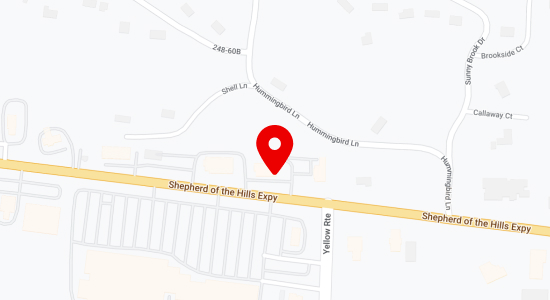
Please note that our law firm's address is for mail correspondence only. We do not accept in-office visits to this location. To schedule an appointment or consult with an attorney, please contact us via phone or email. Our contact information is readily available on our website. We look forward to hearing from you and strive to supply efficient and accessible legal services to our clients.
Branson, MO 65616