
Former Prosecutor
of 20 Years on
Your Side
of 20 Years on
Your Side









Missouri is a premier hunting state. Taney County and the surrounding Ozarks region attract thousands of hunters each year who pursue white-tailed deer, wild turkey, waterfowl, and other native game. For many Missourians and for the visitors who travel to this region every season, hunting is not merely a recreational activity. It is a deeply rooted tradition passed from one generation to the next. A hunting violation charge can put that tradition at serious risk, potentially costing you your license, your ability to hunt in Missouri and dozens of other states, your equipment through forfeiture, and in the most serious cases, your freedom.
If you have been cited or charged with a hunting violation anywhere in Taney County or the surrounding area, it is critical to understand that these charges carry real and lasting legal consequences, and that retaining a skilled criminal defense attorney as early as possible can make a significant difference in how your case is resolved.
Scrivner Law Firm, based in Branson, defends clients throughout Taney, Stone, and Christian Counties against wildlife violations and hunting-related charges. Attorney Dayrell Scrivner brings a combination of more than 20 years of prosecutorial experience and dedicated private criminal defense practice to every case, providing clients with the kind of inside perspective that is rarely available in a defense attorney.
Hunting in Missouri is governed primarily by the Missouri Department of Conservation under authority granted through Chapter 252 of the Missouri Revised Statutes, which establishes the Wildlife and Forestry Law. The Missouri Conservation Commission uses that authority to promulgate and enforce annual rules and regulations governing hunting seasons, legal methods of take, bag limits, licensing and permit requirements, and lawful possession of wildlife. Violations of Commission rules carry criminal penalties under state law, administrative consequences including license revocation, and in serious cases, significant civil restitution obligations.
Missouri also addresses hunting-related conduct in Chapter 578 of the Revised Statutes, which covers offenses such as unlawful hunting on private land, unlawful retrieval of game, and interference with lawful hunting activities. Depending on the facts of your case, charges may be brought under one or both chapters, and in some circumstances federal law may also apply.
Conservation agents with the Missouri Department of Conservation are certified peace officers with broad authority to stop and investigate suspected wildlife violations, search vehicles and equipment under applicable legal standards, issue citations, and make arrests. Understanding your rights during these encounters, and having an attorney who knows how agents build their cases, is essential to an effective defense.
The following are among the most frequently charged hunting violations in Missouri, along with the key statutes that apply.
Hunting Without a Valid License or Permit. Missouri requires hunters to possess valid licenses and, for certain species, specific permits such as deer or turkey tags. Section 252.060 RSMo provides that a license or permit must be available for inspection upon request, and that a refusal to display it upon demand is itself a chargeable violation.
Hunting Out of Season or Over the Bag Limit. Section 252.040 RSMo is the foundational prohibition in Missouri wildlife law. It provides that no wildlife shall be pursued, taken, killed, possessed, or disposed of except in the manner, to the extent, and at the times permitted by Commission rules and regulations. Any violation of this provision is a misdemeanor. This section covers a broad range of conduct, from taking a deer before the season opens to exceeding the daily bag limit on waterfowl.
Unlawful Hunting on Private Land. Section 578.520 RSMo makes it a Class B misdemeanor to hunt, fish, trap, or retrieve wildlife on private land without permission from the owner or lessee of the land. The consequences of a conviction go beyond any fine or jail time. The court may require the surrender of all Department of Conservation licenses and permits, and the court must notify the Conservation Commission and request revocation of all hunting, fishing, and trapping privileges for at least one year from the date of conviction. Property boundary disputes, honest mistakes about land ownership, and misunderstandings about permission are factual scenarios where a defense attorney may be able to challenge the charge or its classification.
Unlawful Retrieval of Large or Small Game. Section 578.525 RSMo creates a separate Class B misdemeanor for certain conduct during the retrieval of wildlife from private land without the landowner’s permission, including intentionally driving or flushing game toward other hunters on adjacent parcels or discharging a firearm at game that originated from the private land during retrieval. The statute includes an affirmative defense where the premises were open to the public and the person complied with all lawful conditions of access, an avenue a defense attorney may explore in appropriate cases.
Poaching and Unlawful Take of Protected Species. The most serious hunting violations involve the illegal take of species such as antlered white-tailed deer, wild turkey, paddlefish, black bear, or elk in violation of established seasons, methods, or limits. In addition to criminal misdemeanor penalties under Section 252.040, Section 252.042 RSMo empowers a court to order civil restitution payments to the state. These amounts can be substantial: between $500 and $1,000 per wild turkey or paddlefish, between $1,000 and $5,000 per antlered white-tailed deer (excluding does), and between $10,000 and $15,000 per black bear or elk. When multiple animals are involved, restitution figures can reach tens of thousands of dollars in addition to criminal penalties.
Illegal Methods of Take. Missouri law and Conservation Commission rules prohibit hunting with certain equipment, over bait, with artificial lights for certain species, or using other methods that are not authorized for the applicable species or season. Violations are prosecuted under Section 252.040 RSMo and may also implicate regulations governing specific seasons or zones.
Violations Involving Endangered Species. Section 252.240 RSMo prohibits the importation, transportation, or sale of any species designated as endangered or threatened by the Missouri Department of Conservation or the United States Department of the Interior. Violations carry criminal penalties separate from the general wildlife violation statutes.
Interference with Lawful Hunting. Sections 578.151 and 578.152 RSMo address interference with lawful hunting, fishing, or trapping in the first and second degree, with penalties that escalate based on the nature and severity of the interference. Section 578.153 RSMo further provides that failure to obey a peace officer or conservation agent enforcing these provisions is itself a chargeable offense.
Beyond fines and potential incarceration, Missouri operates an administrative point system for wildlife code violations. When a conservation agent issues a citation and a court enters a conviction, points are assigned based on the severity of the offense. The Missouri Conservation Commission reviews points accumulated over a five-year period when making recommendations about permit suspensions or revocations. Even a conviction that has been expunged under Section 610.140 RSMo may still be considered in the Commission’s review.
The Commission has authority to revoke or suspend permit privileges for any wildlife code violation, and the consequences can reach well beyond Missouri’s state lines. Under Section 252.247 RSMo, Missouri participates in an interstate wildlife violator compact with the vast majority of other states. A license revocation in Missouri can therefore bar a hunter from lawfully pursuing game in participating states across the country. What appears to be a local citation can, if handled without legal guidance, result in a nationwide restriction on hunting privileges lasting a year or more.
Some Missouri hunting violations may also trigger federal liability under the Lacey Act. This federal law prohibits the interstate transport, sale, or purchase of wildlife taken in violation of any state law. If a violation involves the transportation of unlawfully taken animals across state lines or the commercial sale of poached wildlife, federal charges can accompany state charges, significantly increasing the potential penalties and complexity of the case. Federal prosecution carries its own procedural requirements and potential consequences that make experienced legal representation even more critical.
Many people assume a hunting citation is minor, comparable to a speeding ticket that can be paid without much thought. That assumption can be costly. A conviction, even for a first-time or low-level offense, creates a permanent criminal record, can trigger the loss of your hunting and fishing licenses, and through Missouri’s participation in the interstate reciprocity compact, can restrict your ability to hunt across dozens of states.
A skilled defense attorney will examine the circumstances of every stop, search, and seizure; scrutinize whether conservation agents followed required procedures; challenge the sufficiency of the evidence; identify affirmative defenses provided by statute; negotiate with prosecutors to seek reduced charges, dismissal, or diversion where available; and represent you effectively at any administrative hearings before the Missouri Conservation Commission.
The difference between a conviction and a favorable resolution often comes down to how thoroughly the facts are examined and how aggressively the defense is presented from the very beginning.
Attorney Dayrell Scrivner has more than 30 years of legal experience, including 20 years as a prosecutor, serving for much of that time as Chief Assistant Prosecutor in Stone County. He earned his Juris Doctorate from the University of Missouri-Kansas City School of Law in 1993 and became a Missouri State Licensed Specialist Instructor for universities and police academies, teaching courses on criminal law and criminal procedure. He assisted in the creation of Stone County’s Drug Court and Veterans Court programs and has twice served as President of the 39th Circuit Bar Association. He is a recognized member of the National Trial Lawyers Top 100, holds an A+ rating from the Better Business Bureau, and has been recognized multiple years through the Best of Branson awards.
What sets Dayrell Scrivner apart is the prosecutorial perspective he brings to every defense case. Having spent two decades evaluating evidence, directing investigations, and presenting cases in court, he understands precisely how the state builds wildlife violation cases and where those cases are vulnerable. That insight translates directly into more focused, more effective advocacy for every client he represents.
Scrivner Law Firm serves clients throughout Taney County, including Branson, Forsyth, Hollister, Merriam Woods, and Rockaway Beach, as well as Stone County and Christian County communities.
A hunting violation charge will not simply go away on its own, and waiting to seek legal counsel only narrows your options. Every day without experienced representation is a day that potential defenses may go unexamined. Whether you are facing a citation for hunting without a valid license, an accusation of taking game on private land without permission, charges related to unlawful methods of take, or a serious poaching allegation with civil restitution exposure, Scrivner Law Firm is prepared to fight for you.
Contact Scrivner Law Firm today to schedule a confidential consultation. Attorney Dayrell Scrivner and his team will evaluate the facts of your case, explain your options honestly, and develop a defense strategy designed to achieve the best possible outcome. Your hunting tradition, your privileges, and your future deserve a strong defense from someone who knows how the system works from both sides of the courtroom.
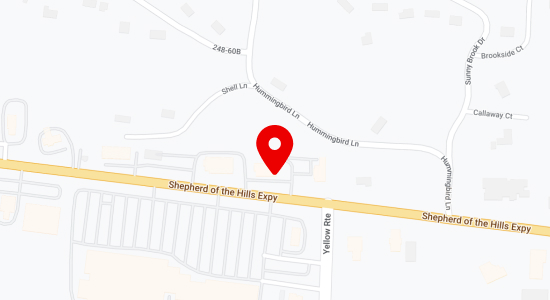
Please note that our law firm's address is for mail correspondence only. We do not accept in-office visits to this location. To schedule an appointment or consult with an attorney, please contact us via phone or email. Our contact information is readily available on our website. We look forward to hearing from you and strive to supply efficient and accessible legal services to our clients.
Branson, MO 65616