
Former Prosecutor
of 20 Years on
Your Side
of 20 Years on
Your Side









A poaching accusation in Missouri can feel bigger than a simple ticket. For many people in Taney County, Branson, Forsyth, Hollister, Rockaway Beach, and the surrounding Ozarks, hunting and fishing are part of family life, weekend travel, land ownership, and local tradition. A citation from a Missouri Department of Conservation agent may involve allegations that a person took wildlife out of season, hunted without the right permit, exceeded a limit, used an unlawful method, took game from a roadway, trespassed on private land, improperly tagged an animal, possessed illegally taken wildlife, or continued hunting after privileges were suspended.
Some people assume they can simply pay the fine and move on. That can be a mistake. A conservation violation can carry fines, court costs, restitution, loss of hunting or fishing privileges, seizure of wildlife, and a criminal record depending on the charge. In cases involving deer, turkey, paddlefish, black bear, elk, or private land, the consequences may be especially serious.
Scrivner Law Firm represents people facing criminal and conservation charges in Taney County and throughout Southwest Missouri. Led by attorney Dayrell Scrivner, a former prosecutor with more than 30 years of legal experience, the firm understands how a citation can develop into a criminal case and how important it is to protect your rights before making statements, entering a plea, or assuming the charge is minor.
“Poaching” is a general term. It is not limited to someone secretly hunting trophy game at night. In Missouri, the word may be used to describe many different alleged violations of the Wildlife Code, Missouri statutes, or regulations issued by the Conservation Commission. A case may begin with a field encounter, a traffic stop, a report from a landowner, a check station issue, social media evidence, trail camera footage, a tip to Operation Game Thief, or an investigation into meat, antlers, photographs, tags, firearms, bows, boats, or other equipment.
Common allegations may include taking deer, turkey, fish, or other wildlife outside the permitted season; hunting or fishing without a valid permit; using artificial light unlawfully; taking wildlife from or across a roadway; exceeding a daily or possession limit; failing to notch, tag, Telecheck, or document wildlife properly; possessing wildlife taken by another person; using an unlawful weapon or method; hunting on private property without permission; retrieving game from private land without legal authority; or hunting while under a suspension or revocation of conservation privileges.
Missouri conservation cases often involve a mix of statutes and administrative rules. The following laws are often relevant.
Section 252.040 is one of the central Missouri statutes in wildlife cases. It provides that wildlife may not be pursued, taken, killed, possessed, or disposed of except as permitted by Missouri conservation rules and regulations. Violating this section is generally a misdemeanor, with a specific exception for certain fur buyer and fur dealer record-keeping violations.
Because this statute reaches more than the moment of harvest, a person may face questions about who took the animal, whether it was lawfully tagged, how it was transported, or why wildlife was found in a cooler, freezer, vehicle, boat, camp, taxidermy location, or residence.
Section 252.042 allows additional restitution when a person is found guilty of unlawfully chasing, pursuing, killing, processing, or disposing of certain wildlife in violation of methods, seasons, and limits. The statute applies to wild turkey, paddlefish, antlered white-tailed deer, black bear, and elk.
The restitution ranges can be substantial. The statute authorizes restitution of $500 to $1,000 for each wild turkey, $500 to $1,000 for each paddlefish, $1,000 to $5,000 for each antlered white-tailed deer, excluding does, and $10,000 to $15,000 for each black bear or elk. Those amounts are in addition to other penalties that may apply. In a serious case, restitution can become the most financially painful part of the judgment.
Section 252.230 provides that a person who violates rules and regulations relating to wildlife is guilty of a class B misdemeanor unless another statute or provision applies. This matters because many conservation violations are based on detailed regulations rather than a single short criminal statute. The rules may address permits, seasons, equipment, species, limits, methods, public conservation areas, tagging, checking requirements, or transport.
A defense lawyer must identify the precise rule the State claims was violated. It is not enough to say “poaching” in general. The charge should be measured against the exact language of the rule, the facts the government can prove, and any exceptions or permit provisions that may apply.
Section 578.520 covers unlawful fishing, hunting, or trapping on private land. A person commits this offense if he or she fishes, hunts, traps, or retrieves wildlife from private land that the person does not own or possess without permission from the owner or lessee. The offense is a class B misdemeanor.
This statute also permits the court, in addition to the criminal penalty, to require surrender of conservation permits and request revocation of hunting, fishing, or trapping privileges for at least one year after conviction. The statute includes an affirmative defense when the premises were open to members of the public and the person complied with lawful access conditions.
Private land cases can be fact-specific. Boundary lines may be unclear. A hunter may have permission from one owner but cross onto another parcel while tracking wounded game. A person may misunderstand whether permission was still valid, whether a lease covered the area, or whether property was posted. These details can matter.
Section 578.525 addresses unlawful retrieval of large or small game from private land. It applies when someone, while retrieving wildlife from private land with landowner or lessee permission, intentionally drives or flushes game toward hunters in the same group on other land or rights-of-way, or intentionally discharges a firearm at game originating from that private land during retrieval. The offense is a class B misdemeanor.
This law is important because permission to retrieve wounded game is not the same as permission to continue hunting. A case may turn on whether the person was truly retrieving, whether game was intentionally flushed, whether a firearm was discharged, and whether the State can prove intent.
Section 252.241 makes it unlawful to hunt or fish during a period when a permit or privilege is suspended, revoked, or denied by a Missouri court or by the Conservation Commission. A violation is a class A misdemeanor, and the penalty is in addition to other penalties allowed by law.
This can become an issue after a prior conservation conviction, private land offense, administrative suspension, or court order. A person accused under this statute may need to examine notice, dates, the scope of suspension, whether the activity actually constituted hunting or fishing, and whether the State can prove the status of the privilege.
A poaching ticket may look like a routine citation, but the consequences can reach into several areas of life. A conviction may affect hunting privileges, firearm-related activities, travel plans, employment background checks, professional licenses, and future interactions with conservation agents. For people who hunt with family every year, guide others, lease land, or manage property, a suspension can be more than an inconvenience.
There may also be collateral consequences. Wildlife may be seized. A firearm, bow, boat, vehicle, electronic device, tag, permit, or animal parts may become evidence. A person may be asked to give a statement before understanding the scope of the investigation.
A defense strategy should begin early. The goal is not only to respond to the ticket, but also to understand what the State can prove, what evidence may be missing, and what resolution may protect the client’s record and hunting privileges.
Conservation cases often depend on practical outdoor evidence. The State may rely on photographs, GPS data, mapping records, trail cameras, witness statements, permit records, Telecheck information, harvest logs, taxidermy records, meat processing records, vehicle location, weapon evidence, ammunition, calls, text messages, social media posts, or statements made in the field.
The defense may need to examine whether the officer correctly identified the land, species, sex of the animal, season, permit requirement, method of take, or person who actually took the wildlife. In a group hunting situation, possession can be misunderstood. A person helping recover a deer or storing meat may not be the person who unlawfully took it.
Missouri law gives conservation agents authority to enforce conservation laws, but that does not mean every search or statement is beyond challenge. Section 252.100 addresses search and seizure in wildlife cases. It allows certain warrantless searches of creels, containers, gamebags, hunting coats, or boats when an agent has reason to believe wildlife is unlawfully possessed or concealed. The statute also requires a search warrant to enter and search an occupied dwelling, adjacent outbuildings, cold storage locker plant, motor vehicle, or sealed freight or express car for those purposes.
The details matter. Where did the search occur? What exactly was searched? Was there consent? Was there a warrant? Did the agent have the required basis? Were statements made before or after the person was effectively detained? Did the person understand that casual comments could be used in court?
A defense attorney can review whether evidence was obtained lawfully and whether statements were voluntary, complete, and accurate. Sometimes the most damaging evidence in a conservation case is not the animal itself, but what the accused person said while trying to explain the situation.
Scrivner Law Firm is located in Branson and serves clients in Taney County, Stone County, Christian County, and nearby Missouri communities. Attorney Dayrell Scrivner brings more than three decades of legal experience to criminal defense, including 20 years as a prosecutor and service as Chief Assistant Prosecutor. That background matters in a poaching case because the defense must anticipate how the State will view the facts, how evidence will be presented, and what weaknesses may matter most during negotiation or trial.
The firm understands that clients are often embarrassed, angry, or confused after receiving a conservation citation. Many are responsible hunters or landowners who never expected to be accused of poaching. Scrivner Law Firm takes the charge seriously and works to protect the client’s record, rights, and future ability to hunt or fish.
If you were cited or investigated for a poaching violation in Taney County or elsewhere in Southwest Missouri, do not assume the case is just a payable ticket. Before entering a plea or speaking further with investigators, it is wise to understand the charge, the possible penalties, and the defenses that may apply.
Scrivner Law Firm can review the citation, evaluate the statutes and Wildlife Code provisions involved, examine the evidence, and help you decide how to move forward. Whether your case involves deer, turkey, fish, private land, a roadway allegation, permit issues, tagging problems, or suspended hunting privileges, attorney Dayrell Scrivner can help you respond with a clear defense strategy.
Contact Scrivner Law Firm to discuss your poaching violation defense and the steps you can take to protect your rights, your record, and your future.
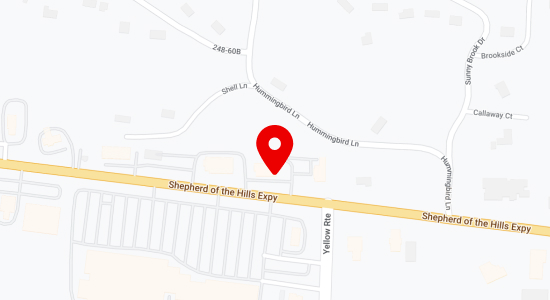
Please note that our law firm's address is for mail correspondence only. We do not accept in-office visits to this location. To schedule an appointment or consult with an attorney, please contact us via phone or email. Our contact information is readily available on our website. We look forward to hearing from you and strive to supply efficient and accessible legal services to our clients.
Branson, MO 65616