
Former Prosecutor
of 20 Years on
Your Side
of 20 Years on
Your Side









An online advertisement can become the focus of a Missouri felony investigation when authorities contend that the operator of a classified website received formal notice about prohibited content and failed to remove it within the period required by law. In a prosecution under RSMo 566.103, the issue is therefore not limited to what appeared on a webpage. Investigators may also examine who owned or operated the service, who had authority to remove content, how notice was delivered, and what happened after it was received.
Scrivner Law Firm represents people accused of criminal offenses in Taney County and throughout Southwest Missouri. Attorney Dayrell Scrivner draws on decades of legal experience, including approximately two decades as a prosecutor, when evaluating the government’s charging theory and the records prosecutors may rely on to establish knowledge and responsibility for online activity.
Promoting online sexual solicitation has a narrower statutory framework than its name may suggest. Missouri law focuses on certain web-based classified services that carry advertisements involving prostitution, the sexual solicitation of a child, or child sex trafficking. As a result, a defense may require close review of domain and ownership records, administrator permissions, archived content, notice documentation, server logs, and the precise timing of any removal or disabling of the advertisement.
The starting point under RSMo 566.103 is the type of website involved. The statute defines a “web-based classified service” as a person or entity in whose name a specific URL or internet domain name is registered and that carries advertisements for goods and services or personal advertisements.
That language matters. The offense is not written to cover every website, social-media profile, message board, chat account, or online communication merely because sexual content appears there. Prosecutors must connect the accused person or entity to a service that falls within the statutory definition and show ownership or operation of that service.
The State must then prove more than the existence of questionable content. The statute addresses a person or entity that knowingly permits the classified service to be used for advertisements promoting prostitution, enticing a child to engage in sexual conduct, or promoting the sexual trafficking of a child after receiving notice under the statute.
Questions about corporate ownership, domain registration, administrator permissions, hosting arrangements, moderation responsibilities, and actual control over content may therefore become central.
RSMo 566.103 creates a notice-based structure that is unusual among criminal offenses. Notice may be provided by the Missouri attorney general, a prosecuting attorney, or a circuit attorney. The statute specifies that notice may be sent by certified mail or facsimile transmission.
Once notice is received, the timing of the response becomes critical. If the advertisement is not removed within seventy-two hours, the statute provides that the failure to remove it constitutes prima facie evidence that the person or entity acted knowingly.
Prima facie evidence does not eliminate the prosecution’s burden of proof, but it gives the State a statutory basis for arguing knowledge. That makes the notice itself important evidence. The defense may need to examine the sender, recipient, address or fax destination, transmission records, delivery confirmation, the description of the advertisement, the time the notice was received, and the time the content ceased to be publicly available.
A screenshot showing that content appeared online at one point does not necessarily answer those questions. Server logs, content-management records, automated moderation records, archived versions, email notifications, support tickets, and administrator activity may provide a more precise timeline.
The statute identifies several categories of content. Whether a particular advertisement qualifies is assessed in part through what its content would communicate to a reasonable person.
An advertisement may fall within the statute if a reasonable person would interpret it as offering to exchange sexual conduct for goods or services in violation of Missouri’s prostitution laws.
Chapter 567 contains the State’s prostitution-related offenses. RSMo 567.020 addresses engaging in, offering, or agreeing to engage in sexual conduct in return for something of value. RSMo 567.030 addresses patronizing prostitution, including requesting sexual conduct in return for something of value.
The wording therefore matters. Investigators may focus on prices, coded language, photographs, location information, contact instructions, payment references, or surrounding messages. The defense can examine whether the State’s interpretation is supported by the actual content or gives lawful or ambiguous language a criminal meaning.
RSMo 566.103 also reaches advertisements that a reasonable person would interpret as seeking a child for sexual conduct or a commercial sex act. The statute expressly connects this category to RSMo 566.151.
Under current Missouri law, RSMo 566.151 addresses grooming or enticement of a minor. It applies when a person more than four years older than a minor knowingly attempts to persuade, solicit, coax, entice, or lure, or actually does so, with the required intent to prepare, condition, manipulate, or otherwise cause the minor to engage in sexual conduct, a sexual performance, or a commercial sex act.
A promoting-online-solicitation case does not automatically prove a separate grooming or enticement offense. The statutes address different actors and different conduct. Still, the State may use the concepts in RSMo 566.151 to argue that the advertisement identified in the notice was prohibited under RSMo 566.103.
The statute also addresses advertisements that offer a child as a participant in sexual conduct or a commercial sex act and references Missouri’s child sex-trafficking laws.
RSMo 566.210 concerns sexual trafficking of a child in the first degree, while RSMo 566.211 concerns sexual trafficking of a child in the second degree. Those provisions cover conduct such as recruiting, providing, obtaining, causing, or advertising the availability of a child for specified commercial sexual activity, sexual performances, or explicit sexual material.
Because trafficking allegations carry exceptionally serious consequences, investigators may scrutinize account relationships, payment records, communications, photographs, location data, and the identity and age of people depicted or described in an advertisement.
A violation of RSMo 566.103 is a class E felony. Missouri’s general sentencing statute authorizes imprisonment of up to four years for a class E felony.
RSMo 566.103 also contains a penalty tied directly to the amount of time the advertisement remains online. The statute authorizes a fine of five thousand dollars per day that the advertisement remains posted after the seventy-two-hour period following notice. A violation may be punished by imprisonment, the statutory daily fine, or both.
That structure makes the timeline more than an evidentiary issue. It can affect financial exposure. The precise point at which content was removed, disabled, made inaccessible, or otherwise ceased to remain posted may therefore become a disputed fact.
The statute assigns original jurisdiction over prosecution to the local prosecuting attorney or circuit attorney. In a Taney County matter, that reinforces the importance of understanding both the statewide statute and the way the evidence is being assembled for a local criminal prosecution.
RSMo 566.103 should not be reviewed in isolation. Depending on the allegation, prosecutors may examine other Missouri statutes that overlap with the same website or advertising activity.
RSMo 567.050, promoting prostitution in the first degree, is especially important in online-platform cases. Among other conduct, it applies to a person who owns, manages, or operates an interactive computer service, or conspires or attempts to do so, with the intent to promote or facilitate another person’s prostitution. That theory is a class B felony and becomes a class A felony in the statutory circumstance involving reckless disregard that the conduct contributed to trafficking for sexual exploitation.
The distinction between the statutes may matter when the State claims more than failure to remove a prohibited classified advertisement after notice. Evidence that prosecutors characterize as proof of active promotion, facilitation, financial participation, or trafficking may produce additional or alternative charging theories.
Federal law may also become relevant in some investigations. Under 18 U.S.C. 2421A, federal prosecutors can pursue certain owners, managers, or operators of interactive computer services when interstate or foreign commerce and the required intent to promote or facilitate prostitution are alleged. An aggravated federal provision applies in specified circumstances involving multiple persons or reckless disregard of sex trafficking. The existence of an online platform does not automatically make a case federal, but interstate digital activity can expand the agencies and statutes involved.
A defense to an online-platform allegation may require reconstructing how the service actually operated. Domain records may identify a registrant but not necessarily the person who controlled day-to-day moderation. Administrator logs may show which account reviewed or removed content. Hosting records may show when a page became unavailable. Payment processors may identify who received subscription or advertising revenue. Internal messages may establish who was responsible for compliance decisions.
The advertisement itself also requires careful preservation. A cropped screenshot may omit disclaimers, surrounding text, timestamps, user names, links, or other context. Metadata can help determine when a file was created, modified, uploaded, or captured. An archived page may differ from the version that existed when notice was sent.
Investigators may also seek computers, phones, cloud accounts, business records, and email. Search-warrant scope, authentication, chain of custody, and the interpretation of technical data can all become part of the defense.
Promoting online sexual solicitation cases can appear straightforward if the prosecution reduces the allegation to “the website contained a prohibited ad.” RSMo 566.103 requires a more detailed analysis.
The defense can examine whether the accused actually owned or operated the service, whether the website met the statutory definition of a web-based classified service, whether the disputed material was an advertisement covered by the statute, and whether its content would reasonably be interpreted in the prohibited manner.
The notice process must also be tested. A statutory notice sent to the wrong person, an outdated address, an unrelated business, or an account without authority to remove content may raise different issues from a notice demonstrably received by the person responsible for the site. The defense should compare the government’s claimed delivery time with the platform’s internal records rather than accepting a simplified timeline.
Knowledge is another distinct issue. The statute gives prosecutors prima facie evidence after the removal period expires, but the surrounding facts still matter. System outages, technical restrictions, compromised administrator accounts, third-party moderation arrangements, duplicate postings, or evidence that content was actually removed can affect how the State’s theory should be evaluated.
Finally, the defense should identify whether investigators are using RSMo 566.103 as a stand-alone charge or as one component of a broader prostitution, enticement, trafficking, or federal investigation. The strategy may change substantially when multiple statutes, agencies, witnesses, or digital accounts are involved.
Scrivner Law Firm defends people accused of criminal offenses in Taney County and other Southwest Missouri communities, including serious sex-crime and internet-crime allegations. Attorney Dayrell Scrivner spent approximately two decades in prosecution before moving into private practice and criminal defense.
That experience can be useful in a case where the State must turn technical records into proof of statutory elements. The defense can focus not only on what investigators collected, but on how prosecutors may try to use notice records, website ownership information, digital logs, advertisements, and related communications to establish knowledge and criminal responsibility.
No two online-platform cases should be treated as interchangeable. Service architecture, ownership records, content controls, notice history, the alleged advertisement, and related criminal theories can produce very different legal issues.
A promoting online sexual solicitation case can turn on records that are easy to overlook or misinterpret, including domain-registration information, administrator access, content-removal logs, archived advertisements, and proof of when statutory notice was actually received. Those records may help establish whether the accused controlled the service, whether the advertisement fell within RSMo 566.103, and whether the State can prove the required knowledge.
Dayrell Scrivner draws on his background as a former prosecutor and criminal defense attorney when evaluating how the government has assembled its case and where the evidence may be challenged. Scrivner Law Firm can review the circumstances surrounding the website, the disputed content, the notice procedure, and any related Missouri or federal allegations. Contact the firm to arrange a consultation regarding a promoting online sexual solicitation investigation or charge in Taney County or elsewhere in Southwest Missouri.
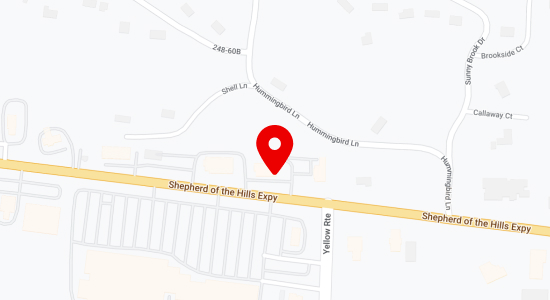
Please note that our law firm's address is for mail correspondence only. We do not accept in-office visits to this location. To schedule an appointment or consult with an attorney, please contact us via phone or email. Our contact information is readily available on our website. We look forward to hearing from you and strive to supply efficient and accessible legal services to our clients.
Branson, MO 65616