
Former Prosecutor
of 20 Years on
Your Side
of 20 Years on
Your Side









A phishing or internet-fraud case can depend on reconstructing activity that may have passed through several accounts, devices, and electronic services before investigators identified a suspect. An email may lead to a login page, captured credentials may later be used to enter an account, and funds or merchandise may then move through another person or platform. Determining who performed each act, what that person knew, and whether the activity was authorized can be central to the prosecution’s case.
Missouri prosecutors may pursue different charges depending on what allegedly occurred after or alongside the deceptive communication. An accusation involving stolen credentials could raise identity-theft or computer-tampering issues, while an unauthorized purchase or transfer may implicate stealing or fraudulent use of a credit or debit device. Some investigations may also involve federal authorities when the alleged conduct falls within federal fraud, identity-theft, access-device, or computer-crime statutes.
Scrivner Law Firm represents people facing criminal investigations and charges in Taney County and throughout Southwest Missouri. Attorney Dayrell Scrivner draws on decades of legal experience, including two decades as a prosecutor, when examining the digital records, financial transactions, account activity, and other evidence used to connect an accused person to an alleged online-fraud scheme.
A suspicious email or text may be the first event investigators identify, but the prosecution still has to connect that communication to criminal conduct. Sending a link, possessing account information, receiving a transfer, or having a device associated with an online account does not automatically establish every element of fraud.
Internet-fraud cases frequently involve several stages: creating a false login page, sending messages that appear to come from a bank or business, collecting credentials, accessing an account, transferring funds, or purchasing goods. Prosecutors may treat those acts as parts of one scheme, while the defense may need to determine what evidence ties the accused person to each step.
Criminal liability depends on more than an association with an account, phone number, computer, or transaction. The State must prove the elements required by the particular statute charged.
Several Missouri statutes can become relevant when an accusation involves stolen credentials, deceptive communications, unauthorized account access, or online purchases.
Missouri’s identity-theft statute applies when a person knowingly, and with the intent to deceive or defraud, obtains, possesses, transfers, uses, or attempts to obtain, transfer, or use a means of identification that was not lawfully issued for that person’s use.
The statute reaches more than a name. Means of identification can include Social Security numbers, driver’s-license numbers, bank-account numbers, credit and debit card numbers, PINs, electronic identification numbers, digital signatures, passwords, biometric information, passports, birth certificates, and other information used to access financial resources.
The classification depends in part on whether property was obtained and its value. Conduct that does not result in the theft or appropriation of credit, money, goods, services, or other property is generally a class B misdemeanor. If property is obtained, the offense can rise from a class A misdemeanor to a class D, C, or B felony as the value increases. Prior identity-theft findings can also affect the classification in some circumstances.
A phishing investigation may therefore become an identity-theft case if prosecutors claim that credentials or other identifying information were acquired or used with an intent to deceive or defraud.
Missouri’s general stealing statute can also apply to internet-fraud allegations. RSMo 570.030 covers appropriating another person’s property or services with the purpose to deprive that person of the property or services, either without consent or by means of deceit or coercion.
An online scheme may fit this theory if prosecutors claim that a false representation caused a person or business to send money, merchandise, services, or other property. The value can determine whether the charge is a misdemeanor or felony, and property associated with one scheme or course of conduct may sometimes be aggregated when the offense is graded.
The presence of a false statement is not the end of the analysis. The prosecution still has to establish the required connection between the alleged deception, the property obtained, the accused person, and the purpose to deprive.
When phishing allegedly produces card or account information that is later used to obtain property or services, prosecutors may consider RSMo 570.130. The statute applies when a person uses a credit or debit device to obtain services or property while knowing the device is stolen, fictitious, forged, revoked, cancelled, or otherwise unauthorized.
The offense is generally a class A misdemeanor, but it becomes a class E felony when the value of the property or services obtained or sought within the statutory period reaches at least $750.
Transaction records can therefore become important. A defense may examine who initiated a purchase, who possessed the account information, where merchandise was delivered, what authentication was used, and whether the evidence establishes that the accused knew the use was unauthorized.
Missouri’s computer-crime statutes can reach conduct that occurs before or after money changes hands.
RSMo 569.095 prohibits several forms of tampering with computer data when done knowingly and without authorization or reasonable grounds to believe authorization exists. Among other conduct, it addresses taking or disclosing data, passwords, identifying codes, PINs, or other confidential information used to control access to a computer system or network. It also addresses unauthorized access used to examine information about another person and the use or disclosure of data known or believed to have been unlawfully obtained.
Tampering with computer data is ordinarily a class A misdemeanor. It becomes a class E felony when committed for the purpose of devising or carrying out a scheme to defraud or obtain property valued at $750 or more.
RSMo 569.099 separately addresses knowingly accessing or causing access to a computer, computer system, or computer network without authorization or reasonable grounds to believe authorization exists. It is generally a class A misdemeanor, but it can be a class E felony when the unauthorized access is committed to devise or execute a scheme to defraud or obtain property worth at least $750.
These statutes can become central when credentials obtained through an alleged phishing operation are then used to enter an email account, financial account, business network, or other computer system.
Email systems, payment processors, cloud platforms, banks, and online services often operate across state or national boundaries. Depending on the facts, federal investigators or prosecutors may become involved even when the accused person and an alleged victim are located in Missouri.
Potential federal statutes include:
Federal exposure should not be assumed merely because a case involves the internet. Jurisdiction, the particular communication or computer involved, the accused person’s conduct, and the elements of the selected statute still have to be established.
Online activity creates records, but a record identifying an account or device is not necessarily proof identifying the person who performed a particular act.
Investigators may rely on subscriber records, IP logs, device identifiers, email headers, authentication records, messages, financial records, or provider records. Those records can be powerful, but they require context.
A connection may be used by multiple people. A device may be shared, lost, remotely accessed, or compromised. Passwords may be disclosed, and an account may remain logged in while another person uses the device.
For the defense, the question is whether the evidence reliably establishes attribution, knowledge, intent, and the other elements of the offense beyond a reasonable doubt.
Internet-fraud investigations may expand from online records to phones, laptops, storage devices, email accounts, cloud accounts, financial records, and social-media profiles. Investigators may use search warrants, subpoenas, provider requests, interviews, consent searches, or forensic extraction tools.
The defense can examine how that evidence was obtained and whether the government stayed within the lawful scope of its authority. Questions may include whether a warrant was supported by probable cause, whether it described the place or data to be searched with sufficient particularity, whether officers exceeded the authorized scope, whether consent was voluntary and sufficiently broad, and whether statements were obtained in compliance with constitutional protections.
No single defense applies to every phishing or online-fraud allegation. The strongest issues depend on the statute, technology, and evidence prosecutors actually possess.
Identity and account control. The defense may challenge whether the State can prove who created a message, controlled an account, entered credentials, initiated a transfer, or made a purchase.
Intent to deceive or defraud. A misleading communication is not necessarily criminal fraud unless the required mental state is proven. Business disputes, incomplete transactions, account-sharing arrangements, mistakes, or other circumstances may present a different explanation.
Authorization. Computer and account-access cases frequently turn on whether the accused had permission, reasonably believed permission existed, or acted outside the limits of authorized access.
Knowledge. Receiving money, possessing credentials, or using a device can carry different legal significance depending on what the person knew about the source, status, or intended use of the information.
Loss and value. Dollar amounts can affect the grade of Missouri offenses and may influence federal allegations. The defense can examine whether claimed losses were completed, attempted, reversed, refunded, duplicated, or improperly attributed to the accused.
Reliability of digital evidence. Timestamps, account logs, forensic reports, provider records, and extracted communications may require examination for completeness, context, authentication, and chain of custody.
Statements and searches. A confession, consent search, device extraction, or account warrant may raise constitutional or evidentiary issues that affect what the prosecution can use.
A conviction involving internet fraud or phishing may bring incarceration, fines, probation, restitution, or other court-ordered conditions. Felony allegations can also affect employment, professional licensing, access to financial positions, housing, and future background checks.
Identity-theft law permits restitution for certain victim expenses, while federal cases can involve forfeiture and restitution depending on the charges and proven losses. When multiple transactions or alleged victims are involved, the claimed financial impact can become a major point of dispute.
Scrivner Law Firm represents people facing criminal allegations in Taney County and throughout Southwest Missouri, including internet and computer-related accusations. Attorney Dayrell Scrivner brings decades of legal experience, including two decades as a prosecutor, to evaluating how the State assembled its case and whether the evidence supports the specific charges filed.
In an internet-fraud investigation, that review may require reconstructing the sequence of communications and transactions rather than accepting the prosecution’s summary of what happened. Account records, device access, financial activity, search warrants, witness statements, and forensic evidence can be compared to determine where the State’s theory is supported, where assumptions have been made, and which issues may be challenged through motions, negotiation, or trial.
Digital evidence can create an incomplete picture when account activity, electronic payments, login records, and communications are considered without their full context. An effective defense may require determining who actually controlled an account or device, whether access was authorized, what the accused person knew, and whether prosecutors can establish the fraudulent intent required by the offense charged.
Scrivner Law Firm represents people facing criminal investigations and charges in Taney County and throughout Southwest Missouri. Drawing on decades of legal experience, including two decades as a prosecutor, attorney Dayrell Scrivner evaluates the prosecution’s theory alongside the underlying digital and financial evidence. If you are facing allegations involving phishing, identity theft, unauthorized account access, or another form of internet fraud, contact the firm or use the online contact form to arrange a consultation.
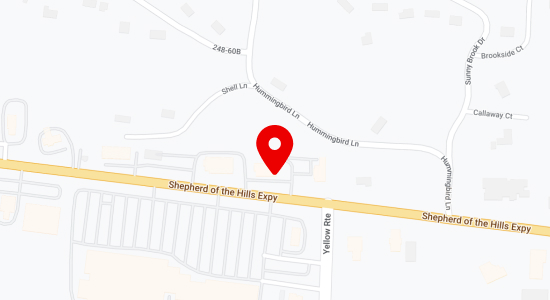
Please note that our law firm's address is for mail correspondence only. We do not accept in-office visits to this location. To schedule an appointment or consult with an attorney, please contact us via phone or email. Our contact information is readily available on our website. We look forward to hearing from you and strive to supply efficient and accessible legal services to our clients.
Branson, MO 65616