
Former Prosecutor
of 20 Years on
Your Side
of 20 Years on
Your Side









A dispute outside a place of worship can take on a very different legal character when authorities believe someone was threatened, prevented from entering, or deliberately interfered with while exercising religious freedom. What begins as an argument at a doorway, a confrontation during a gathering, or conduct near a church, synagogue, mosque, or other religious location may lead investigators to consider both Missouri criminal law and federal civil-rights statutes.
Religious-worship cases can be particularly fact-dependent because similar conduct may have very different legal consequences. Investigators may examine whether anyone used force or threatened force, whether an entrance or exit was actually obstructed, what the accused intended, and whether the alleged conduct was directed at another person’s religious exercise. Recordings, eyewitness accounts, messages, photographs, and evidence showing where the people involved were positioned can all affect how the incident is interpreted.
Scrivner Law Firm represents people facing serious criminal accusations in Taney County and surrounding Southwest Missouri communities. Criminal defense attorney Dayrell Scrivner has more than 30 years of legal experience, including approximately 20 years as a prosecutor. His experience evaluating criminal cases from both sides can be important when the government’s theory depends on disputed intent, competing accounts of an encounter, and whether the conduct actually satisfies the elements of the offense being considered.
“Religious worship intimidation” is a useful description of a category of conduct, but it is not the title of one universal criminal charge. Several statutes can overlap.
Missouri has a specific House of Worship Protection Act, RSMo 574.035, that addresses interference with people exercising religious freedom in or outside a house of worship or seeking access to one. Federal law separately protects access to places of religious worship and the free exercise of religious beliefs through 18 U.S.C. §§ 247 and 248.
Other statutes may become relevant if an allegation includes property damage, bodily injury, discriminatory motive, coordinated action, or masked threats. Determining the actual charging theory is therefore an essential early step.
RSMo 574.035 defines a “house of worship” broadly. The term includes a church, synagogue, mosque, other building or structure, or a public or private place used for religious worship, religious instruction, or another religious purpose.
For intimidation-related allegations, subsection 3(2) is especially important. It addresses a person who intentionally injures, intimidates, or interferes with a person lawfully exercising religious freedom in or outside a house of worship or seeking access to a house of worship. The statute specifies force, threat, or physical obstruction as the means by which the prohibited conduct may occur.
That language makes several factual questions critical. Was the accused acting intentionally? Was there a threat, force, or physical obstruction? Was the other person exercising religious freedom or trying to enter a house of worship? Did the accused actually interfere, or is the accusation based primarily on an argument, protest, or misunderstanding?
The classification increases with repeat offenses. A first offense under the statute is a class B misdemeanor, a second offense is a class A misdemeanor, and a third or subsequent offense is a class E felony.
The same statute also contains language concerning disturbance of worship through profane discourse, rude or indecent behavior, or noise. That language must be considered together with First Amendment law. The United States Court of Appeals for the Eighth Circuit has held that the content-based restrictions on profane, rude, or indecent expression were not narrowly tailored to satisfy constitutional requirements. That history is important because a religious setting does not erase constitutional protection for speech. The prosecution still must rely on a legally enforceable theory and prove conduct that falls within it.
Federal law provides another route for cases involving alleged intimidation at a place of worship. Although 18 U.S.C. § 248 is commonly associated with the Freedom of Access to Clinic Entrances Act, subsection (a)(2) expressly protects people lawfully exercising or seeking to exercise the First Amendment right of religious freedom at a place of religious worship.
The statute prohibits using force, a threat of force, or physical obstruction to intentionally injure, intimidate, interfere with, or attempt to injure, intimidate, or interfere with such a person.
Federal law also supplies definitions that can become central to the defense. Under § 248, “interfere with” means restricting a person’s freedom of movement. “Intimidate” means placing a person in reasonable apprehension of bodily harm to that person or another. “Physical obstruction” concerns making entrance to or exit from a place of religious worship impassable or making passage unreasonably difficult or hazardous.
Those definitions narrow the inquiry. A tense exchange near a church entrance is not automatically a federal offense. The government must connect the accused’s intentional conduct to one of the prohibited means and to another person’s lawful exercise of religious freedom at a place of worship.
A first § 248 offense can carry up to one year of imprisonment, while a later offense after a prior conviction can carry up to three years. An offense involving exclusively nonviolent physical obstruction has lower maximum imprisonment terms. If bodily injury results, the maximum increases substantially, and an offense resulting in death can expose a defendant to imprisonment for any term of years or for life. Section 248 also authorizes civil remedies, meaning the same alleged conduct can create litigation beyond the criminal case.
Another federal statute, 18 U.S.C. § 247, reaches certain intentional obstruction of religious exercise. It prohibits intentionally obstructing, by force or threat of force, including a threat of force against religious real property, a person in the enjoyment of that person’s free exercise of religious beliefs, or attempting to do so, when the required interstate or foreign commerce connection exists.
Section 247 also covers intentional damage or destruction of religious real property because of its religious character. “Religious real property” includes churches, synagogues, mosques, religious cemeteries, other religious real property, certain fixtures or religious objects within a place of worship, and real property owned or leased by a nonprofit religiously affiliated organization.
The penalties depend heavily on the consequences and means involved. Cases involving death, kidnapping, attempted killing, serious forms of sexual abuse, bodily injury, dangerous weapons, explosives, or fire can carry far greater exposure than an offense without those aggravating circumstances. Federal prosecution under § 247 also requires written certification by the Attorney General or a designee that prosecution is in the public interest and necessary to secure substantial justice.
Religious-worship intimidation cases often turn on context. A short video clip, one witness statement, or a screenshot may not show what happened immediately before or after the alleged threat. The defense may need to reconstruct the encounter from multiple sources.
Relevant evidence can include surveillance footage, body-camera recordings, phone video, text messages, social-media posts, photographs, dispatch records, witness accounts, event announcements, property boundaries, security plans, and records showing where people were standing or moving. If prosecutors allege physical obstruction, the dimensions and configuration of an entrance, sidewalk, parking area, or access route may matter. If the case concerns a threat, the exact words, surrounding conduct, audience, and circumstances become important.
Identity can also be disputed. Crowds, masks, poor-quality video, copied social-media material, and secondhand reports can cause investigators to combine the actions of multiple people. A defense should separate what the accused personally said or did from what others allegedly did nearby.
The principal statutes in this area contain intent requirements. That means the government cannot simply point to a person’s presence near a religious gathering and assume criminal purpose.
Intent may be inferred from circumstances, but that inference can be challenged. A person may have been trying to communicate, protest, leave the area, protect another person, or respond to a confrontation. An argument may have escalated without any plan to obstruct worship.
The defense should examine whether the prosecution’s interpretation is consistent with the complete record. Statements made before and after the incident, the duration of the alleged conduct, warnings from security or police, movements captured on video, and the accused person’s relationship to the location may all affect the analysis.
Religious institutions and worshippers are protected from qualifying threats, force, and obstruction, but the First Amendment also protects speech, assembly, and expressive activity. Criminal law cannot treat criticism of a religion, disagreement with religious doctrine, peaceful advocacy, or offensive viewpoints as criminal intimidation merely because the speech occurs near a religious location.
The difficult cases are those in which expressive conduct and alleged obstruction or threats occur together. A sign, chant, argument, or protest may be protected, while separate conduct involving a true threat, assault, physical blocking, or intentional interference may create criminal exposure.
The defense must therefore identify exactly what prosecutors claim crossed the line. Broad descriptions such as “harassment,” “intimidation,” or “disruption” are not substitutes for statutory elements.
A religious-worship investigation may involve additional statutes beyond RSMo 574.035 and 18 U.S.C. §§ 247 and 248.
RSMo 574.085, Missouri’s institutional vandalism statute, applies to knowing vandalism, defacement, or damage to specified property, including churches, synagogues, other places used for religious worship or religious purposes, adjacent grounds, and certain property contained there.
RSMo 565.097 addresses masked intimidation when a person intentionally harasses, intimidates, or threatens another while concealing identity with a mask, hood, or similar item for the prohibited purpose and with the required intent. The statute includes exceptions, including religious garb, and expressly preserves First Amendment rights.
At the federal level, 18 U.S.C. § 249 can apply to qualifying bodily injury or attempted bodily injury motivated by a person’s actual or perceived religion. If two or more people are accused of agreeing to injure, oppress, threaten, or intimidate someone in the free exercise of a federally secured right, 18 U.S.C. § 241 may also be investigated.
These statutes have different elements. Religious hostility does not automatically establish physical obstruction, and obstruction does not necessarily prove the discriminatory motive required by a hate-crime theory.
Cases involving religious worship can attract immediate attention from witnesses, institutional security, police, federal agencies, and the public. Early statements may quickly become the foundation for later charging decisions. For the accused, preserving evidence can be as important as responding to the accusations themselves.
A defense review can focus on the exact statute under investigation, the source and reliability of each allegation, whether recordings have been edited or taken out of sequence, whether witnesses observed the same conduct, whether access was actually restricted, and whether the alleged words amount to a legally relevant threat. When federal jurisdiction is asserted, the defense should also examine the jurisdictional element and any statutory prerequisites to prosecution.
Attorney Dayrell Scrivner’s prosecutorial background gives him experience evaluating how criminal cases are assembled from witness testimony, police reports, physical evidence, and alleged intent. Scrivner Law Firm approaches these cases by testing the charging theory against the evidence and the specific elements the government must prove.
An allegation involving threats, intimidation, obstruction, or interference at a place of worship can develop quickly into a serious criminal investigation. Police may be reviewing surveillance footage, interviewing worshippers and other witnesses, examining messages or social-media activity, and determining whether Missouri charges, federal charges, or both may apply. Having a defense attorney involved early can help protect your rights and begin evaluating the evidence before the government’s version of the incident becomes firmly established.
Attorney Dayrell Scrivner brings experience as both a former prosecutor and criminal defense lawyer to serious criminal cases. If you are being investigated or have already been charged based on allegations involving interference with religious worship or access to a place of worship, contact Scrivner Law Firm to discuss what happened, the potential consequences, and the options available for your defense.
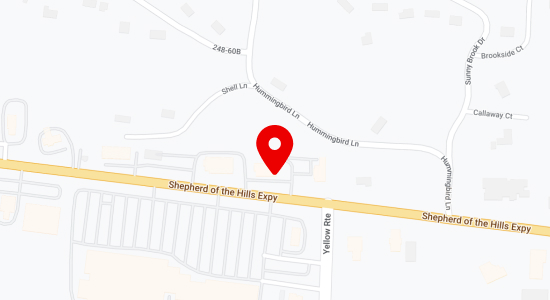
Please note that our law firm's address is for mail correspondence only. We do not accept in-office visits to this location. To schedule an appointment or consult with an attorney, please contact us via phone or email. Our contact information is readily available on our website. We look forward to hearing from you and strive to supply efficient and accessible legal services to our clients.
Branson, MO 65616