
Former Prosecutor
of 20 Years on
Your Side
of 20 Years on
Your Side









Damage to religious property can place a criminal investigation at the intersection of property law, civil-rights law, and, in some cases, federal jurisdiction. Conduct involving a church, synagogue, mosque, religious cemetery, sanctuary, or religious object may be investigated as institutional vandalism, property damage, arson, or a federal offense directed specifically at interference with religious property or religious exercise. Which laws apply depends on much more than the fact that something was damaged.
The reason the property was allegedly selected can become one of the most important issues in the case. Prosecutors may examine graffiti, statements, messages, social-media activity, surveillance footage, witness accounts, or prior interactions in an effort to establish that religion or another protected characteristic motivated the conduct. Other questions may involve the value of the damage, whether fire or explosives were used, whether worship was disrupted, and whether the facts satisfy the jurisdictional requirements of a federal statute.
Those overlapping issues can make the defense substantially different from an ordinary property-damage case. Scrivner Law Firm represents people facing serious criminal allegations in Taney County and throughout Southwest Missouri. Attorney Dayrell Scrivner has more than 30 years of legal experience, including approximately 20 years as a prosecutor and service as a Chief Assistant Prosecutor. He has also taught criminal law and criminal procedure. His experience on both sides of criminal cases can be particularly relevant when prosecutors are attempting to connect physical evidence, alleged motive, and multiple state or federal statutes into a single charging theory.
“Church hate crime” is a useful description, but it is not a single criminal charge. The facts may be evaluated under laws with different elements.
At the federal level, 18 U.S.C. § 247 is the principal statute directed specifically at damage to religious real property and interference with the free exercise of religion. Missouri separately criminalizes institutional vandalism under RSMo § 574.085. Missouri also has a hate-offense statute, RSMo § 557.035, that changes the classification of certain listed offenses when the State proves a qualifying bias motive.
If fire or an explosion is alleged, state or federal arson laws can increase the potential exposure. If a person was injured or prosecutors claim an attempt to cause bodily injury because of religion, 18 U.S.C. § 249 may also become relevant.
Section 247 is often associated with the Church Arson Prevention Act, but its reach is broader than burned churches.
Under § 247(a)(1), federal prosecutors may pursue a case when they claim that a person intentionally defaced, damaged, or destroyed religious real property, or attempted to do so, because of the religious character of the property. For this subsection, the offense must be in or affect interstate or foreign commerce.
Section 247(a)(2) prohibits intentionally obstructing, or attempting to obstruct, a person in the enjoyment of the free exercise of religious beliefs through force or threat of force. The statute expressly includes threats of force against religious real property and likewise requires the specified commerce connection.
Section 247(c) provides another route when religious real property is intentionally defaced, damaged, or destroyed because of the race, color, or ethnic characteristics of an individual associated with the property. That provision does not use the same interstate-commerce requirement found in § 247(a).
“Religious real property” includes churches, synagogues, mosques, religious cemeteries, other religious real property, fixtures or religious objects within a place of worship, and real property owned or leased by a nonprofit religiously affiliated organization.
A prosecution under § 247(a)(1) requires more than proof that the accused damaged property that happened to be religious. The government must connect the intentional damage or attempted damage to the religious character of the property.
Investigators may examine social-media activity, messages, search history, prior disputes, graffiti, symbols, statements, recorded conversations, location history, photographs, purchases, and witness testimony. Prosecutors may use that evidence to argue why the property was selected.
The defense may challenge both attribution and interpretation. An argument with a particular person is not necessarily proof that a building was targeted because it was religious. Offensive language does not automatically establish the motive required by the statute. Statements must also be placed in context and reliably connected to the accused.
The distinction between hostility toward an individual, a personal dispute, impulsive conduct, and an intent to target religious property can therefore become central.
RSMo § 574.085 applies when a person knowingly vandalizes, defaces, or otherwise damages specified property.
Covered locations include a church, synagogue, or other place used for religious worship or another religious purpose. The statute also reaches cemeteries and certain schools, community centers, hospitals, clinics, and other facilities owned and operated by religious or sectarian groups, as well as adjacent grounds and personal property contained within covered institutions.
Institutional vandalism is generally a class A misdemeanor. When property damage is at least $750, it is a class E felony. When damage exceeds $5,000, it is a class D felony. The statute treats repair cost or, when necessary, replacement cost as part of the damage calculation.
Valuation can become a contested issue. Restoration, specialized materials, religious fixtures, smoke remediation, structural work, or replacement estimates may affect the classification, and the defense can examine whether the claimed amounts are properly attributable to the alleged conduct.
RSMo § 557.035 should not be treated as interchangeable with institutional vandalism. It applies to specific underlying crimes listed in the statute when the State alleges and proves that the offense was knowingly motivated because of race, color, religion, national origin, sex, sexual orientation, or disability of the victim or victims.
Two listed property offenses can be especially relevant. Under RSMo § 569.100, knowingly damaging another person’s property to an extent exceeding $750 can constitute first-degree property damage. When the qualifying offense is knowingly motivated because of religion or another protected characteristic, § 557.035 permits it to be charged as a class D felony.
RSMo § 569.120 includes knowingly damaging another person’s property as second-degree property damage. When that listed form of the offense is knowingly motivated because of a protected characteristic, § 557.035 provides for a class E felony.
The same incident may therefore lead prosecutors to consider institutional vandalism, property damage, a hate-offense theory, or multiple counts depending on the alleged facts.
Under Missouri law, RSMo § 569.050 defines second-degree arson to include knowingly damaging a building or inhabitable structure by starting a fire or causing an explosion. It is generally a class D felony, but becomes a class B felony if serious physical injury or death results.
RSMo § 569.040 addresses first-degree arson when, among other circumstances, a person knowingly damages a building or inhabitable structure by fire or explosion while another person is present or nearby and recklessly places that person in danger of death or serious physical injury. It is generally a class B felony and can become a class A felony when serious physical injury or death results.
Federal prosecutors may also evaluate 18 U.S.C. § 844(i), which applies to malicious damage or attempted damage by fire or explosive to property used in interstate or foreign commerce or in an activity affecting that commerce. The basic penalty is five to 20 years, with greater exposure when injury or death results. Whether a particular religious building satisfies the commerce element is fact-specific and should not be assumed merely because it is a house of worship.
Section 844(h) can add a consecutive prison term when fire or an explosive is used to commit a separate federal felony, including a qualifying civil-rights offense.
18 U.S.C. § 249, the federal hate-crime statute, is related but different. It focuses on willfully causing bodily injury, or attempting to cause bodily injury through specified dangerous means, because of protected characteristics that include religion. Property damage alone does not automatically satisfy § 249.
Another related law, 18 U.S.C. § 248, protects religious exercise at places of worship. It prohibits certain uses of force, threats of force, or physical obstruction against people exercising religious freedom and also addresses intentional damage or destruction of property at a place of religious worship. Depending on the facts, prosecutors may examine § 248 alongside § 247 rather than relying on the general label “hate crime.”
Religious-property cases can combine physical evidence with extensive digital records. Investigators may collect surveillance video, fingerprints, DNA, paint or accelerant evidence, fire-scene analysis, vehicle records, location data, account records, messages, photographs, and internet activity.
Important defense questions may include:
The analysis should begin with the elements of each charge and the evidence offered to prove them, not with the emotional label attached to the allegation.
Section 247 uses graduated penalties. In cases outside an aggravated category, imprisonment can be up to one year. If property damage or destruction exceeds $5,000, the maximum can reach three years.
Certain violations involving bodily injury or the use, attempted use, or threatened use of a dangerous weapon, explosives, or fire can carry up to 20 years. If bodily injury results and the violation is committed by fire or explosive, the maximum can reach 40 years. Cases involving death, attempted killing, kidnapping, or aggravated sexual abuse carry still more severe exposure.
A § 247 prosecution also requires written certification by the Attorney General or a designee that federal prosecution is in the public interest and necessary to secure substantial justice.
For comparison, Missouri generally authorizes up to seven years for a class D felony, up to four years for a class E felony, up to one year for a class A misdemeanor, and up to six months for a class B misdemeanor. The actual sentencing analysis can depend on the offense, criminal history, concurrent or consecutive sentencing rules, and other statutory considerations.
A religious-property case may require the defense to address identity, intent, motive, causation, damage valuation, the meaning of communications, forensic reliability, federal jurisdiction, and whether prosecutors can prove that religion was the reason for the alleged conduct when the charged statute requires that showing.
Searches of phones or accounts, statements made during questioning, warrants, expert fire conclusions, and the interaction of overlapping counts may also need close review.
Dayrell Scrivner’s experience as both a criminal defense attorney and former prosecutor can help in evaluating how the government may assemble those separate facts into a charging theory. Scrivner Law Firm examines what the prosecution must prove, how the evidence was developed, and which legal or factual issues may affect the defense.
An investigation involving damage to a church or other religious property can become serious quickly, particularly when law enforcement believes the property was targeted because of its religious character or that fire, threats, or other aggravating circumstances were involved. Investigators may be reviewing surveillance footage, digital communications, physical evidence, and statements while prosecutors determine whether to pursue Missouri charges, federal charges, or both. Having a defense attorney involved early provides an opportunity to protect your rights and begin evaluating the evidence from the defense side.
Attorney Dayrell Scrivner brings experience as both a former prosecutor and criminal defense lawyer to serious criminal cases. If you are being investigated or have already been charged in connection with damage to a church or other religious property, contact Scrivner Law Firm to discuss the allegations, the potential consequences, and the options available for your defense. Submit the firm’s online contact form to schedule a consultation.
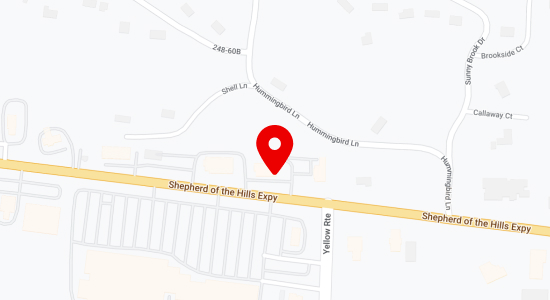
Please note that our law firm's address is for mail correspondence only. We do not accept in-office visits to this location. To schedule an appointment or consult with an attorney, please contact us via phone or email. Our contact information is readily available on our website. We look forward to hearing from you and strive to supply efficient and accessible legal services to our clients.
Branson, MO 65616