
Former Prosecutor
of 20 Years on
Your Side
of 20 Years on
Your Side









A masked-intimidation investigation can depend heavily on what happened before, during, and after a confrontation. Video may show a covered face but not explain why it was covered. Witnesses may describe threatening conduct without agreeing on who said or did what. Messages, clothing, surveillance footage, and statements made after the incident may then be used to argue that concealment was deliberate and connected to an effort to frighten another person.
Missouri law requires more than those circumstances alone. Under the masked intimidation statute, prosecutors must establish qualifying harassment, intimidation, or threats, concealment of the face for the purpose of hiding identity, and an intent to place another person in reasonable fear for physical safety. The statute also recognizes legitimate reasons for wearing face coverings and expressly preserves constitutionally protected activity.
For defendants in Taney County and elsewhere in Southwest Missouri, those requirements make the details of the investigation particularly important. Scrivner Law Firm is led by criminal defense attorney Dayrell Scrivner, who has more than 30 years of legal experience and approximately two decades of prior prosecutorial experience. His background can assist in examining whether the State can prove the purpose behind the face covering, attribute the alleged conduct to the accused, and satisfy each element of the felony charge.
RSMo 565.097 creates the Missouri offense of masked intimidation. Under the statute, a person commits the offense when the person intentionally harasses, intimidates, or threatens another person while hiding or concealing the person’s face with a mask, hood, article, or device for the purpose of concealing identity and with the intent to place another person in reasonable fear for physical safety.
That language creates several distinct questions. Prosecutors may need to prove:
Wearing a face covering during a heated exchange is not necessarily enough. The reason for the covering, the words used, the surrounding conduct, and the accused person’s intent all become part of the analysis.
Section 565.097 supplies its own definitions for the three types of conduct that can support the charge. Those definitions can determine which theory the State is actually pursuing.
For purposes of the statute, “harass” means engaging in a knowing and willful pattern of conduct directed at a particular person or group that is intended to cause reasonable fear for safety or substantial emotional distress. A harassment theory therefore raises questions about whether there was truly a pattern, who was targeted, what the separate acts were, and what those acts were intended to accomplish.
“Intimidate” is defined differently. It involves willfully and substantially interfering, through threats, intimidation, or coercion, with another person’s exercise or enjoyment of rights secured by federal or Missouri law because of that person’s actual or perceived race, color, religion, national origin, ethnicity, sex, gender, gender identity or expression, sexual orientation, or disability. Under this branch of the statute, both the alleged interference with legal rights and the alleged discriminatory reason can become central issues.
“Threaten” is defined as communication with the clear intention to cause imminent physical injury to another person. That definition makes timing and context especially important. Angry, insulting, or offensive language does not automatically satisfy a statutory requirement directed at an intention to cause imminent physical injury.
A defense should therefore identify the prosecution’s exact theory rather than treating “harassment,” “intimidation,” and “threat” as three labels for the same conduct.
A person can cover their face for countless lawful reasons. Section 565.097 focuses on concealment done for the purpose of concealing identity while the prohibited conduct occurs.
That purpose requirement can create a major evidentiary issue. A face covering may already have been in place because of weather, work, health, religion, a costume event, or another lawful reason unrelated to anonymity.
The prosecution may try to prove purpose through statements, surveillance footage, the timing of when a covering was put on or removed, efforts to avoid cameras, coordinated conduct with others, messages exchanged before the incident, or evidence that clothing was selected to make identification more difficult.
The defense can examine the same evidence for a different explanation. The statutory question is not merely whether a witness could see the accused person’s face. It is why the face was concealed.
The masked intimidation statute identifies circumstances in which it does not apply when the person is covering the face for a purpose other than the prohibited purpose described in the offense.
The listed situations include masks or face coverings associated with holidays, celebrations, or costume events; occupational or professional safety; protection from weather or participation in winter sports; artistic or theatrical productions; gas masks or other protective coverings used for emergencies or emergency drills; masks used to protect the wearer’s health or the health of others, including limiting airborne illness; and garb worn for religious purposes.
The statute also states that it should not be construed to diminish or infringe rights protected by the First Amendment to the United States Constitution. That provision can matter when an accusation arises from a protest, demonstration, political gathering, religious activity, expressive association, or other setting involving protected speech or assembly.
The offense requires an intent to place another person in reasonable fear for physical safety. That is more specific than simply causing discomfort, embarrassment, anger, offense, or social pressure.
Evidence surrounding that issue may include the words allegedly used, physical distance between the parties, gestures, movement toward or away from another person, display or possession of an object alleged to be a weapon, the number of people involved, prior interactions, witness reactions, recorded video, emergency calls, and statements made immediately after the incident.
Context can cut both ways. Conduct that seems threatening in a written report may look different on uninterrupted video. A witness may have heard only part of an exchange, and a statement or gesture can change meaning when the surrounding events are considered.
Because the statute contains both an intent requirement and an objective reference to reasonable fear, the defense should examine what the accused allegedly intended as well as what the surrounding circumstances would support.
Masked intimidation is a felony offense from the first conviction. Under RSMo 565.097, a first offense is a class E felony, a second offense is a class D felony, and a third or subsequent offense is a class C felony.
Missouri’s general sentencing statute, RSMo 558.011, authorizes imprisonment of up to four years for a class E felony, up to seven years for a class D felony, and from three to ten years for a class C felony. RSMo 558.002 generally permits a fine of up to $10,000 for a class C, D, or E felony, subject to the statute’s additional provisions.
The penalty structure makes prior convictions important. A defense lawyer should verify whether an alleged prior offense legally qualifies, whether identity has been established, and whether the charging document correctly states the level of the current offense.
RSMo 557.035, Missouri’s hate-offense statute, expressly includes masked intimidation among the offenses that may be charged under that section when the State believes the conduct was knowingly motivated because of the victim’s race, color, religion, national origin, sex, sexual orientation, or disability.
That allegation creates a separate motive issue. Investigators may examine statements, social-media activity, messages, symbols, prior communications, or evidence about why a person or location was selected.
The characteristic list in RSMo 557.035 should not simply be assumed to be identical to every term appearing in RSMo 565.097. Careful statutory analysis matters, particularly when the prosecution attempts to combine a masked intimidation count with a hate-offense theory.
An incident investigated as masked intimidation may also be reviewed under other criminal statutes. Which statutes apply depends on the conduct alleged rather than the label used in a police report.
RSMo 565.090 addresses first-degree harassment when a person, without good cause, engages in an act with the purpose of causing emotional distress and the act actually causes emotional distress. RSMo 565.056 addresses several forms of fourth-degree assault, including purposely placing another person in apprehension of immediate physical injury. RSMo 565.225 addresses first-degree stalking and may become relevant when an accusation involves a course of conduct, following, or threats.
If an incident also involves damage to a church, synagogue, cemetery, religious school, public monument, or another institution specified by statute, RSMo 574.085 concerning institutional vandalism may become relevant.
These statutes have different elements, and each proposed count should be tested independently.
Because RSMo 565.097 requires proof of conduct, identity concealment, purpose, and intent, evidence from before and after the confrontation can be important. A defense investigation may focus on surveillance or body-camera footage, cellphone recordings, messages, social-media activity, location data, witness statements, seized clothing, warrant materials, and device evidence.
Continuity matters. A short clip may omit the exchange that explains a reaction; a still image may show a covered face without showing when the covering was put on; and a screenshot may omit surrounding messages.
The defense should also scrutinize attribution. If several people wore similar clothing, prosecutors still must connect the charged conduct to the accused. Group presence does not by itself establish that every person shared the same words, purpose, or intent.
A masked intimidation defense can involve multiple lines of analysis rather than a single factual denial. Depending on the circumstances, important questions may include whether the accused was correctly identified; whether the face covering was actually intended to conceal identity; whether the alleged conduct fits the statutory definition of harass, intimidate, or threaten; whether the required intent to cause reasonable fear for physical safety can be proven; whether a listed lawful-use provision applies; and whether protected expression is being confused with criminal conduct.
The defense may also examine whether evidence was obtained through a lawful stop, arrest, search, device seizure, or warrant. If prosecutors rely on online activity to establish motive or identity, the connection between an account and a particular person may need to be proven rather than assumed.
Because this is a felony statute, seemingly small distinctions can materially change the case. The defense should force the prosecution to prove each statutory requirement rather than allowing the presence of a mask to dominate the narrative.
Masked intimidation cases can require prosecutors to assemble an inference about why a person covered their face, what they intended by their conduct, what another person reasonably feared, and whether the conduct fits one of three separately defined statutory categories.
Attorney Dayrell Scrivner spent approximately two decades as a prosecutor and served for many years as a Chief Assistant Prosecutor before focusing his practice on criminal defense. He has also taught criminal law and criminal procedure as a Missouri-licensed specialist instructor. That experience can help when evaluating how police and prosecutors may construct an intent-based felony case from witness accounts, video, statements, digital evidence, and surrounding circumstances.
Scrivner Law Firm represents criminal defendants in Taney County and throughout surrounding Southwest Missouri communities, including areas of Stone and Christian Counties.
A masked intimidation charge can turn on details that may not be obvious from the initial accusation. Whether the face covering was actually used to conceal identity, whether the alleged words or conduct meet the statutory definition of harassment, intimidation, or threats, and whether the evidence supports an intent to cause reasonable fear for physical safety are all questions that may require close review.
Scrivner Law Firm represents defendants facing felony allegations in Taney County and throughout Southwest Missouri. Criminal defense attorney and former prosecutor Dayrell Scrivner can examine the evidence, the circumstances surrounding the face covering, the prosecution’s theory of intent, and any additional charges arising from the incident. If you are facing a masked intimidation investigation or criminal charge, contact Scrivner Law Firm through the online contact form to discuss the case and the defense options that may be available.
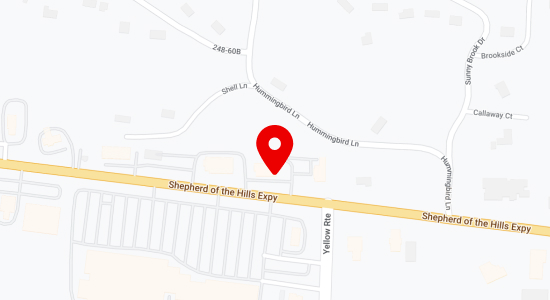
Please note that our law firm's address is for mail correspondence only. We do not accept in-office visits to this location. To schedule an appointment or consult with an attorney, please contact us via phone or email. Our contact information is readily available on our website. We look forward to hearing from you and strive to supply efficient and accessible legal services to our clients.
Branson, MO 65616