
Former Prosecutor
of 20 Years on
Your Side
of 20 Years on
Your Side









A bias-motivated criminal case often develops on two tracks at the same time. One concerns what allegedly happened: a confrontation, threatening message, physical contact, property damage, trespass, harassment, or display of a weapon. The second concerns why prosecutors believe it happened. A racial slur, reference to national origin, online post, symbol, choice of target, or statement made before or after the incident may be used to argue that an otherwise separate offense was knowingly motivated by bias.
Missouri law makes that second question important, but not in the way the phrase “ethnic intimidation” may suggest. There is no single Missouri offense that automatically applies whenever racial or ethnic hostility is alleged. Instead, prosecutors may rely on the state’s hate-offense statute when a qualifying underlying crime is allegedly motivated by a protected characteristic, while separate statutes govern conduct such as harassment, assault, masked intimidation, trespass, property damage, and weapons offenses.
That structure can make the prosecution’s theory unusually dependent on context. Investigators may try to connect words, digital communications, prior interactions, witness accounts, or the selection of a particular person or property to the accused person’s motive. Scrivner Law Firm represents defendants facing serious criminal allegations in Taney County and elsewhere in Southwest Missouri. Former prosecutor Dayrell Scrivner brings more than 30 years of legal experience to examining both sides of that theory: whether the underlying offense can be proved and whether the evidence actually establishes the bias motivation prosecutors claim.
Missouri Revised Statutes Section 557.035 is the central state provision for hate offenses. It does not apply to every crime and does not create a general rule that any offense becomes a hate crime whenever bias is alleged. Instead, the statute identifies particular underlying offenses and provides different felony classifications when the State pleads and proves that the offense was knowingly motivated because of the race, color, religion, national origin, sex, sexual orientation, or disability of the victim or victims.
For a charge described as ethnic intimidation, race, color, or national origin may be the most relevant statutory categories. “Ethnicity” itself is not separately listed in Section 557.035. Prosecutors therefore must work within the actual wording of the statute rather than relying solely on a broad characterization of the incident as ethnic or racial harassment.
The phrase “knowingly motivated” is significant. Evidence that people exchanged insults, argued about cultural differences, or used offensive language does not automatically establish that a covered offense occurred because of a protected characteristic. The State still must connect the alleged bias to an underlying offense listed in Section 557.035.
The hate-offense statute groups specified underlying crimes into classifications that can substantially change the exposure in a criminal case.
Certain offenses may be charged as a class D felony when the qualifying bias motivation is alleged and proved. These include third-degree assault under Section 565.054, first-degree harassment under Section 565.090, a specified form of first-degree property damage under Section 569.100, and several forms of unlawful use of weapons under Section 571.030.
Other specified conduct may be charged as a class E felony. This group includes fourth-degree assault under Section 565.056, tampering with another person’s property for the purpose of causing substantial inconvenience under Section 569.090.1(1), masked intimidation under Section 565.097, knowing property damage under Section 569.120.1(1), and first-degree trespass under Section 569.140.
A class D felony can carry up to seven years of imprisonment under Missouri’s general sentencing statute, while a class E felony can carry up to four years. The actual sentence depends on the charge, criminal history, applicable sentencing provisions, and case-specific circumstances.
Harassment allegations require attention to which Missouri harassment statute is actually being used.
Section 565.090 defines first-degree harassment. A person commits that offense when, without good cause, the person engages in an act with the purpose of causing emotional distress to another person and the act actually causes emotional distress. First-degree harassment is ordinarily a class E felony. Because Section 565.090 is specifically listed in the hate-offense statute, a qualifying bias motivation can allow the State to charge the conduct under Section 557.035 as a class D felony.
Section 565.091 addresses second-degree harassment. It generally applies when a person, without good cause, engages in an act with the purpose of causing emotional distress, without the additional requirement that the victim actually suffer emotional distress. The offense is ordinarily a class A misdemeanor, subject to increased classification in certain repeat-offense circumstances.
Importantly, Section 565.091 is not listed in Section 557.035. A prosecutor therefore cannot use the general hate-offense enhancement for second-degree harassment in the same way the statute permits for first-degree harassment.
Bias cases often contain disturbing or offensive words. Those words can become evidence of motive, identity, intent, or context, but criminal liability still depends on conduct that falls within a valid criminal statute.
That distinction matters because the First Amendment generally protects speech even when it is hateful, insulting, or deeply offensive. Criminal law can reach conduct such as true threats, assault, intimidation satisfying a criminal statute, qualifying harassment, or property crimes. The government may also use statements as evidence that an independently criminal act was committed because of race, national origin, or another protected characteristic.
For the defense, the issue may be less about whether a statement was objectionable and more about what it legally proves. Was it made by the accused? Was it serious or sarcastic? Was it directed at the alleged victim? Was it made before the incident or reconstructed afterward? Does it establish motive, or does the surrounding conversation point to a different reason for the dispute?
A screenshot or quoted phrase may not show tone, earlier messages, deleted content, participant identities, or the larger dispute. Context can be central when prosecutors attempt to use speech as proof of bias motive.
Missouri Section 565.097 creates the offense of masked intimidation. It applies when a person intentionally harasses, intimidates, or threatens another person while concealing the face with a mask, hood, or other article for the purpose of hiding identity and with the intent to place another person in reasonable fear for physical safety.
The statute contains its own definitions. “Intimidate” includes willfully and substantially interfering, through threats, intimidation, or coercion, with another person’s exercise or enjoyment of rights secured by federal or state law because of an actual or perceived protected characteristic. That definition expressly includes ethnicity, along with race, color, religion, national origin, and other listed characteristics.
A first masked-intimidation offense is a class E felony, with higher classifications possible for repeat offenses. Section 557.035 also lists masked intimidation among offenses that may fall within Missouri’s hate-offense framework when the separate motivational requirements of the enhancement statute are satisfied.
The protected-characteristic language in the masked-intimidation statute is not identical to the language in the general hate-offense statute. The charging document and facts must therefore be evaluated under the specific elements of each provision being alleged.
A bias case does not have to begin with harassment. The underlying accusation may instead involve physical contact, property, unlawful entry, or a weapon.
Third-degree assault under Section 565.054 applies when a person knowingly causes physical injury to another. Fourth-degree assault under Section 565.056 covers several forms of conduct, including attempting or recklessly causing physical injury or pain, purposely placing another person in apprehension of immediate physical injury, and certain offensive or provocative physical contact.
Property allegations can involve first-degree property damage under Section 569.100 when the statutory requirements are met, or second-degree property damage under Section 569.120 for knowingly damaging another person’s property. First-degree trespass under Section 569.140 can also become part of a hate-offense allegation when a person knowingly enters or remains unlawfully in a qualifying building or on qualifying real property.
Section 571.030 covers multiple forms of unlawful use of weapons. Section 557.035 references specific subdivisions of that law, so the precise weapon allegation matters before a hate-offense classification can be evaluated.
Motive is rarely proved by a formal admission. Investigators may instead assemble a narrative from messages, social-media accounts, witness statements, video, symbols, graffiti, prior disputes, photographs, or statements allegedly made during the incident.
The defense should test each link. A post may not belong to the accused. A witness may have heard only part of an argument. A phrase may have been repeated rather than adopted. A longstanding personal or business conflict may offer a non-bias explanation for why two people were in conflict.
The legal question is not simply whether prosecutors can produce evidence suggesting prejudice. Under Section 557.035, they must prove the required motivation in connection with an offense covered by the statute.
Bias-motivated harassment investigations increasingly depend on phones, messaging platforms, social media, cloud accounts, and surveillance recordings. Those sources can support a prosecution, but they can also expose missing context.
Account ownership must be distinguished from authorship. A device may be used by more than one person. Screenshots may omit timestamps or earlier messages. Usernames can be copied. Posts can be edited. Group conversations can make it difficult to determine who authored a statement. Location data and video may contradict witness recollections.
A defense review may focus on preservation, authentication, metadata, search warrants, consent searches, account records, and the sequence in which digital evidence was collected. Constitutional issues can arise when police search a phone, home, vehicle, or online account without proper legal authority.
Some allegations can also attract federal attention. Under 18 U.S.C. § 249, federal law criminalizes specified bias-motivated violence, including willfully causing bodily injury because of actual or perceived race, color, religion, or national origin. Other protected categories are covered under a separate portion of the statute subject to additional jurisdictional requirements. Section 249 is directed at violent conduct and certain attempts involving specified dangerous means; it is not a general federal prohibition on offensive speech.
Another federal statute, 18 U.S.C. § 245, can apply when force or the threat of force is used to willfully injure, intimidate, or interfere with a person because of race, color, religion, or national origin and because that person is participating in certain federally protected activities. Those activities can include public education, employment, jury service, interstate travel, and use of public accommodations.
Federal involvement can change the investigation substantially, particularly when federal agents, digital warrants, interstate evidence, or parallel state and federal theories are involved.
Terms such as “hate crime,” “ethnic intimidation,” and “bias-motivated harassment” can influence how an accusation is viewed before the legal elements have been tested. A defense analysis should break the case back into its component parts.
That means asking whether the underlying offense can be proved, whether the accused was correctly identified, whether the required mental state existed, and whether the State can prove that a protected characteristic actually motivated the conduct. It also means testing the reliability and admissibility of statements, digital records, photographs, videos, and prior-act evidence offered to establish motive.
Dayrell Scrivner’s experience as a former prosecutor can provide a useful perspective when evaluating how the State may try to organize those pieces into one narrative. The defense can then focus on where the evidence does not support the elements, where context has been omitted, and where constitutional or evidentiary challenges may limit what the prosecution can use.
A criminal investigation involving allegations of racial, ethnic, or other bias can become complicated quickly. Police and prosecutors may be reviewing messages, social-media activity, witness statements, video, prior interactions, and the circumstances surrounding the alleged offense in an effort to establish both what happened and why it happened. Having a defense attorney involved early can help protect your rights and begin evaluating whether the evidence actually supports the underlying charge and the claimed bias motivation.
Attorney Dayrell Scrivner brings experience as both a former prosecutor and criminal defense lawyer to serious criminal cases. If you are being investigated or have already been charged with harassment, assault, property damage, trespass, masked intimidation, or another offense involving an alleged bias motive, contact Scrivner Law Firm to discuss the allegations, the potential consequences, and the options available for your defense.
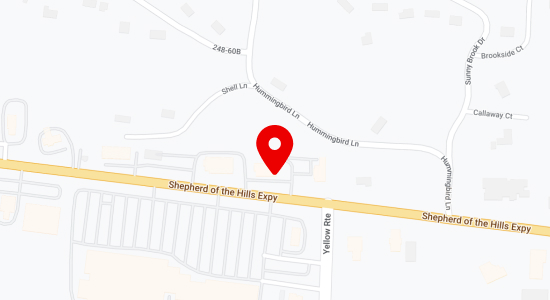
Please note that our law firm's address is for mail correspondence only. We do not accept in-office visits to this location. To schedule an appointment or consult with an attorney, please contact us via phone or email. Our contact information is readily available on our website. We look forward to hearing from you and strive to supply efficient and accessible legal services to our clients.
Branson, MO 65616