
Former Prosecutor
of 20 Years on
Your Side
of 20 Years on
Your Side









A federal deprivation-of-rights allegation can arise when a person accused of exercising government authority is claimed to have intentionally violated someone’s constitutional or federally protected rights. The conduct may involve an arrest, use of force, detention, search, official interview, correctional setting, public-school incident, or another situation in which prosecutors contend that governmental power was used improperly.
A prosecution under 18 U.S.C. § 242 involves more than showing that an official made a poor decision, violated workplace policy, or committed an act later determined to be unlawful. Federal prosecutors must address whether the accused acted under color of law, what specific federal right was allegedly deprived, and whether the conduct was willful. Depending on the allegations, the case may also involve body-camera footage, official reports, medical evidence, witness accounts, training records, communications, and questions about bodily injury or the use of a dangerous weapon.
Scrivner Law Firm represents people facing serious criminal accusations in Taney County and surrounding Southwest Missouri communities, including federal criminal matters. Attorney Dayrell Scrivner brings more than 30 years of legal experience, including approximately 20 years as a prosecutor and service as a Chief Assistant Prosecutor, to evaluating how the government developed its case, whether the evidence supports each required element, and what issues may be raised in the defense.
The phrase “under color of law” is broader than conduct that falls within an official’s lawful duties. A person may be accused of acting under color of law even when the alleged conduct exceeded legitimate authority, so long as government power, position, access, or apparent authority was used or invoked in carrying it out.
Police officers, sheriff’s deputies, corrections officers, and other law-enforcement personnel are common subjects of Section 242 cases, but the statute is not limited to them. Depending on the circumstances, judges, prosecutors, public employees, public-school personnel, or others exercising governmental authority can also fall within the statute.
This makes the source and use of authority a major defense question. A federal investigation may examine whether the accused was on duty, wearing a uniform, displaying a badge, using government equipment, accessing a facility through an official position, issuing commands, invoking arrest powers, controlling a detainee, or otherwise using authority that would not have existed in a purely private interaction.
The defense may therefore need to distinguish between private conduct and conduct genuinely connected to official power. The job title alone does not answer that question.
Section 242 does not create a general federal crime of unfair treatment or official misconduct. The prosecution must connect the alleged conduct to a right, privilege, or immunity secured or protected by the Constitution or federal law.
The right at issue depends on the setting. A case involving an arrest or seizure may focus on Fourth Amendment protections. A case involving a convicted prisoner may raise Eighth Amendment issues. Other prosecutions may involve due process, equal protection, freedom of speech, or another established federal right.
Federal civil rights cases have included allegations involving excessive force, unlawful arrests, physical or sexual assaults, evidence planting, theft by officials, and failures to protect people in custody. But the label placed on the conduct is not enough. The prosecution still has to establish the specific protected right and show how the accused person’s actions deprived the alleged victim of that right.
Section 242 protects “any person,” not only United States citizens. It also does not require the government to prove that every prosecution was motivated by racial hostility or another form of discriminatory animus. Although the statutory text separately addresses certain discriminatory punishments based on alienage, color, or race, a general deprivation-of-rights prosecution can proceed without alleging that kind of bias.
One of the most important issues in a color-of-law prosecution is willfulness.
Federal prosecutors are not permitted to obtain a Section 242 conviction merely by showing that an official made a mistake or that a court, looking back at the event, would find the conduct unconstitutional. The government must prove that the accused acted willfully.
That mental-state requirement can make the surrounding circumstances extremely important. Investigators may examine training, written policies, prior instructions, commands given during the incident, statements made before or after the event, reports, body-camera recordings, surveillance footage, witness testimony, medical evidence, and communications among officials. Prosecutors may use those materials to argue that the accused understood the limits of lawful authority and deliberately crossed them.
The defense can examine the same record differently. Training may be incomplete or ambiguous. A rapidly developing event may look different on video than it did to a person making decisions in real time. Witness accounts may conflict. A report may omit details without being intentionally false. An officer or official may have misunderstood facts, perceived a threat, relied on information from another person, or acted for a legitimate purpose even if the result is later challenged.
The criminal question is not resolved simply by proving that a different decision could have been made.
Section 242 contains escalating punishment levels based on what allegedly occurred during the deprivation.
For the base offense, the statute authorizes a fine, imprisonment for up to one year, or both. If bodily injury results, or if the acts include the use, attempted use, or threatened use of a dangerous weapon, explosives, or fire, the maximum imprisonment increases to 10 years.
The most serious tier applies if death results or if the acts include kidnapping or attempted kidnapping, aggravated sexual abuse or attempted aggravated sexual abuse, or an attempt to kill. In those circumstances, Section 242 authorizes imprisonment for any term of years or for life, and the statutory text also permits a death sentence.
These aggravating facts are therefore not secondary details. Questions involving causation, the existence and degree of bodily injury, whether an object qualifies as a dangerous weapon in the circumstances, and what conduct actually occurred can materially affect the level of federal exposure.
By the time federal agents become involved, the investigation may include far more than the event that prompted the complaint.
Records can become central. Depending on the case, investigators may seek dispatch logs, body-camera recordings, jail video, booking records, incident reports, use-of-force reports, medical records, photographs, personnel records, training materials, text messages, emails, access logs, internal investigative files, and statements from other officials or witnesses.
The sequence of events matters as much as the individual pieces of evidence. A report written minutes later may be compared with video. A supervisor’s instructions may be compared with what happened on scene. Medical findings may be used to test competing descriptions of force. Communications among officials may become evidence of intent, coordination, or an attempt to explain the incident after the fact.
For the defense, that means reviewing both what the record contains and what it does not contain. Missing context, camera angles, gaps in recordings, uncertain timing, inconsistent recollections, and assumptions about an official’s authority can all affect the prosecution’s reconstruction.
It is also important to treat a federal inquiry carefully. Statements made to federal investigators can create separate legal problems if prosecutors believe they were materially false, and alteration, destruction, concealment, or falsification of records can raise obstruction issues.
A color-of-law investigation may involve statutes beyond 18 U.S.C. § 242.
18 U.S.C. § 241 — Conspiracy Against Rights. Section 241 applies when two or more people conspire to injure, oppress, threaten, or intimidate a person in the exercise or enjoyment of a right secured by the Constitution or federal law. A case involving alleged coordination among officials may therefore be investigated under both Sections 241 and 242.
18 U.S.C. § 245 — Federally Protected Activities. Section 245 addresses certain uses or threats of force that injure, intimidate, or interfere with people participating in specifically protected activities, including voting, federal programs, jury service, certain employment, public education, travel, and other activities identified by the statute.
18 U.S.C. § 250 — Civil Rights Offenses Involving Sexual Misconduct. When sexual misconduct is alleged during the commission of an offense under the federal civil rights chapter, Section 250 can create additional criminal exposure and separate penalty provisions.
18 U.S.C. § 1001 — False Statements. Knowingly and willfully making a materially false statement or representation in a matter within federal jurisdiction can itself become a federal charge. This is one reason an interview with federal agents should not be treated as an informal conversation.
18 U.S.C. § 1519 — Destruction, Alteration, or Falsification of Records. Section 1519 can apply to knowingly altering, destroying, concealing, covering up, or falsifying records with the intent to impede or influence a matter within federal jurisdiction.
There may also be a separate civil claim under 42 U.S.C. § 1983, which authorizes civil actions for certain deprivations of federal rights committed under color of state law. A Section 1983 lawsuit and a Section 242 criminal prosecution are different proceedings with different purposes, burdens, and consequences.
A strong defense analysis should not begin by accepting the government’s description of the event. It should break the accusation into the questions federal prosecutors must actually prove.
Was the accused acting under color of law at the relevant time? What government authority was supposedly used? Which federal right does the indictment or investigation identify? Was that right clearly implicated by the facts? What evidence supports the claim of willfulness? Are witness accounts consistent with objective recordings and records? Did the alleged victim suffer bodily injury, and if so, what caused it? Is the government attempting to infer criminal intent from a policy violation, incomplete report, or disputed judgment call?
These cases can also require careful separation of multiple legal standards. Department policy does not define the Constitution. Civil liability does not automatically establish criminal guilt. An administrative finding does not eliminate the government’s burden to prove every element of a federal offense beyond a reasonable doubt.
Dayrell Scrivner’s prosecutorial background gives Scrivner Law Firm experience evaluating how charging decisions are developed and how prosecutors may use witness testimony, official records, training evidence, and alleged inconsistencies to construct a theory of criminal intent. For a person whose career, liberty, and reputation may all be implicated by a federal civil rights accusation, that prosecutorial perspective can help frame the defense around the actual elements and evidence rather than the allegation alone.
A federal civil rights investigation can intensify quickly once agents begin reviewing body-camera footage, official reports, medical evidence, training records, witness statements, and communications surrounding the alleged incident. Getting a defense attorney involved early can help identify the constitutional and factual issues at the center of the investigation, preserve important evidence, and evaluate whether the government can actually prove a willful deprivation of federal rights.
Attorney Dayrell Scrivner brings experience as both a former prosecutor and criminal defense lawyer to serious federal criminal matters. If you are being investigated or have been charged with deprivation of civil rights under color of law, contact Scrivner Law Firm to discuss the circumstances, the allegations being made, and the options available for your defense.
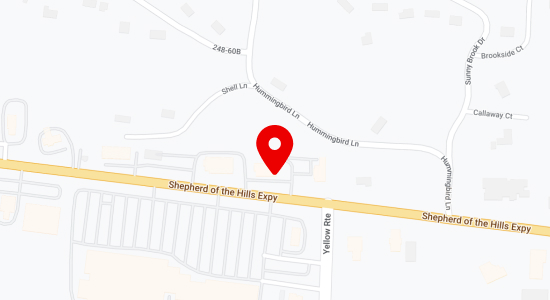
Please note that our law firm's address is for mail correspondence only. We do not accept in-office visits to this location. To schedule an appointment or consult with an attorney, please contact us via phone or email. Our contact information is readily available on our website. We look forward to hearing from you and strive to supply efficient and accessible legal services to our clients.
Branson, MO 65616