
Former Prosecutor
of 20 Years on
Your Side
of 20 Years on
Your Side







Allegations that you displayed or handled a firearm in a threatening or reckless manner can place you in immediate legal danger. Missouri takes any form of firearm misuse seriously, and a charge for brandishing a weapon can escalate quickly from a misunderstanding to a life-changing criminal case. Even if no one was injured and even if you never intended to frighten anyone, prosecutors often view these cases as significant public-safety concerns.
At Scrivner Law Firm, attorney Dayrell Scrivner uses his decades of experience as both a former prosecutor and defense lawyer to evaluate the accusations, uncover the facts, and protect clients from the harsh consequences that can follow a brandishing charge. Understanding how Missouri defines unlawful display of a firearm is essential if you want to protect your future and preserve your rights.
Missouri law does not use the word “brandishing” in the statutes. Instead, the conduct is prosecuted under other statutes that criminalize the unlawful exhibition of weapons, the use of a firearm in an angry or threatening manner, and actions that place others in fear of immediate harm. In many cases, prosecutors rely on section 571.030 RSMo, which prohibits exhibiting any weapon readily capable of lethal use in an angry or threatening manner in the presence of one or more persons.
Under section 571.030, a person commits unlawful use of a weapon if he or she knowingly exhibits a firearm or other lethal weapon in an angry or threatening way. That statute forms the backbone for “brandishing” cases, even though the term brandishing itself is not in the text. What matters is the behavior, the language used, the circumstances surrounding the display, and whether another person reasonably felt threatened.
Unlike some firearm offenses that require proof of possession alone, brandishing charges focus on conduct, intent, and the perception of bystanders. This makes witness credibility, context, body language, and the sequence of events central to the defense.
Brandishing allegations arise in many different scenarios. Some involve disputes between strangers in public places. Others come from arguments between family members or neighbors, misunderstandings in crowded spaces, or even self defense situations where the firearm was displayed without a shot being fired.
In general, the State must show that the person intentionally exhibited a firearm in a way that could reasonably be interpreted as threatening or aggressive. The display might involve pointing the gun at someone, raising it in a confrontational manner, taking it out during a heated argument, or handling it in a way that implies a willingness to use it. The statute does not require that the weapon be fired or even loaded. It also does not require a verbal threat.
Because of that broad definition, people are sometimes charged with brandishing even when they believe they were simply protecting themselves, trying to stop a situation from escalating, or checking a weapon with no ill intent. Understanding the finer points of intent and perception is essential when forming a defense.
Under section 571.030, unlawful exhibition of a weapon is generally classified as a class E felony in Missouri. A class E felony carries a potential sentence of up to 4 years in the Missouri Department of Corrections, along with possible fines. When prosecutors believe the behavior created a serious risk or involved additional aggravating factors, the charge can sometimes be elevated or accompanied by additional offenses such as assault, terroristic threats, or endangering the welfare of a child.
Even without jail time, a felony conviction can carry long term consequences. You may lose your right to possess any firearm, face difficulties obtaining employment or housing, or struggle with professional licensing and background checks. Courts may impose probation conditions such as anger management, substance evaluations, or restrictions on firearm ownership.
For clients who already have prior convictions, a brandishing case may also impact how prosecutors view the case and may result in enhanced sentencing recommendations. This is why it is crucial to involve a knowledgeable defense attorney early to prevent assumptions and to present the facts clearly.
Many brandishing cases start because someone displayed a firearm during a moment of danger or perceived danger. Missouri recognizes the right to defend yourself or your family when confronted with imminent harm. If you showed a firearm because you believed you faced a real, immediate threat, that context matters deeply.
Self defense can apply if:
Missouri’s self defense laws do not require you to wait until an attacker makes physical contact. The law also does not require retreat when you are in a place you have a lawful right to be. If your conduct fits within these boundaries, the display of a firearm may have been legally justified.
Brandishing charges often arise not because someone acted improperly, but because a witness misunderstood the situation or only saw part of it. An experienced defense lawyer can piece together the full context, gather video and witness accounts, and demonstrate that your actions were defensive, not aggressive.
Prosecutors often rely heavily on witnesses in brandishing cases. Yet these cases frequently involve flawed memories, inconsistent descriptions, and emotionally charged reactions. People may misinterpret gestures, exaggerate details, or confuse actions that happened quickly.
Witness recollections can be affected by stress, fear, or assumptions about who was the aggressor. In chaotic situations, different witnesses often give conflicting accounts. Part of building a strong defense is identifying these inconsistencies, comparing statements to physical evidence, and determining which witnesses truly observed what happened.
Attorney Dayrell Scrivner’s background as a former prosecutor is invaluable in this area. He understands how prosecutors evaluate witness reliability and how quickly a case can break down when key statements are shown to be inaccurate or incomplete. His experience gives defendants an important advantage when credibility issues exist.
Brandishing accusations occur in many everyday settings. Common examples include:
Because Missouri is a state with high rates of lawful firearm ownership, many people carry firearms for self defense. When conflicts happen in public places, even momentary exposure of a firearm can lead to accusations, especially if bystanders feel alarmed. A skilled defense attorney must explain the purpose of the firearm, the legality of its possession, and the context of the encounter.
In most brandishing prosecutions, the State attempts to prove:
The State does not need to show that the gun was loaded or that the accused verbally threatened anyone. Prosecutors often argue that the manner of holding or raising the firearm was enough to cause fear. This means that cases can hinge not on what you intended, but on how someone else interpreted the situation and how the State presents it.
This is why contextual facts matter. A defense attorney may challenge whether the display was knowing, whether it was actually threatening, whether witnesses misinterpreted the situation, or whether the firearm was handled safely and briefly without any aggressive meaning.
There is no single defense that works for every case. However, several strategies are commonly effective depending on the circumstances.
Attorney Scrivner approaches each case strategically rather than relying on assumptions. His prosecution background gives him sharp insight into how the State builds these cases and how to challenge weak or unsupported evidence.
A brandishing accusation can sometimes lead to additional criminal charges, depending on what the police believe happened. These may include:
These additional charges can increase the potential penalties significantly. Armed criminal action, in particular, carries mandatory prison time in Missouri. This makes early legal intervention essential so the defense can control the narrative and prevent the situation from snowballing.
If you are confronted with accusations of unlawfully displaying a weapon, you should take steps immediately to protect yourself. Avoid making statements to the police without legal counsel. Even well intentioned explanations can be misinterpreted or used to support the State’s theory of the case.
Preserve any evidence that may help establish the context of the encounter. Save text messages, video recordings, photographs, or anything that documents the situation before the police arrived. Identify potential witnesses who saw or heard what actually happened. Contact an attorney as quickly as possible so that the defense can begin investigating before memories fade or evidence disappears.
Brandishing cases often unfold quickly, and police may only hear one version of events. The earlier a defense attorney becomes involved, the more effectively they can ensure your side of the story is accurately presented.
Attorney Dayrell Scrivner brings extensive experience in weapon related cases from both sides of the courtroom. As a former prosecutor for nearly two decades in Stone County, he handled countless cases involving firearms, threats, and confrontational situations. He now uses that background to defend clients across Taney County, Stone County, Christian County, and the surrounding Missouri region.
In addition to his courtroom experience, Mr. Scrivner serves as a Missouri state licensed instructor in criminal law and criminal procedure for law enforcement academies and universities. This gives him a deep understanding of how officers are trained to evaluate threats, interview witnesses, and document firearm related incidents. His expertise allows him to identify procedural mistakes or assumptions that may strengthen your defense.
Scrivner Law Firm emphasizes attentive communication, detailed case preparation, and strategies tailored to the unique facts of each case. Brandishing accusations can be stressful, especially when your reputation and future rights are at stake. The firm approaches each case with a combination of legal precision and practical guidance so clients can make informed decisions at every stage.
A charge for brandishing a firearm can feel overwhelming, but an accusation is not the same as guilt. Missouri prosecutors must still prove their case beyond a reasonable doubt, and many allegations fall apart once the facts are carefully examined.
If you are facing charges in Taney County, Stone County, Christian County, or elsewhere in Missouri, you do not have to go through the process on your own. Scrivner Law Firm can help you understand the charges, evaluate your options, and defend your rights.
To discuss your situation in confidence, you should contact Scrivner Law Firm and request a consultation with attorney Dayrell Scrivner. Getting legal guidance early can make a significant difference in the outcome of your case and protect your future from the consequences of a misunderstanding or a moment taken out of context.
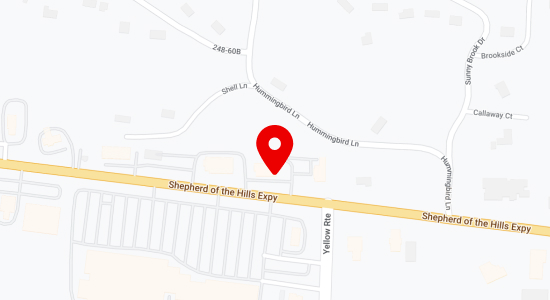
Please note that our law firm's address is for mail correspondence only. We do not accept in-office visits to this location. To schedule an appointment or consult with an attorney, please contact us via phone or email. Our contact information is readily available on our website. We look forward to hearing from you and strive to supply efficient and accessible legal services to our clients.
Branson, MO 65616