
Former Prosecutor
of 20 Years on
Your Side
of 20 Years on
Your Side







Discharging a firearm in public is one of the most aggressively prosecuted gun related offenses in Missouri. Whether the incident happened in a neighborhood, a parking lot, a rural area, or within city limits, firing a gun in a public space instantly raises concerns for law enforcement and prosecutors about community safety. Even when no one was hurt, even when the shot was accidental, or even when the person believed they were acting responsibly, a case involving the discharge of a firearm can quickly become a serious felony prosecution.
At Scrivner Law Firm, attorney and former prosecutor Dayrell Scrivner brings decades of Missouri criminal law experience to the defense of clients accused of firing a weapon unlawfully. These cases are often highly fact specific. They involve questions about self defense, reckless conduct, intent, witness credibility, the legality of the surrounding circumstances, and the client’s understanding of local firearm regulations. A strong defense requires examining every detail of the event from the first moment a shot was fired to the final actions of responding officers.
Missouri does not have a single statute that uses the phrase “discharging a firearm in public.” Instead, these allegations fall under several different provisions of the Revised Statutes of Missouri, depending on the details of the incident. One of the most frequently used statutes is section 571.030, which prohibits the reckless or unlawful discharge of a firearm under certain circumstances.
Firing a gun in a public location can be charged as unlawful use of a weapon if the State believes the person:
Missouri also allows municipalities and counties to enact local ordinances regulating when and where firearms may be discharged. Violations of local ordinances can sometimes form the basis of a criminal charge or an accompanying citation. This patchwork of laws can cause confusion for gun owners, particularly those who believe they were acting lawfully, responsibly, or on their own property.
An important part of any defense is determining which specific subsection of the law the State is using and whether the evidence actually supports that charge.
One of the most misunderstood parts of these cases is what counts as a “public” place. Many people assume that as long as they are on private property, firing a gun is always legal. That is not necessarily the case. Missouri courts and prosecutors may consider a location to be “public” if shots were fired anywhere that others could be endangered or alarmed.
Examples of places that may be treated as public include:
Even rural areas can be treated as public if homes, vehicles, or public roads are nearby. Understanding the classification of the location is key to forming a defense, especially when the defendant believed they were firing safely or with no one else around.
Depending on how the case is charged, discharging a firearm unlawfully can be a misdemeanor or a felony. Under section 571.030, firing a gun recklessly or in a prohibited manner is typically charged as a class E felony, which can result in up to 4 years in the Missouri Department of Corrections and substantial fines.
If the discharge placed a person at risk of serious injury or involved additional criminal behavior, prosecutors may elevate the charge to a more severe felony or file additional charges such as assault, armed criminal action, or endangering the welfare of a child. Armed criminal action is especially serious, carrying mandatory prison time that cannot be suspended or served on probation.
Municipal or county level firearm discharge ordinances can also impose their own penalties. While some of these cases begin as local ordinance violations, they can quickly escalate into state felony charges once law enforcement believes that someone was endangered or that the conduct violated state law.
A conviction for unlawful discharge of a firearm can also affect a person’s right to possess firearms in the future, harm their employment opportunities, and affect housing or professional licensing. For anyone in Missouri who lawfully owns guns, protecting your record is essential.
A wide variety of real world situations can lead to accusations of unlawfully firing a gun. Some are the result of misunderstandings, others involve self defense, and still others arise from accidents, celebrations, or mechanical malfunctions.
Common examples include:
Because these cases vary so widely, the facts must be examined carefully to determine whether the discharge was intentional, reckless, negligent, accidental, or justified. A strong defense begins with understanding exactly why the firearm was discharged and whether the law supports the conclusion that the act was unlawful.
One of the most important defenses in firearm discharge cases involves self defense. Missouri’s self defense laws allow a person to use force, including deadly force in limited circumstances, to protect themselves or others from the threat of serious harm. Missouri recognizes the right to stand your ground when in a place you lawfully occupy, meaning you do not have a duty to retreat before defending yourself.
If a firearm was discharged in response to an immediate threat, the law allows that use of force under certain conditions. The analysis focuses on whether:
Applying these standards requires careful review of witness statements, physical evidence, security footage, and the surrounding circumstances. A shot fired in fear during a dangerous encounter is very different from a shot fired as a warning during a verbal argument. Understanding the distinction is critical for both prosecutors and the defense.
Not every gunshot is intentional. Accidental discharges can happen due to mechanical failures, mishandling, unexpected triggers, or unfamiliarity with a particular firearm. While an accidental discharge may still result in charges, the State must prove that the defendant acted recklessly or with criminal negligence.
A mere mistake is not necessarily a crime. The law requires more than simple carelessness. Criminal negligence means the person failed to be aware of a substantial and unjustifiable risk and that the failure represented a gross deviation from what a reasonable person would do.
Accidental discharge cases often involve competing narratives. The prosecution may argue that the firearm was handled carelessly or unsafely, while the defense may present evidence of mechanical malfunction, poor lighting, sudden movements, or other factors that show the incident was not criminal. Expert testimony can be especially important when mechanical failure is a possible explanation.
Discharging a firearm in public often leads to fast moving and emotionally charged situations. Witnesses may believe they saw more than they truly did, or they may interpret the sound or location of a shot incorrectly. In some cases, people assume wrongdoing simply because they heard a gunshot without understanding the context.
Witness recollections are often incomplete or inconsistent, especially when:
Defending a firearm discharge case requires close examination of every witness statement. Inconsistencies, gaps in memory, or exaggerations can play an important role in showing reasonable doubt. Surveillance footage, audio recordings, and physical evidence can all help clarify what actually happened.
A strong defense in a discharge case requires collecting and preserving all available evidence. Helpful forms of evidence may include:
An attorney who understands firearm mechanics can examine the weapon itself, check for defects, and evaluate whether the shot occurred unintentionally. The sooner evidence is preserved, the better the chances of defending these cases.
If you are under investigation or have been arrested for firing a gun in public, your actions in the early moments of the case can significantly affect the outcome. You should avoid discussing the incident with police until you have consulted an attorney. Even seemingly harmless statements can be misinterpreted.
You should also preserve any evidence you may have, including video clips, photographs, messages, or witness information. Make a written account of the events while your memory is clear. Share all prior interactions, threats, or concerns that may explain why the firearm was present or discharged.
Involving an attorney early allows the defense to control the narrative, gather evidence before it disappears, and prevent the State from shaping the case based on incomplete or incorrect information.
Attorney Dayrell Scrivner has spent more than thirty years in Missouri criminal law. As a former prosecutor and current defender, he understands how firearm discharge cases are built, how evidence is evaluated, and how witnesses can shape or distort the facts. He has taught criminal law and procedure to police academy students as a Missouri licensed specialist instructor, giving him unique insight into how officers are trained to handle firearm incidents.
Scrivner Law Firm serves clients throughout Taney County, Stone County, Christian County, and surrounding communities, providing a grounded and strategic approach to defense. The firm emphasizes detailed case preparation, clear communication, and a thorough understanding of Missouri firearm laws. Each client receives individualized attention based on their circumstances rather than a generic defense approach.
These cases are often emotional and overwhelming. The firm’s role is to provide balanced guidance, explain each step of the process, and work tirelessly to obtain the most favorable outcome possible.
A charge for discharging a firearm in public is serious, but the State must still prove that the conduct was unlawful. Many cases fall apart once the facts are examined carefully. Whether the shot was fired defensively, unintentionally, or under circumstances that the law permits, you deserve a thorough and effective defense.
If you are facing charges in Taney County, Stone County, Christian County, or any surrounding part of Missouri, Scrivner Law Firm is ready to help. You can contact the firm to request a confidential consultation with attorney Dayrell Scrivner, who will review your case, explain your options, and begin forming a defense strategy tailored to your circumstances.
Early legal guidance can make a significant difference in how these cases unfold and how your future is protected.
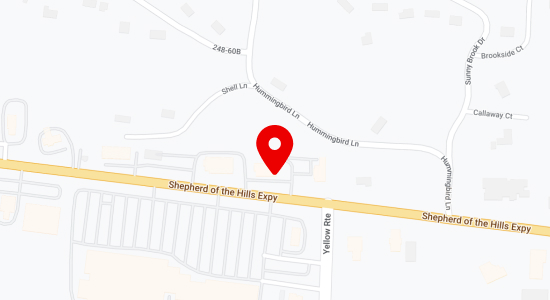
Please note that our law firm's address is for mail correspondence only. We do not accept in-office visits to this location. To schedule an appointment or consult with an attorney, please contact us via phone or email. Our contact information is readily available on our website. We look forward to hearing from you and strive to supply efficient and accessible legal services to our clients.
Branson, MO 65616