
Former Prosecutor
of 20 Years on
Your Side
of 20 Years on
Your Side









A drug manufacturing accusation can begin without a finished controlled substance. Officers may rely on chemical purchases, equipment, plant material, messages, utility records, surveillance, or another person’s statements to argue that illegal production was underway. Because Missouri law covers attempts and possession with intent to manufacture, prosecutors do not necessarily need evidence of a completed batch or operating laboratory.
An object with an innocent household, agricultural, or commercial use can take on a different meaning when viewed alongside other evidence. Yet proximity to suspicious materials does not establish that every person in a home or vehicle knowingly participated. A defense must separate investigators’ inferences from what the State can prove about the accused person’s knowledge, conduct, and intent.
Scrivner Law Firm represents people facing serious drug allegations in Taney County and neighboring Southwest Missouri communities. Attorney Dayrell Scrivner has spent decades working in Missouri’s legal system, including 20 years as a prosecutor. That experience helps him understand how drug investigations develop, how manufacturing charges are constructed, and which conclusions may not be supported by the evidence.
Section 579.055 of the Missouri Revised Statutes defines the offense of manufacturing a controlled substance. Unless the conduct is authorized under Missouri’s controlled-substance laws, a person may violate the statute by:
The statutory meaning of “manufacture” is also broad. Under Section 195.010, it includes production, preparation, propagation, compounding, or processing, whether performed through extraction, chemical synthesis, or a combination of the two. Packaging, repackaging, labeling, and relabeling may also fall within the definition. The law contains exceptions for certain authorized professional, research, teaching, and chemical-analysis activities.
Allegations may involve cultivating plants, operating equipment, processing a substance, combining chemicals, packaging a product, or taking steps that officers characterize as an attempt. The defense should require the State to identify the prohibited act, connect it to the accused, and establish the required mental state beyond a reasonable doubt.
Many manufacturing investigations are circumstantial. Police may seize glassware, containers, solvents, scales, heating devices, grow lights, fertilizer, packaging, precursor materials, or written instructions. Some of those things have lawful uses. Their evidentiary significance depends on condition, location, residue, configuration, and connection to other proof.
Investigators may also use phone extractions, text conversations, online orders, photographs, location data, security footage, unusually high utility consumption, confidential informants, or controlled purchases. If several people occupy the property, the State may argue that the accused had constructive or joint possession rather than an item being found on the person’s body. Missouri law generally defines constructive possession as having both the power and the intention to exercise dominion or control over a substance, with knowledge of its presence and nature.
A defense review examines who controlled the location, who could access the relevant room or container, whether fingerprints or DNA were recovered, what the messages say, whether another occupant accepted responsibility, and whether the setup could produce the alleged substance. Evidence of preparation is not automatically proof that a person completed—or legally attempted—the offense.
The felony level under Missouri’s manufacturing statute depends on the substance and circumstances:
Under Missouri’s general sentencing statute, a class A felony carries 10 to 30 years or life imprisonment; a class B felony carries 5 to 15 years; a class C felony carries 3 to 10 years; and a class E felony carries up to 4 years. Section 558.002 authorizes a fine of up to $10,000 for a class C or E felony. It also contains a gain-based provision that can permit a fine of up to twice the money or property gained through an offense. The sentence in an individual case can be affected by the precise conviction, criminal history, enhancements, and other statutory rules.
The 2,000-foot school provision requires factual review. The State must prove that the conduct occurred within the statutory distance and that the property qualifies as a listed educational property. Maps, measurements, parcel boundaries, and the alleged production location may become important.
An allegation involving production may also be charged as first-degree drug trafficking under Section 579.065. That statute applies when a person knowingly manufactures, produces, or attempts to manufacture or produce specified threshold quantities. First-degree trafficking is ordinarily a class B felony and becomes a class A felony at higher quantities or under certain location-based provisions.
Examples under the latest version include more than 30 grams of a mixture containing heroin, more than 150 grams of a cocaine-related mixture described by the statute, more than 30 kilograms of marijuana, and more than 30 grams of material containing methamphetamine or certain other listed stimulants. The corresponding class A thresholds include at least 90 grams of a heroin mixture, at least 450 grams of the listed cocaine-related material, at least 100 kilograms of marijuana, and at least 90 grams of material containing methamphetamine or another listed stimulant. For the stimulant category, more than 30 grams can also constitute a class A offense when the conduct occurs in one of several protected locations listed in the statute.
Current law sets particularly small thresholds for highly potent opioids. More than 3 milligrams of fentanyl, or any amount of carfentanil, can satisfy a class B first-degree trafficking threshold. At least 14 milligrams of fentanyl or more than five-hundredths of a milligram of carfentanil can trigger class A treatment. The statute contains additional substances and detailed measurement rules, so the laboratory report and the exact statutory language must be compared carefully.
Section 579.068 addresses second-degree trafficking based on knowingly possessing, controlling, purchasing, attempting to purchase, or bringing specified quantities into Missouri. A trafficking theory may therefore arise even when the State cannot establish who performed the manufacturing. Substance identity, total weight, treatment of mixtures, sampling, and chain of custody can affect whether a threshold is met.
A manufacturing investigation may produce multiple charges from the same search. Relevant Missouri provisions include:
Other counts may involve possession, delivery, paraphernalia, weapons, stolen chemicals, or property damage. The defense must evaluate whether each count addresses separate conduct, whether the State can prove every element, and whether cooperating witnesses are motivated by their own exposure.
Missouri’s legalization of adult-use marijuana did not make every form of cultivation or processing lawful. Article XIV of the Missouri Constitution protects limited personal cultivation by an adult who is at least 21 and registered with the Department of Health and Senior Services. Subject to its requirements, a registered cultivator may keep up to six flowering plants, six nonflowering plants over 14 inches tall, and six clones under 14 inches tall. Plants and marijuana produced above the ordinary possession limit must be kept at one private residence in a locked space and must not be visible from a public place by normal, unaided vision. The Constitution also limits the combined number of plants at a residence.
Registration, age, plant counts, location, security, visibility, transfer, and commercial activity can determine whether conduct is protected. Article XIV also restricts solvent-based marijuana extraction. It does not generally permit extraction with solvents other than water, glycerin, propylene glycol, vegetable oil, or food-grade ethanol unless the person is properly licensed. Separate rules address dangerous materials and combustible gases.
A marijuana case should not be analyzed solely through the 35-gram language in Section 579.055. Constitutional protections and limitations must be considered with the criminal statute. Whether conduct was personal cultivation, licensed commercial activity, an infraction, or a felony depends on facts—not simply the presence of plants or equipment.
Drug manufacturing cases often turn on how law enforcement obtained the evidence. Counsel may examine the basis for a search warrant, whether officers remained within its scope, whether a warrant exception applied, and whether consent was voluntary and authorized. Traffic stops, protective sweeps, trash searches, probation searches, and digital-device searches can raise distinct issues. A successful suppression motion may change what the prosecution can use.
Laboratory documentation may reveal how samples were selected, tested, stored, and weighed. Photographs and body-camera footage can show whether officers altered a scene before documenting it. Expert review may be appropriate when the prosecution claims components formed an operational laboratory or created a chemical hazard.
Statements require equal attention. Investigators may treat an ambiguous comment as an admission, omit surrounding context, or rely on one participant’s effort to shift responsibility. Counsel can compare reports with recordings, determine whether custodial interrogation complied with Miranda requirements, and test an informant’s history, promises, payment, or pending charges.
Depending on the evidence, a strategy may seek dismissal, suppression, acquittal, a lesser offense, exclusion of an enhancement, or a negotiated resolution. Treatment-court or rehabilitation-related options may be relevant, but their availability and suitability are case-specific.
An investigation may remain open while officers analyze devices, send samples to a laboratory, interview occupants, or seek cooperation from alleged associates. During that period, an unrepresented person may be asked to explain purchases, ownership of equipment, access to a room, or another person’s actions. Attempts to provide an innocent explanation can still supply details the State did not previously possess.
Early representation allows counsel to communicate with investigators, preserve favorable records, identify witnesses, and advise the client before an interview or charging decision. It also creates time to document legitimate uses for equipment or materials. A person should not destroy, move, or alter potential evidence; the safer course is to obtain advice about preserving information and responding to law enforcement.
Drug manufacturing allegations can involve far more than the discovery of a controlled substance. Investigators may be examining chemicals, equipment, electronic communications, laboratory results, and access to the property while prosecutors determine which charges and enhancements may apply. Involving a defense attorney early can help preserve important evidence and provide a clearer understanding of the case being assembled by the State.
Attorney Dayrell Scrivner has spent decades working in Missouri’s legal system, including 20 years as a prosecutor handling matters that included drug offenses. He now applies that experience to defending people accused of serious crimes. To discuss a drug manufacturing investigation or charge in Taney County or a nearby Southwest Missouri community, call Scrivner Law Firm or complete the online contact form to request a consultation.
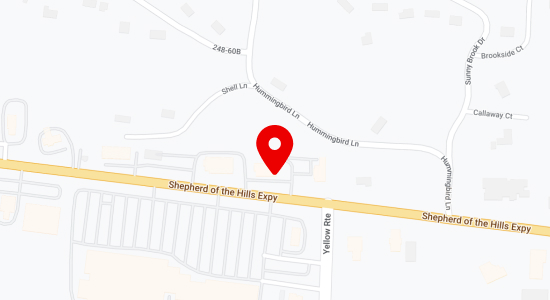
Please note that our law firm's address is for mail correspondence only. We do not accept in-office visits to this location. To schedule an appointment or consult with an attorney, please contact us via phone or email. Our contact information is readily available on our website. We look forward to hearing from you and strive to supply efficient and accessible legal services to our clients.
Branson, MO 65616