
Former Prosecutor
of 20 Years on
Your Side
of 20 Years on
Your Side









Being accused of a crime while visiting Taney County creates a problem that most local defendants do not face: the case stays in Missouri after the visitor goes home. The charge is governed by Missouri law and the court handling the matter, while the accused may be hundreds of miles away and the witnesses, businesses, recordings, and physical evidence remain in the Branson area.
Tourist crime defense therefore involves more than evaluating the criminal accusation. It also requires careful attention to court obligations, travel, evidence preservation, communication, and the practical consequences of defending a Missouri case from another county or state.
Visitors accused of crimes in Taney County can face a practical challenge that extends beyond the charge itself: defending a Missouri case while living somewhere else. Scrivner Law Firm helps clients navigate those complications while evaluating the allegations, the evidence, and the court requirements that may affect the case. Attorney Dayrell Scrivner draws on decades in criminal law, including two decades on the prosecution side, when assessing how the State’s case was developed and where it may be challenged.
A visitor who is released from custody may understandably want to return home and deal with the case later. That can be a serious mistake. A citation, summons, bond release, or initial court date is not the end of the matter. The case remains under the authority of the Missouri court handling it, and the defendant must comply with the obligations imposed in that proceeding.
Missouri law also creates a separate failure-to-appear offense in certain circumstances. Under RSMo 544.665, a person who has been released on recognizance or bond and knowingly fails to appear as required can face an additional charge. The classification of that offense depends on the underlying criminal matter. A missed appearance can therefore turn one legal problem into two and may also affect bond or lead to other court action.
For a tourist, one of the first defense priorities is identifying exactly where the case is pending, what has been filed, what conditions apply, and what the next required step is. It is dangerous to assume that a case is minor because the person was permitted to leave the area.
Tourist cases do not fall into a single offense category. They often arise from ordinary vacation activities that escalate unexpectedly: driving between attractions, drinking at a restaurant, staying in a hotel or rental property, shopping, attending entertainment venues, boating, or traveling with friends, spouses, or family members.
DWI is one of the most significant examples. RSMo 577.010 makes it an offense to operate a vehicle while in an intoxicated condition. A DWI may begin as a misdemeanor, but prior offenses, injuries, serious injuries, deaths, and other circumstances can substantially increase the classification and sentencing exposure. A visitor can also face separate issues involving chemical testing and driving privileges. Tourists using Missouri lakes may face boating while intoxicated allegations under RSMo 577.013, which prohibits operating a vessel while in an intoxicated condition.
Assault accusations can develop from fights, arguments, unwanted physical contact, or claims that someone was placed in fear of immediate injury. RSMo 565.056 defines assault in the fourth degree through several forms of conduct, including attempting or recklessly causing physical injury, purposely placing another person in apprehension of immediate physical injury, and certain offensive or provocative contact. Depending on the alleged conduct and victim, the offense may be charged at different misdemeanor levels.
Theft allegations may arise in stores, hotels, restaurants, entertainment venues, or other businesses. Under RSMo 570.030, stealing generally involves appropriating another person’s property or services with the purpose to deprive the owner, without consent or through deceit or coercion. Classification can depend on the value and type of property and on other statutory circumstances.
Property damage and trespass charges can also grow out of incidents at hotels, rental properties, parking areas, attractions, bars, or private land. RSMo 569.120 addresses knowingly damaging another person’s property, while RSMo 569.100 covers more serious forms of property damage, including certain damage exceeding the statutory threshold. RSMo 569.140 addresses knowingly entering or remaining unlawfully in a building, inhabitable structure, or qualifying real property.
Other cases may involve possession of a controlled substance under RSMo 579.015, peace disturbance under RSMo 574.010, or resisting or interfering with an arrest, detention, or stop under RSMo 575.150. The precise charge matters because two incidents that look similar from a distance can require very different defense strategies.
The law applied to a visitor is generally the same Missouri law that applies to a resident. Depending on the facts, statutes that may become important include:
These statutes describe broad categories. The actual charge, probable-cause statement, police report, witness accounts, recordings, and charging document determine what the prosecution is alleging in a particular case.
A local defendant may be able to return to a scene, locate a witness, obtain records from a business, or meet with counsel without major travel. A tourist may be hundreds of miles away by the time those tasks become important.
That makes organization especially important. The defense may need to determine whether hotel security footage exists, whether a restaurant or attraction has surveillance video, whether a rideshare trip can be documented, whether receipts establish a timeline, whether a rental vehicle contains relevant records, or whether companions who witnessed the event live in other states. Cellphone photographs, messages, location records, credit-card transactions, reservation records, and medical documentation may also become important.
Some evidence can disappear quickly through routine deletion or overwriting. Witness memories can also become less precise after a group returns home. Identifying useful information early can help prevent the case from being reduced to the police report alone.
A tourist should also be cautious about trying to “clear things up” directly with an alleged victim, business employee, police officer, or witness. A message intended as an explanation or apology may later be interpreted in a way the sender did not expect. Bond conditions, no-contact orders, or other restrictions may also prohibit certain communications.
A tourist may first learn the legal label attached to the incident from a citation, booking paperwork, or online case entry. That label does not explain the entire prosecution theory.
A DWI case may turn on the basis for the traffic stop, observations of impairment, field sobriety testing, chemical-test procedures, body-camera footage, and whether the State can connect the evidence to actual operation of the vehicle. An assault case may depend on who initiated the confrontation, whether the physical contact occurred as alleged, whether self-defense is supported by the circumstances, and whether witness accounts are consistent with video or injuries.
A stealing case may require closer examination of intent, ownership, consent, checkout procedures, payment records, or whether an item was mistakenly retained. Property-damage cases may involve disputes about who caused the damage, whether it was intentional, and how the value of the damage was calculated. Trespass allegations can raise questions about notice, permission, boundaries, and whether the person knowingly remained where they were not authorized to be.
The defense therefore should not be built around the fact that the accused was visiting from somewhere else. It should be built around the specific conduct the prosecution must establish and the evidence available to prove or challenge that account.
Missouri divides crimes into different felony and misdemeanor classes, and those classifications affect possible punishment. Under RSMo 558.011, a class A misdemeanor can carry up to one year of imprisonment, a class B misdemeanor up to six months, and a class C misdemeanor up to fifteen days. A class E felony can carry up to four years, while a class D felony can carry up to seven years. Other felony classes carry greater ranges.
RSMo 558.002 also authorizes fines by classification, subject to other statutes that may apply. For example, the general maximum fine is $2,000 for a class A misdemeanor, $1,000 for a class B misdemeanor, and $10,000 for a class C, D, or E felony.
The statutory maximum is not a prediction of what will happen in a specific case. Sentencing can depend on the charge, criminal history, aggravating or mitigating facts, negotiated disposition, available alternatives, and other legal requirements. Even when jail or prison is not ultimately imposed, a criminal case may affect employment, professional licensing, insurance, travel, firearm rights in some cases, and a person’s criminal record.
For a nonresident, the practical cost of repeated travel can also become part of the burden. That is one reason it is important to understand the procedural requirements of the case rather than guessing about when personal attendance will or will not be necessary.
Tourist crime defense requires coordination between the facts of the incident and the realities of living elsewhere. Counsel can examine what was filed, communicate about the status of the case, evaluate discovery, identify evidence that should be preserved, and advise the defendant about court obligations and defense options.
Dayrell Scrivner’s background gives him experience evaluating criminal cases from both sides of the courtroom. Before focusing on defense work, he spent two decades as a prosecutor and served in a leadership role in a prosecutor’s office. He has also taught criminal law and criminal procedure in Missouri educational and law-enforcement settings.
That background can be especially useful when an accusation developed quickly during a crowded, unfamiliar, or alcohol-related incident. Police may have arrived after the event had already begun. Employees or bystanders may have seen only part of what happened. Multiple people may have been drinking. A complainant’s first account may differ from later statements. Video may show a sequence that cannot be reconstructed accurately from memory alone.
Scrivner Law Firm represents clients in Taney County and also handles criminal matters in Stone and Christian Counties. For visitors accused in the Branson area, the goal is to address the Missouri case deliberately while keeping the client informed about what the case requires from them after they return home.
Returning home does not put a Taney County criminal case on hold. A visitor may still need to address pending court requirements, bond conditions, evidence located in Missouri, and decisions that can affect how the case moves forward. Understanding those obligations early can be particularly important when attending to the case requires coordinating across county or state lines.
Scrivner Law Firm assists visitors facing criminal allegations arising from trips to Branson and other communities in the surrounding area. Drawing on decades in criminal law and substantial experience from his years as a prosecutor, Attorney Dayrell Scrivner evaluates the State’s allegations, the available evidence, and the procedural issues created by defending a case from outside the area. Contact Scrivner Law Firm to discuss the accusation, the evidence involved, and the defense options available in your Missouri case.
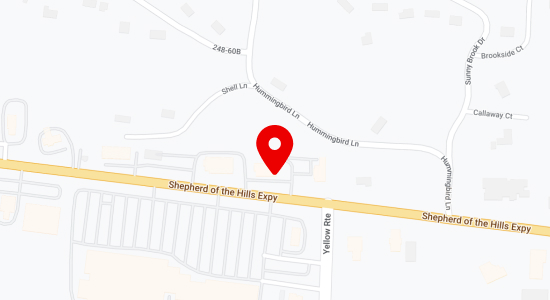
Please note that our law firm's address is for mail correspondence only. We do not accept in-office visits to this location. To schedule an appointment or consult with an attorney, please contact us via phone or email. Our contact information is readily available on our website. We look forward to hearing from you and strive to supply efficient and accessible legal services to our clients.
Branson, MO 65616