
Former Prosecutor
of 20 Years on
Your Side
of 20 Years on
Your Side







Probable cause is one of the most important concepts in criminal law because it sits at the gateway of so many police actions. It is the constitutional threshold that generally must be met before law enforcement can arrest someone, seek a warrant, or justify certain searches and seizures. In plain terms, probable cause means there are enough specific facts and circumstances to make it reasonable to believe a crime has been committed and that the person involved committed it, or that evidence of a crime will be found in a particular place.
At Scrivner Law Firm, probable cause issues often determine whether a criminal case moves forward or collapses early. Dayrell L. Scrivner is a criminal defense attorney and former prosecutor with decades of experience, including years serving as Chief Assistant Prosecutor. That background matters because probable cause is not just a legal definition. It is a practical decision point that influences how police investigate, how prosecutors charge cases, and how judges evaluate constitutional limits.
Probable cause is grounded in the Fourth Amendment to the United States Constitution, which protects people from unreasonable searches and seizures. Missouri’s Constitution contains its own parallel protection in Article I, Section 15. Both provisions require that warrants be supported by probable cause and issued based on sworn statements describing with particularity what is to be searched or seized.
These constitutional protections reflect a balance. Law enforcement must be able to investigate crime effectively, but citizens must be protected from arbitrary government intrusion. Probable cause is the mechanism that enforces that balance. When police act without it, courts have the authority to suppress evidence or invalidate arrests.
Probable cause is often described as a fair probability based on the totality of the circumstances. It does not require certainty, proof beyond a reasonable doubt, or even a showing that guilt is more likely than not. Instead, courts ask whether a reasonable person would believe criminal activity is occurring or that evidence will be found based on the facts known at the time.
Courts consistently emphasize that probable cause is a practical, common sense standard. It deals with probabilities and reasonable inferences, not technical precision. This means officers are allowed to draw conclusions from experience, but those conclusions must be grounded in observable facts, not speculation or hunches.
Because probable cause depends on context, two cases with similar facts can have very different outcomes. Small details such as timing, reliability of information, or the credibility of witnesses can determine whether probable cause existed.
Probable cause is frequently confused with reasonable suspicion, but the two standards serve different purposes.
Reasonable suspicion allows law enforcement to briefly detain a person for investigative purposes. The officer must be able to point to specific and articulable facts suggesting criminal activity. This standard applies to temporary stops, such as traffic stops or brief street encounters.
Probable cause is a higher standard. It is generally required for arrests and for the issuance of search warrants. Missouri courts recognize that probable cause requires more evidence than reasonable suspicion and must be supported by concrete facts rather than generalized suspicions.
This distinction is critical because a stop that begins lawfully can become unlawful if officers escalate the encounter into an arrest or search without establishing probable cause.
An arrest is a seizure under the Constitution. To justify an arrest, officers must have probable cause at the moment the arrest occurs.
The controlling principle is that probable cause exists when the facts and circumstances within the officer’s knowledge would lead a reasonable person to believe the suspect committed or is committing a crime. Courts focus on what the officer knew at the time, not on facts discovered later.
Probable cause is generally evaluated objectively. Even if an officer has improper motives, the arrest may still be lawful if the facts objectively support probable cause. Courts also look at whether probable cause existed for any offense, not necessarily the specific charge initially cited by the officer.
In many cases, multiple officers are involved. Missouri courts recognize that probable cause can be based on the collective knowledge of law enforcement when officers are working together and communicating. However, this doctrine does not excuse assumptions or gaps in communication. The defense may challenge whether critical information was actually shared before the arrest occurred.
Search warrants require a showing of probable cause that evidence of a crime will be found in a specific location.
Courts evaluate warrant applications under a totality of the circumstances approach. Judges consider all the information presented, including witness statements, police observations, corroboration, and the reliability of informants. No single factor is determinative.
The probable cause affidavit is often one of the most important documents in a criminal case. It provides the justification for a search or arrest and reveals how law enforcement interpreted the facts. Weak affidavits may rely on vague conclusions, omit key information, or exaggerate the strength of the evidence. These defects can form the basis for suppression motions.
Arrests do not always require a warrant.
Under Missouri law, officers may generally arrest a person without a warrant if they have probable cause to believe a felony has been committed, even if the offense was not committed in the officer’s presence.
For misdemeanors, the rules are more restrictive. In many cases, the offense must occur in the officer’s presence unless a statute authorizes a warrantless arrest. This distinction is especially important in cases involving minor offenses that escalate into more serious charges.
Traffic stops are a common setting for probable cause disputes.
An officer may stop a vehicle based on probable cause that a traffic violation occurred. During the stop, the officer may attempt to expand the investigation into other offenses, such as DUI or drug possession. To justify further detention or a search, the officer must develop probable cause or obtain valid consent.
The timeline of events is critical. Courts examine what the officer knew at each stage of the encounter. Evidence obtained before probable cause existed may be subject to suppression, even if probable cause developed later.
When a person is arrested without a warrant and held in custody, the Constitution requires a prompt judicial determination of probable cause. This review is designed to prevent prolonged detention based solely on an officer’s unilateral decision.
Even if a judge finds probable cause for detention, the defense may still challenge whether evidence was obtained unlawfully or whether constitutional violations occurred during the investigation.
Probable cause challenges often arise from subtle but important flaws.
Officers may rely on unreliable tips without sufficient corroboration. They may stack weak inferences on top of one another. Affidavits may omit facts that undermine probable cause or include misleading statements. Arrests may not align with what the evidence actually shows when reviewed carefully.
These issues are often uncovered through detailed review of reports, body camera footage, dispatch logs, and witness statements.
Probable cause is a central focus of defense strategy at Scrivner Law Firm. Dayrell L. Scrivner brings decades of experience as both a former prosecutor and a criminal defense attorney. He has handled thousands of cases and has extensive experience teaching criminal law and procedure.
That background allows the firm to identify when law enforcement actions exceed constitutional limits. Motions to suppress based on lack of probable cause can exclude critical evidence, weaken the prosecution’s case, and in some situations lead to dismissal.
Because Scrivner Law Firm represents clients in Branson and throughout Taney, Stone, and Christian Counties, the firm is familiar with local law enforcement practices and court procedures. This local knowledge can be decisive in probable cause litigation.
If you believe you were arrested or searched without probable cause, it is important to act quickly. Document what happened, preserve communications and digital evidence, and avoid making informal statements to law enforcement.
An experienced criminal defense lawyer can review the probable cause determination, analyze whether constitutional standards were met, and pursue appropriate motions. Early intervention often makes the greatest difference.
Probable cause is often where a criminal case begins, and it is frequently where it can be challenged most effectively. A careful legal review can determine whether police actions were justified or whether constitutional violations occurred.
Scrivner Law Firm is led by Dayrell L. Scrivner, a former prosecutor with decades of experience now dedicated to criminal defense. If you are facing criminal charges or believe law enforcement acted without proper probable cause, contact Scrivner Law Firm to discuss your situation and learn how an experienced defense attorney can protect your rights and challenge unlawful arrests, searches, or seizures before they shape the outcome of your case.
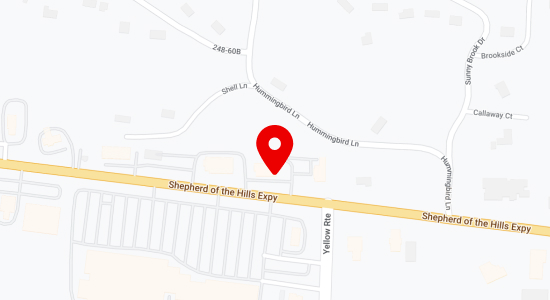
Please note that our law firm's address is for mail correspondence only. We do not accept in-office visits to this location. To schedule an appointment or consult with an attorney, please contact us via phone or email. Our contact information is readily available on our website. We look forward to hearing from you and strive to supply efficient and accessible legal services to our clients.
Branson, MO 65616