
Former Prosecutor
of 20 Years on
Your Side
of 20 Years on
Your Side







If you are facing criminal charges in Southwest Missouri, the legality of the police search is often the hinge point in the entire case. A traffic stop that turns into a vehicle search. A home search after a “knock and talk.” A phone search after an arrest. When the government’s evidence comes from an unlawful search or seizure, Missouri law provides a pathway to challenge it and, in the right case, keep it out of court.
Scrivner Law Firm is led by Dayrell L. Scrivner, a criminal defense attorney and former longtime prosecutor who built his career inside Missouri courtrooms and now focuses his practice on defending people in Taney, Stone, and Christian Counties.
Search and seizure disputes start with two primary sources of law.
First is the Fourth Amendment to the United States Constitution, which protects against unreasonable searches and seizures. That federal protection applies in Missouri criminal cases, and it is the baseline rule most people have heard about.
Second is Article I, Section 15 of the Missouri Constitution. Missouri’s provision is similar to the Fourth Amendment, but it is notable for expressly protecting electronic communications and data and requiring warrants to describe what will be searched, seized, or accessed, as nearly as possible, supported by probable cause.
Missouri appellate courts often describe Article I, Section 15 as generally coextensive with the Fourth Amendment, meaning Missouri courts frequently track federal search and seizure doctrine. Even so, Missouri’s explicit constitutional language about electronic data matters in modern cases involving phones, messages, and digital accounts.
A search usually means government action that invades a place, item, or information you have a legally protected privacy interest in. A seizure can mean taking property, but it also includes stopping or detaining a person. A traffic stop is a seizure of the driver and, typically, the passengers as well.
Many Missouri cases begin with an officer claiming a lawful reason to stop a vehicle, briefly detain the occupants, and then expand the encounter into questioning and searching. Whether that expansion was lawful depends on the facts: what the officer observed, what was said, what consent, if any, was given, and how long the detention lasted.
Because search and seizure law is fact driven, small details matter. Where the officer was standing. Whether the driver was free to leave. How questions were phrased. Whether consent was requested or implied. Those details often determine whether evidence is admissible.
The traditional rule is simple. Searches and seizures are presumed unreasonable unless police have a warrant supported by probable cause, issued by a neutral judge, and executed within legal bounds.
In real life, many criminal cases involve warrantless searches. When there is no warrant, the burden typically shifts to the State to justify the search under a recognized exception. Courts scrutinize these claims carefully because the warrant requirement is the rule and exceptions are intended to be narrow.
A lawful warrant has three pressure points: probable cause, particularity, and execution.
Probable cause means there is a fair probability that evidence of a crime will be found in the place to be searched or the data to be accessed. Particularity requires the warrant to describe the place and items with enough specificity to prevent open ended rummaging. Missouri’s constitution specifically requires warrants to describe the place, person or thing to be seized, and any electronic data or communication to be accessed.
Execution matters as well. Even a valid warrant can be undermined if officers exceed its scope or fail to follow required procedures. Defense attorneys review the affidavit, the timing, what was seized, and whether officers went beyond what the judge authorized.
In Missouri criminal cases, warrantless searches are most often defended under a limited number of recognized exceptions. The name of the exception matters less than whether its requirements were actually met.
Consent is one of the most frequently litigated issues in search cases. For consent to be valid, it must be voluntary under the totality of the circumstances. Consent obtained through intimidation, pressure, or implied authority can be challenged.
In practice, these cases often turn on subtle factors. Whether the person was already detained. Whether multiple officers were present. Whether the individual was told they could refuse. Whether the officer suggested the search would happen regardless.
The plain view doctrine allows officers to seize evidence without a warrant if they are lawfully present and the incriminating nature of the item is immediately apparent. Plain view does not justify unlawful entry, nor does it permit officers to manipulate objects or open containers without further legal justification.
Following a lawful custodial arrest, officers may search the arrestee and certain areas within immediate reach. These searches are intended to protect officer safety and preserve evidence. They are not unlimited and do not automatically authorize broad searches of vehicles or property without additional justification.
Missouri recognizes the automobile exception, which allows police to search a vehicle without a warrant if they have probable cause to believe it contains contraband or evidence of a crime.
Many disputes arise over what actually created probable cause. Claims based on odor, nervous behavior, or ambiguous observations are often challenged. Courts examine whether the officer’s explanation is credible and supported by the facts.
Exigent circumstances can justify a warrantless search when immediate action is necessary, such as preventing the destruction of evidence or responding to an urgent safety threat. Convenience or efficiency does not qualify. If officers had time to seek a warrant, exigency is often difficult to prove.
Police may briefly detain someone based on reasonable suspicion of criminal activity. A limited pat down for weapons is permitted only if the officer reasonably believes the person is armed and dangerous. Problems arise when these brief encounters are extended without legal justification or transformed into evidence searches.
When police lawfully impound a vehicle, they may conduct an inventory search under standardized procedures. These searches must follow established policy and cannot be used as a pretext to investigate suspected criminal activity.
Individuals on probation or parole may be subject to reduced privacy expectations depending on the conditions imposed. Even so, officers must act within the bounds of those conditions, and unlawful searches can still be challenged.
Digital evidence is now central to many Missouri criminal cases. Phones, text messages, location data, and social media content can all become evidence.
Missouri’s constitution explicitly protects electronic communications and data, which reinforces the importance of warrants for digital searches. Defense attorneys closely review whether police obtained proper authorization, whether the search exceeded the warrant’s scope, and whether the methods used were legally permissible.
When evidence is obtained unlawfully, the primary remedy is a motion to suppress. Missouri law allows defendants to challenge evidence obtained through illegal searches, invalid warrants, or seizures that exceed lawful authority.
A motion to suppress leads to a separate hearing where officers may testify and be cross examined. Judges decide whether the evidence will be admitted at trial. In many cases, suppression significantly weakens the prosecution or results in dismissal or favorable resolution.
Judges focus on specific factual and legal questions. Whether the initial stop was lawful. Whether the detention was improperly prolonged. Whether consent was voluntary. Whether probable cause existed. Whether officers followed required procedures.
Credibility is often decisive. Body camera footage, dispatch logs, and inconsistencies in testimony can play a major role.
Search and seizure law affects a wide range of criminal cases handled by Scrivner Law Firm, including drug offenses, DWI investigations, weapons allegations, and traffic stop prosecutions.
In drug cases, disputes often involve vehicle searches, containers, and extensions of traffic stops. In DWI cases, legality of the stop and detention is frequently contested. In weapons cases, the scope of frisks and vehicle searches is often critical.
Most people do not anticipate contact with law enforcement, but certain principles are generally helpful.
Remain calm and polite. Do not argue roadside legal issues. Ask whether you are free to leave. Be cautious about giving consent to searches. Do not physically resist. If arrested, exercise your right to remain silent and ask for a lawyer.
These are general guidelines, not legal advice for any specific situation.
Scrivner Law Firm approaches search and seizure cases by reconstructing the encounter from start to finish. Reports, body camera footage, warrant applications, and forensic documentation are reviewed in detail.
The firm is led by Dayrell L. Scrivner, a former prosecutor with extensive courtroom experience who now focuses on defending individuals in Taney, Stone, and Christian Counties. His background provides insight into how law enforcement and prosecutors evaluate searches and how suppression issues are litigated in Missouri courts.
Early identification of suppression issues is often critical. When appropriate, motions are filed and litigated aggressively, with careful preparation for cross examination and legal argument.
If your arrest followed a traffic stop, home entry, vehicle search, or phone search, the legality of that search may determine the outcome of your case. Many people assume that if police found evidence, the search must have been lawful, but that assumption is often incorrect. Search and seizure issues are highly fact driven, and small details such as how a stop began, whether a detention was prolonged, or how consent was requested can make the difference between admissible evidence and suppression. When an unlawful search occurs, courts may exclude evidence, weaken the prosecution’s case, or eliminate the charges altogether.
Scrivner Law Firm carefully evaluates search and seizure issues by reconstructing the encounter from start to finish and identifying whether officers followed constitutional and Missouri legal requirements at each step. Because these challenges often must be raised early, acting quickly is critical. If you are facing criminal charges in Taney County, Stone County, Christian County, or nearby areas, contact Scrivner Law Firm to discuss your case and learn how Missouri search and seizure laws apply to your situation. Taking action now can protect your rights and shape the course of your defense.
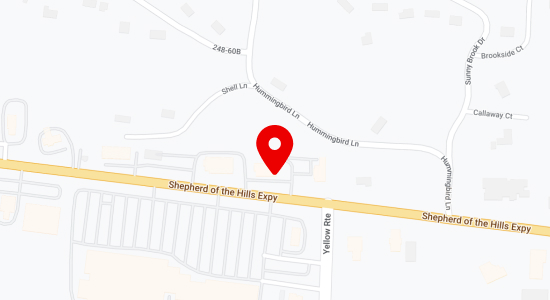
Please note that our law firm's address is for mail correspondence only. We do not accept in-office visits to this location. To schedule an appointment or consult with an attorney, please contact us via phone or email. Our contact information is readily available on our website. We look forward to hearing from you and strive to supply efficient and accessible legal services to our clients.
Branson, MO 65616