
Former Prosecutor
of 20 Years on
Your Side
of 20 Years on
Your Side









A plea bargain in a Missouri criminal case can involve considerably more than an agreement to plead guilty in exchange for a reduced charge. Negotiations may address which offense will remain, whether other counts will be dismissed, what sentencing position the prosecutor will take, whether probation or a suspended sentence is available, and what other conditions may become part of the proposed resolution.
The value of an offer depends on more than the punishment stated in the proposal. The strength of the State’s evidence, possible suppression issues, witness credibility, sentencing exposure, prior criminal history, and the consequences of a conviction can all affect whether accepting the agreement is preferable to continued negotiation or trial.
Scrivner Law Firm represents people facing criminal charges in Taney County and throughout Southwest Missouri. Attorney Dayrell Scrivner brings decades of legal experience, including two decades as a prosecutor, to evaluating plea proposals, identifying issues that may affect the State’s position, and determining whether a negotiated resolution adequately reflects the evidence and circumstances of the case.
The strength of a plea position often depends on what the prosecution could establish at trial. Before evaluating an offer, the defense can examine police reports, recordings, body-camera footage, witness statements, laboratory results, photographs, digital evidence, search warrants, prior statements, and any other material relevant to the charged offense.
That review can change the bargaining landscape. A witness may have given inconsistent accounts. A search or statement may present a suppression issue. Video may contradict an allegation. Laboratory evidence may not establish what the charging theory assumes. In another case, strong evidence may make the certainty of a negotiated disposition more valuable.
Pretrial motions can matter as well. A motion to suppress evidence or statements, a challenge to the admissibility of particular proof, or another legal issue may affect both trial risk and settlement discussions. Negotiation is most meaningful when the defense understands where the State’s case is strong, where it is vulnerable, and what a conviction could expose the defendant to if negotiations fail.
Missouri Supreme Court Rule 24.02 governs guilty pleas in felony and misdemeanor cases. It expressly permits the prosecutor and defense to discuss an agreement under which the defendant pleads guilty to the charged offense or to a lesser or related offense in exchange for a particular prosecutorial position.
The agreement may provide for dismissal of other charges. The prosecutor may recommend a particular disposition or agree not to oppose a defense request. The parties may agree that a specific sentence is appropriate. They may also agree on another disposition that fits the case.
These categories matter because they do not all provide the same degree of certainty.
A prosecutor’s recommendation under Rule 24.02(d)(1)(B) is not binding on the court. If the judge does not follow that recommendation, the defendant generally cannot withdraw the plea merely for that reason. By contrast, when an agreement is based on dismissal of other charges, a specific agreed sentence, or another agreed disposition, Rule 24.02 provides different protections if the court rejects the agreement, including an opportunity to withdraw the plea in the circumstances described by the rule.
The wording of a plea proposal therefore matters. “The prosecutor will recommend probation” is not necessarily the same agreement as “the parties agree that probation is the appropriate disposition.” Before a plea is entered, the defendant should understand what the prosecutor has promised, what remains within the judge’s discretion, and what happens if the court does not accept the contemplated result.
Two plea offers involving the same offense can produce very different consequences. Negotiations may address whether a felony is reduced to a misdemeanor, whether multiple counts are dismissed, whether sentences run concurrently or consecutively when the law permits, whether jail or prison is requested, and whether probation is part of the proposed resolution.
Missouri’s sentencing statutes supply the framework for those discussions. RSMo 558.011 establishes imprisonment ranges by offense classification. Class A felonies can carry ten to thirty years or life imprisonment; Class B felonies generally carry five to fifteen years; Class C felonies generally carry three to ten years; Class D felonies can carry up to seven years; and Class E felonies can carry up to four years. Misdemeanor jail exposure also depends on classification.
RSMo 558.002 addresses fines for many criminal classifications, while individual offense statutes may contain additional or different punishment provisions. RSMo 557.036 directs the court, after a finding of guilt, to determine the sentence or other disposition with regard to the nature and circumstances of the offense and the defendant’s history and character.
Prior criminal conduct can also change the sentencing analysis. RSMo 558.016 contains enhanced sentencing provisions for categories such as persistent and dangerous offenders. When an enhancement applies, a plea that changes the offense, resolves an enhancement allegation, or narrows the sentencing range can have consequences that are not obvious from the headline charge alone.
Missouri law authorizes several different dispositions after a finding of guilt. Under RSMo 557.011, a court may impose imprisonment, a fine, a suspended imposition of sentence, or a suspended execution of sentence, among other authorized combinations.
The difference between a suspended imposition of sentence and a suspended execution of sentence is significant.
With a suspended imposition of sentence, commonly called an SIS, the court does not impose a sentence at that time. If the person successfully completes the case as required, the disposition generally does not result in a conviction in the same way as an imposed sentence, and RSMo 610.105 generally provides for closure of qualifying official records after the case is finally terminated. An SIS should not, however, be treated as though the case never existed. Certain government agencies, courts, licensing authorities, and statutes may still treat the underlying finding of guilt as relevant.
With a suspended execution of sentence, commonly called an SES, the court imposes a sentence but suspends execution while the defendant is placed on probation. The sentence already exists. If probation is later revoked, the suspended sentence may be ordered executed.
Probation itself can carry substantial obligations. RSMo 559.012 addresses when a court may place a person on probation. RSMo 559.016 sets general probation terms, and RSMo 559.021 authorizes conditions that may include restitution, treatment, community-based programs, or other requirements the court considers appropriate. A plea should therefore be evaluated not only by whether it avoids immediate confinement, but also by what supervision will require and what the consequences of a violation could be.
Plea negotiations are driven by case-specific leverage. Legal weaknesses in the prosecution’s proof can be important, but negotiation can also be influenced by facts that affect how the prosecutor or court views an appropriate resolution.
For example, the defense may present evidence concerning employment, education, military service, caregiving responsibilities, lack of criminal history, treatment participation, counseling, sobriety efforts, restitution, or other circumstances that bear on sentencing. In a property case, repayment or recovery of property may matter. In a substance-related case, documented treatment may be relevant. In an allegation arising from a conflict between people who know one another, communications or other context may change how the incident is understood.
Mitigation does not erase the evidence or guarantee a reduction. Its purpose is to give the prosecutor a more complete picture than the police report alone may provide and, when appropriate, support a resolution proportionate to the actual conduct and the defendant’s circumstances.
Timing can matter too. Some cases benefit from early discussions. Others should not be negotiated seriously until discovery has been reviewed, testing is complete, a witness has been interviewed, or a motion has been litigated. Accepting an early offer without understanding what later investigation might reveal can surrender leverage that had not yet been developed.
The existence of an offer does not mean it should be accepted. Prosecutors may extend offers in cases where the evidence is strong, but they may also negotiate because a witness is uncertain, a legal issue creates risk, proof problems exist, or trial would produce an unpredictable result.
A defense attorney can compare the proposed disposition with the likely consequences of conviction after trial, the strength of available defenses, the sentencing range, and the consequences of entering the particular plea. That analysis may lead to further negotiation, a counterproposal, acceptance of the offer, an open plea without a sentencing agreement, or continued preparation for trial.
The defendant ultimately decides whether to plead guilty. The attorney’s role is to investigate, identify the risks, negotiate where appropriate, and explain the terms so the client can make that decision deliberately.
Even after the parties reach an agreement, the case does not bypass the court. Rule 24.02 requires disclosure of the plea agreement on the record, subject to limited circumstances in which disclosure may occur in camera. The court may accept the agreement, reject it, or defer a decision while considering a presentence report.
Before accepting a guilty plea, the judge must address the defendant and determine that the defendant understands the nature of the charge, the applicable punishment range, the right to counsel, the right to plead not guilty, the right to a jury trial, the right to confront and cross-examine witnesses, and the privilege against compelled self-incrimination. The court must also determine that the plea is voluntary and not the product of force, threats, or promises outside the disclosed agreement.
Rule 24.02 further requires a factual basis before judgment is entered on the plea. Rule 24.03 separately requires a record of felony guilty-plea proceedings. A negotiated resolution is therefore not merely a private arrangement between defense counsel and the prosecutor. It must satisfy the procedural requirements governing guilty pleas and, depending on the agreement, receive the court’s acceptance.
The sentence written into a plea agreement may not capture every consequence that matters to the defendant. A conviction or finding of guilt can affect employment, professional licensing, firearm rights, immigration status, housing, insurance, driving privileges, future sentencing exposure, and other areas depending on the offense and the person’s circumstances.
Those consequences are not uniform. A reduced charge that appears acceptable from a jail-time perspective may still create a licensing or immigration problem. A plea that avoids incarceration may carry probation conditions that conflict with employment or travel.
For that reason, plea negotiations should be evaluated as a complete resolution rather than as a single number of days, months, or years.
Scrivner Law Firm represents people facing criminal allegations in Taney County and surrounding Southwest Missouri communities. Attorney Dayrell Scrivner brings decades of legal experience to criminal defense, including nearly two decades working as a prosecutor in Stone County.
That prosecution background can be particularly relevant in plea negotiations because evaluating a proposed resolution requires understanding how the State may assess evidence, witnesses, charging alternatives, sentencing exposure, and trial risk. The defense can use that perspective to identify what should be investigated before discussions begin, what information may support a counterproposal, and when the terms offered do not adequately account for weaknesses or mitigating circumstances in the case.
Negotiation is one possible path to resolving a criminal charge, not an obligation to accept the first offer presented. The goal is to understand the State’s case, preserve available defenses, and determine whether an agreement serves the client better than the alternatives.
Deciding whether to accept, reject, or counter a plea proposal requires more than comparing the offered sentence with the maximum punishment for the charge. The defense should consider what the State may be able to prove, what charges or enhancements remain in dispute, which terms are binding, what discretion the judge retains, and how the proposed disposition could affect the defendant after the case is resolved.
Attorney Dayrell Scrivner draws on experience in both prosecution and criminal defense when evaluating negotiated resolutions in Missouri criminal cases. Scrivner Law Firm can review the terms of a plea proposal, assess them against the evidence and available defenses, and determine whether further negotiation may be appropriate. To arrange a consultation regarding plea negotiations or an offer already presented by the prosecution, reach out to Scrivner Law Firm to schedule a consultation.
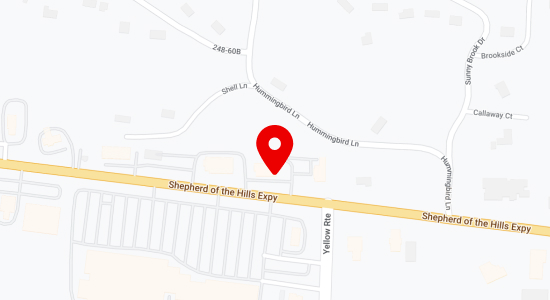
Please note that our law firm's address is for mail correspondence only. We do not accept in-office visits to this location. To schedule an appointment or consult with an attorney, please contact us via phone or email. Our contact information is readily available on our website. We look forward to hearing from you and strive to supply efficient and accessible legal services to our clients.
Branson, MO 65616