
Former Prosecutor
of 20 Years on
Your Side
of 20 Years on
Your Side







Getting arrested in Missouri is disorienting on purpose. You are taken out of your normal routine, put under pressure, and surrounded by rules you did not create. In that environment, many people make “small” choices that quickly become big problems, from talking too much, to signing something they do not understand, to trying to fix the situation with a text message that becomes Exhibit A.
This page explains the most common mistakes people make after a Missouri arrest, why those mistakes matter, and what to do instead. It is written for real life, meaning the late night traffic stop, the sudden knock at the door, the ride to the jail, the holding cell, the bond process, and the first days afterward when you are tempted to explain yourself to the wrong audience.
Scrivner Law Firm is led by Dayrell Scrivner, a former Missouri prosecutor who left the Stone County Prosecutor’s Office after 19 years to open his private practice, and who now focuses on helping people facing criminal charges across Southwest Missouri.
The hours and days after arrest are when the government is building the first version of its case. Officers write reports. They decide what to seize, what to photograph, what to submit for testing, and what to ask you. Prosecutors review referrals and decide whether to file charges and what to allege. In many cases, the most damaging evidence is not physical evidence at all. It is the person’s own words.
That is why so many of the mistakes below share one theme. People keep talking when silence would have been safer.
Another reality that surprises detainees is that many detention environments are designed to generate statements. You may be placed near someone who talks. You may be recorded on calls. You may be asked the same question multiple ways to see if your story shifts. Even if you believe you are innocent, inconsistency is often treated as proof of guilt.
Many people assume that if they are polite, cooperative, and willing to explain, officers will realize this is all a misunderstanding. Sometimes that happens. Often it does not. Once you are in custody, your statements can be used against you, and they can also be used to justify further searches, additional charges, or a higher bond.
One of the most common misunderstandings is believing you can answer “just the basic questions” without risk. In practice, basic questions turn into details. Details turn into timelines. Timelines turn into contradictions. Contradictions turn into leverage.
If you are being questioned while in custody, you generally protect yourself by clearly and politely invoking your rights and then stopping. A vague statement like “Maybe I should talk to someone” can lead to continued questioning. A clear request is better.
You do not need a long speech. A short statement is usually more effective, such as:
Then stop talking about the incident.
Another common mistake is starting a conversation with police and then feeling trapped, as if stopping makes you look guilty. The legal system does not grade you on how cooperative you appear. It judges what can be proven. If your words help the case against you, they will be used.
Interrogations also create a psychological momentum. Officers may act friendly, disappointed, or sympathetic. They may suggest that honesty will “help.” They may imply that your side will not be heard unless you speak now. Those tactics are not designed to protect you.
Missouri has been at the center of a major U.S. Supreme Court decision about interrogation tactics, Missouri v. Seibert, which addressed a “two step” technique where warnings are delayed until after a confession and then repeated after warnings are given. (Justia Law) The larger lesson is simple: timing and strategy matter, and people who try to improvise their way through questioning often get hurt.
Even if you already spoke, you can stop. If you are in custody and questioning is underway, you can still invoke your rights and end the interview.
After an arrest, officers may ask for consent to search a phone, a car, a bag, a home, or “just take a quick look.” People often agree because they think refusal makes them look guilty or because they believe consent is harmless.
Consent searches are dangerous because they can expand the investigation well beyond the original arrest. A phone search can turn a simple allegation into multiple counts. A car search can create new possession allegations. A home search can bring in items you forgot were there or that belong to someone else.
You can be respectful without consenting. If you are asked for consent, a simple response like “I do not consent to any searches” is often the safest approach. If officers have a warrant or another legal basis, they may proceed anyway. But you do not help build the case against you.
Many detainees assume that if officers already took their phone, the damage is done. It is not. The passcode is often the real key. People provide it because they feel pressured, because they believe refusal is pointless, or because they think they can talk their way through what the phone contains.
Phones hold location history, messages, photos, drafts, call logs, social media, and app data that can be interpreted in the worst possible way. Even innocent data can be framed as motive, planning, or consciousness of guilt.
Do not volunteer passcodes or unlock your device just to “clear things up.” Let your attorney evaluate the situation and challenge any unlawful search where appropriate.
Jail calls are frequently recorded and monitored. People know this in the abstract, but they still talk about the case because they are scared, angry, or trying to coordinate family logistics. The problem is that a call meant to reassure a spouse can become a confession, an inconsistency, or an allegation of witness contact.
Even statements like “They do not have anything” or “Here is what really happened” can be damaging. Attempts to persuade someone to “help” can be interpreted as pressure. Attempts to ask someone to delete messages can look like evidence tampering.
Use calls for logistics only. Focus on bond arrangements, childcare, medication, and obtaining a lawyer. If you need to communicate about the case, do it through counsel in a protected setting.
This is one of the most common and most harmful mistakes after release. People send apologies, explanations, or requests to drop the matter. Sometimes they send angry texts. Sometimes they use a friend as a messenger. They may think they are de escalating. But those messages often become evidence.
In many situations, there may also be bond conditions, no contact directives, or protective orders that make contact a new offense. Even if you believe the allegation is false, contact can be framed as intimidation, retaliation, or harassment.
Do not contact the complainant or key witnesses directly or indirectly. If communication is necessary for legitimate reasons, such as child exchange logistics, your attorney can help structure it in a way that reduces risk and complies with court orders.
Posting is tempting because it feels like control. You want your friends and family to know you are not the person described in the allegations. The problem is that prosecutors and investigators look at social media, and posts can be used to prove motive, attitude, or consciousness of guilt. They can also be used to impeach you later if your story changes.
A post can also trigger witness reactions. People comment. People argue. People share screenshots. You lose control of the narrative, and your digital footprint grows.
Say less, not more. Ask friends and family not to post about the incident either. If you need support, keep it offline and private.
Missouri has a specific statute about detention after a warrantless arrest. Section 544.170 generally requires release within twenty four hours unless a charge is made by oath and the person is held by warrant, and it also recognizes a right to consult with counsel or others acting on the confinee’s behalf.
People often hear simplified versions of rules like this and make risky decisions, such as refusing bond options, assuming they will be automatically released, or getting confrontational because they believe the clock is about to run out.
Missouri law is more nuanced, and federal constitutional rules about probable cause determinations and warrants can also affect timing. The safest move is not to rely on jailhouse folklore.
Ask for counsel. Have family contact a lawyer early. If detention timing becomes an issue, your attorney can raise it properly.
It is also important to understand another hard truth found in Missouri authorities. A violation of a detention time statute does not automatically erase a confession. Missouri’s statutory materials discuss cases where failure to release within the prescribed time did not, by itself, make a confession involuntary, although it can be a factor in analyzing coercion.
After arrest, paperwork comes fast. Bond conditions, waivers, property receipts, advisements, and sometimes diversion or plea related documents can show up earlier than you expect. People sign because they feel they have no choice.
But signatures matter. Some documents lock in conditions or create admissions. Some waive hearings. Some create timelines that prosecutors later use.
Slow down. Read. Ask what the document is. If you do not understand, say you want to speak with counsel before signing anything beyond basic booking necessities.
Bond conditions can include travel restrictions, no contact orders, alcohol or drug conditions, GPS monitoring, check ins, or firearm restrictions. Many people violate conditions without intending to. They return to the same residence where the protected person lives. They respond to a text. They go to a bar “just to eat.” They leave the county for work.
Even a technical violation can land you back in custody, increase bond, and make the judge less receptive to future requests.
Get a written copy of your bond conditions and follow them exactly. If a condition is unclear or unworkable, your attorney can request modification through the proper process.
Court dates are not suggestions. Missing a date can lead to a warrant, new charges in some circumstances, higher bond, and a worse negotiating position. Detainees and families sometimes assume a notice got lost, or that paying a bondsman means the bondsman will manage everything. Others assume that if they have a lawyer, the lawyer can appear without them.
Sometimes counsel can appear for certain settings. Sometimes the court requires your presence. The risk of guessing wrong is enormous.
Track every court date. Confirm appearance requirements. Show up early, dressed appropriately, with a calm demeanor. If you have an emergency, notify your attorney immediately so the issue can be addressed correctly.
A panicked person may delete messages, wipe a phone, throw out items, or ask a friend to remove something from a car or home. They tell themselves they are just removing “misunderstood” material. Prosecutors often frame these actions as consciousness of guilt or obstruction.
Even if the underlying incident is defensible, evidence tampering allegations can create a separate track of risk.
Preserve everything. That includes your own evidence too. Save receipts, screenshots, call logs, location records, and the names of potential witnesses. Good defense work often depends on reconstructing what actually happened, and you cannot reconstruct what you destroy.
Detention creates forced proximity. People talk to pass the time. Someone in a holding cell asks what happened. A friend wants details. You want “someone” to understand.
But every extra person who hears your version is a potential witness later, especially if your story changes. Some people also repeat what they hear, sometimes for their own advantage.
Keep details limited to your lawyer. If you need to vent, do it in a way that does not create additional witnesses or statements about the facts of the case.
Early representation is not just about “going to court.” It is about what happens before court, including preserving evidence, contacting witnesses, preventing damaging communications, and identifying issues that could support suppression or reduction of charges.
Missouri procedure recognizes the importance of pretrial motions, including motions to suppress evidence. Missouri’s rules and cases reflect that suppression issues are raised by motion before trial, although courts may address them at trial as well. Missouri statutes also discuss written motions to suppress.
The practical point is that suppression arguments, charging challenges, and bond strategies often work best when counsel is involved early, before the case record hardens.
Call a criminal defense lawyer as soon as possible. If your family is trying to help you from the outside, have them focus on hiring counsel and gathering basic facts, not contacting witnesses or posting online.
Scrivner Law Firm focuses on criminal defense and related matters across Taney County, Stone County, and Christian County, including communities such as Branson, Forsyth, Hollister, Kimberling City, Crane, Nixa, Ozark, Clever, and more. The firm emphasizes thorough case investigation, strategic motion practice, negotiation where appropriate, and trial representation when needed.
Dayrell Scrivner brings the perspective of a former prosecutor to evaluating cases, anticipating how the State will argue, and identifying the weak points that can change outcomes.
If you or someone you care about has been arrested in Missouri, the safest immediate steps are usually simple. Stop talking about the facts of the case. Do not consent to searches. Do not contact the complainant or witnesses. Focus on getting counsel involved quickly so bond issues, early strategy, and evidence preservation are handled correctly.
Reach out to Scrivner Law Firm today for additional guidance.
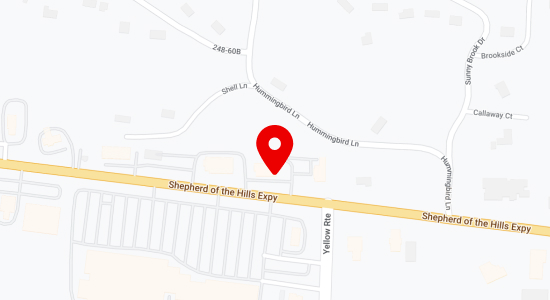
Please note that our law firm's address is for mail correspondence only. We do not accept in-office visits to this location. To schedule an appointment or consult with an attorney, please contact us via phone or email. Our contact information is readily available on our website. We look forward to hearing from you and strive to supply efficient and accessible legal services to our clients.
Branson, MO 65616