
Former Prosecutor
of 20 Years on
Your Side
of 20 Years on
Your Side









An arrest in Missouri is stressful enough when the charge comes from a local court. It can feel even more confusing when the arrest is based on a warrant from another state. A person may be stopped for a traffic violation in Branson, booked into a Missouri jail, and then learn that the real issue is an old case, probation matter, missed court date, or pending charge from Arkansas, Oklahoma, Kansas, Illinois, Texas, or another state entirely.
Out-of-state warrants raise legal questions that are different from a regular Missouri criminal case. The immediate concern is often not whether Missouri can prosecute the underlying charge. Instead, the issue may be whether Missouri will hold the person for the other state, whether the other state will request extradition, whether bond is available, and whether the person should waive extradition or challenge the process.
Scrivner Law Firm, led by criminal defense attorney and former prosecutor Dayrell Scrivner, represents people facing criminal charges and warrant-related issues in Missouri. Dayrell Scrivner spent nearly two decades in the Stone County Prosecutor’s Office before entering private practice, giving him valuable insight into how prosecutors, courts, and law enforcement handle criminal matters. For someone arrested in Missouri on an out-of-state warrant, that experience can be important because these cases often move quickly and require careful decisions early in the process.
An out-of-state warrant is a warrant issued by a court or legal authority outside Missouri. It may be tied to a new criminal charge, an old unresolved case, a failure to appear, a probation or parole violation, an escape allegation, or a sentence that has not been completed. When that warrant appears in a law enforcement database, Missouri officers may detain or arrest the person if they encounter them.
The warrant does not disappear simply because the person is in Missouri. Under Missouri’s extradition laws, particularly Chapter 548 of the Revised Statutes of Missouri, Missouri may hold a person who is accused of committing a crime in another state or who is alleged to have violated the terms of bail, probation, parole, or confinement in that state.
RSMo 548.021 provides that, subject to the applicable law, the governor of Missouri has a duty to have arrested and delivered to another state a person charged there with treason, felony, or other crime, if that person has fled from justice and is found in Missouri. In practical terms, Missouri is not necessarily deciding the guilt or innocence of the out-of-state case. Missouri is deciding whether the legal requirements exist to hold and transfer the person to the state demanding their return.
That distinction matters. A person arrested in Missouri may want to explain that they did not commit the out-of-state offense, that the case is old, that they never received notice, or that the warrant should have been recalled. Those facts may be extremely important, but some of them may need to be addressed in the demanding state rather than in the Missouri extradition proceeding.
Out-of-state warrant arrests can happen in several ways. Many people learn about the warrant during a Missouri traffic stop, a jail booking, a background check, a court appearance on another matter, or contact with law enforcement after a minor incident. Sometimes the person already knew about the other state’s case. Other times, the warrant comes as a complete surprise.
The warrant may involve a pending felony, a misdemeanor, a probation violation, a parole violation, or a failure to appear. Some warrants are entered as extraditable nationwide. Others may be limited by distance or by offense level. Even when a warrant appears active, the demanding state still has to decide whether it will take the steps necessary to retrieve the person from Missouri.
A person may be arrested in Missouri even before a formal governor’s warrant is issued. RSMo 548.131 allows an arrest prior to requisition when a person in Missouri is charged under oath with committing a crime in another state and is alleged to have fled from justice, or when the person has been convicted in another state and allegedly escaped confinement or violated bail, probation, or parole. The statute allows a Missouri judge or associate circuit judge to issue a warrant directing law enforcement to apprehend the person in Missouri and bring them before an available court.
RSMo 548.141 also addresses arrest without a warrant in extradition situations. It allows an arrest by a peace officer, and in the statute’s language even by a private person, based on reasonable information that the accused stands charged in another state with a crime punishable by death or imprisonment for more than one year. After such an arrest, the accused must be taken before a judge or associate circuit judge with all practicable speed, and a sworn complaint must be made.
Missouri’s extradition process is governed largely by Chapter 548, sometimes referred to as Missouri’s version of the Uniform Criminal Extradition Act. The process usually involves two states. Missouri is the asylum state, meaning the state where the person is found. The other state is the demanding state, meaning the state that wants the person returned.
The demanding state may send a formal request to Missouri’s governor. RSMo 548.031 sets out the form of demand. In many cases, the demand must allege that the accused was present in the demanding state at the time of the alleged crime and later fled from that state. It must be accompanied by proper charging documents, such as an indictment, information supported by affidavit, warrant, judgment of conviction, sentence, or documentation showing an escape or violation of bail, probation, or parole. Those documents must be authenticated by the executive authority making the demand.
There are also cases where the demanding state claims the person caused a crime there even though the person was not physically present in that state at the time. RSMo 548.061 allows Missouri’s governor to surrender a person who is charged in another state with committing an act in Missouri or a third state that intentionally resulted in a crime in the demanding state. This can arise in cases involving financial crimes, internet-related allegations, communications, or other conduct that crosses state lines.
If Missouri’s governor decides the demand should be honored, RSMo 548.071 allows the governor to sign a warrant of arrest. RSMo 548.081 provides that the warrant authorizes the arrest of the accused at any time and place within Missouri and the delivery of the accused, subject to Chapter 548, to the authorized agent of the demanding state.
After an arrest in Missouri on an out-of-state warrant, the person is typically brought before a Missouri court. The court may address identity, custody, bond, extradition rights, and whether the demanding state is seeking return. These hearings are not the same as a trial on the underlying out-of-state charge.
One of the most important questions is whether the person is actually the person named in the warrant. Another is whether the documents appear legally sufficient for extradition. A person may also need to decide whether to waive extradition or require the demanding state to follow the formal process.
RSMo 548.101 gives an accused person important rights after arrest on a governor’s warrant. Before the person may be delivered to the agent of the demanding state, they must be taken before a judge of a court of record in Missouri. The judge must inform the person of the demand for surrender, the crime charged, and the right to demand and obtain legal counsel. If the person or counsel wants to test the legality of the arrest, the judge must allow a reasonable time to apply for a writ of habeas corpus.
A habeas corpus challenge in this setting is not usually a full defense to the underlying criminal charge. Instead, it may test whether the extradition arrest and process are lawful. The issues can include identity, whether the extradition documents are in order, whether the person is charged with a crime in the demanding state, and whether the person is the person sought. The scope can be narrow, but in the right case, it can matter.
After an arrest prior to requisition, RSMo 548.151 allows a Missouri judge or associate circuit judge to commit the person to county jail for a period not exceeding thirty days if the court finds that the person is the person charged and, except in certain cases, has fled from justice. The purpose of that commitment is to allow time for the demanding state to obtain a governor’s warrant.
The statute also allows bail in appropriate cases. RSMo 548.161 provides that, unless the offense is punishable by death or life imprisonment under the law of the demanding state, a Missouri judge or associate circuit judge may admit the person to bail. The bond is conditioned on the person appearing at the time specified and surrendering to be arrested upon the Missouri governor’s warrant.
If the governor’s warrant is not obtained within the original commitment or bond period, RSMo 548.171 allows the judge or associate circuit judge to discharge the person, recommit them for a further period not exceeding sixty days, or again take bail for appearance and surrender within a period not exceeding sixty days after the new bond.
These time limits can be important. A person should not assume that an out-of-state warrant automatically means they will be sent away immediately, but they also should not assume that release is guaranteed. The outcome can depend on the nature of the warrant, the demanding state’s response, the court’s view of bond, and whether the person challenges or waives extradition.
Many people arrested on an out-of-state warrant are asked whether they want to waive extradition. Waiving extradition generally means the person gives up the formal extradition process and agrees to be returned to the demanding state.
RSMo 548.260 allows a person arrested in Missouri and charged with a crime in another state, or alleged to have escaped confinement or violated bail, probation, or parole, to waive the issuance and service of the governor’s warrant and other extradition procedures. The waiver must be executed or subscribed before a judge of a court of record in Missouri. Before the waiver is completed, the judge must inform the person of the right to the issuance and service of a warrant of extradition and the right to seek habeas corpus under RSMo 548.101.
A waiver may make sense in some cases. For example, if the person wants to resolve the out-of-state case quickly, the demanding state is clearly going to extradite, and there is no meaningful challenge to identity or paperwork, waiving may avoid delay. In other cases, waiving extradition too quickly may create problems. The person may lose the chance to challenge the legality of the Missouri detention, secure release while the other state acts, coordinate counsel in the demanding state, or address factual issues before being transported.
This is one reason legal advice matters. Extradition decisions often happen when the person is under pressure, in custody, and eager to get out of jail. A fast decision is not always the best decision.
Some people arrested in Missouri on an out-of-state warrant also have a Missouri charge. For example, a person may be arrested for a Missouri offense and then held because another state has an active warrant. In that situation, two different legal problems may move at the same time.
Missouri may have its own interest in prosecuting the local charge. The demanding state may also want the person returned. The order in which those cases proceed can depend on the seriousness of the Missouri charge, whether bond is set, whether a hold is placed, whether the other state files extradition paperwork, and whether prosecutors or courts coordinate custody.
An out-of-state warrant can also affect bond arguments in Missouri. A prosecutor may argue that the warrant shows a risk of nonappearance. A defense lawyer may need to explain the facts, the age of the warrant, the person’s ties to Missouri, employment, family obligations, criminal history, and willingness to address the other state’s case lawfully.
If a person is already on probation, parole, or pretrial release, an out-of-state arrest may create additional consequences. Missing court in either state can make things worse. Ignoring one case while dealing with the other can lead to new warrants, bond forfeiture, probation violation allegations, or additional custody time.
Every out-of-state warrant case should be reviewed carefully. The defense strategy may be different depending on whether the warrant involves a new charge, a failure to appear, a probation matter, or a sentence issue. It may also depend on whether the person is contesting identity, contesting the paperwork, seeking bond, or trying to arrange a voluntary return.
A defense lawyer may review whether the Missouri arrest was based on lawful authority, whether the person was brought before a judge promptly, whether the demanding state has submitted sufficient documents, and whether the person has been informed of the right to counsel and habeas corpus. Counsel may also help determine whether the demanding state is actually willing to extradite, since some states do not pursue extradition for every warrant.
The lawyer may also communicate with counsel or court personnel in the demanding state when appropriate. In some cases, the best path is to address the out-of-state warrant directly with the court that issued it. In other cases, the immediate priority is the Missouri extradition proceeding and preventing the person from making a rushed waiver decision.
An out-of-state warrant arrest is not just a paperwork issue. It affects a person’s freedom, family, job, travel, and ability to defend themselves. Missouri courts still play an important role, even when the underlying accusation comes from somewhere else.
Dayrell Scrivner’s background as a former prosecutor provides a practical advantage in these situations. He understands how criminal cases are built, how prosecutors evaluate warrants and custody, and how courts respond when a defendant has more than one legal issue pending. His experience in Southwest Missouri courts is also important for people arrested in Taney County, Stone County, Christian County, Branson, Galena, Ozark, and surrounding communities.
A person arrested on an out-of-state warrant should not assume that nothing can be done in Missouri. There may be issues involving bond, identity, timing, paperwork, waiver, habeas corpus, or coordination with the demanding state. Even when extradition ultimately occurs, careful legal guidance can help protect the person’s rights and avoid unnecessary mistakes.
If you or someone you care about was arrested in Missouri on an out-of-state warrant, the next decisions may matter. You may be asked to waive extradition. You may be held while another state decides whether to act. You may have a Missouri case and an out-of-state case moving at the same time. You may not know whether bond is possible or whether the warrant can be challenged.
Scrivner Law Firm helps clients face criminal charges and warrant-related matters with clear guidance, focused advocacy, and the benefit of former prosecutorial experience. Contact Scrivner Law Firm to discuss the arrest, the warrant, the extradition process, and the steps that may be available to protect your rights.
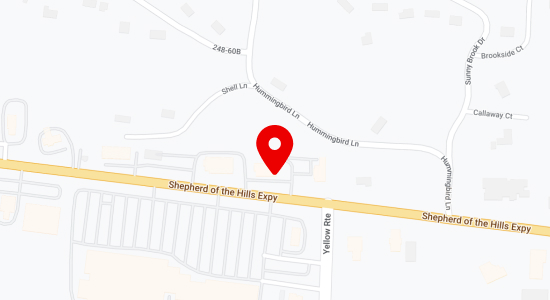
Please note that our law firm's address is for mail correspondence only. We do not accept in-office visits to this location. To schedule an appointment or consult with an attorney, please contact us via phone or email. Our contact information is readily available on our website. We look forward to hearing from you and strive to supply efficient and accessible legal services to our clients.
Branson, MO 65616