
Former Prosecutor
of 20 Years on
Your Side
of 20 Years on
Your Side









Healthcare fraud is one of the most aggressively prosecuted categories of white-collar crime in the United States. Federal and state authorities dedicate significant resources to investigating providers, billing personnel, administrators, and even patients suspected of defrauding Medicare, Medicaid, or private insurers. If you or your organization is under investigation or has been charged, the consequences can be devastating, including federal prison time, massive fines, mandatory exclusion from federal health programs, and the permanent loss of professional licenses.
At Scrivner Law Firm in Taney County, Missouri, attorney Dayrell Scrivner brings a unique and powerful perspective to healthcare fraud defense. As a former prosecutor with more than 20 years of experience on the other side of the courtroom, including nearly two decades as an Assistant Prosecuting Attorney and Chief Assistant Prosecutor in Stone County, Dayrell Scrivner knows how investigators build cases, what prosecutors look for, and where weaknesses in a healthcare fraud case can be found and challenged. That inside knowledge is now working for you.
Healthcare fraud involves intentional deception or misrepresentation made to obtain an unauthorized benefit from a healthcare program. While outright theft is easy to identify, healthcare fraud charges frequently arise from billing practices, documentation errors, and compliance failures that may have no dishonest intent behind them. Federal prosecutors, however, can and do pursue charges based on patterns of conduct they allege demonstrate willful wrongdoing.
Common conduct that gives rise to healthcare fraud investigations includes:
Upcoding. Submitting billing codes for services at a higher level of complexity or cost than the services that were actually provided. Even isolated coding errors can become the basis for a fraud investigation when they form a pattern across many claims.
Billing for services not rendered. Submitting claims for procedures, tests, or visits that never took place, or that were performed on patients who were not present.
Unbundling. Billing separately for procedures that should be submitted as a single combined service in order to receive a higher total reimbursement.
Phantom patients and patient recruiting. Filing claims under real or fictitious patient identities, or paying recruiters to bring patients to a clinic in exchange for later billing to Medicare or Medicaid.
Kickback arrangements. Paying or receiving anything of value, including money, gifts, meals, travel, or other remuneration, in exchange for patient referrals to providers whose services are billed to federal health programs.
Improper physician self-referrals. Referring patients to medical facilities or services in which the referring physician has a financial interest, in violation of federal law.
False documentation. Fabricating or altering medical records, prescriptions, or treatment notes to justify claims that would not otherwise qualify for reimbursement.
These allegations can arise in virtually any healthcare setting, including physician practices, hospitals, home health agencies, durable medical equipment suppliers, pharmacies, laboratories, nursing facilities, and mental health clinics, among others.
Healthcare fraud prosecutions can involve a web of overlapping federal laws. Understanding each statute and the specific elements the government must prove is critical to building an effective defense.
18 U.S.C. § 1347 — The Federal Healthcare Fraud Statute. This is the primary federal criminal statute used to prosecute healthcare fraud. It makes it a crime to knowingly and willfully execute, or attempt to execute, a scheme to defraud any healthcare benefit program, or to obtain money or property controlled by a healthcare benefit program through false or fraudulent pretenses. A conviction under Section 1347 carries up to 10 years in federal prison. If the offense results in serious bodily injury, the maximum increases to 20 years. If a patient’s death results, a conviction can lead to life imprisonment.
18 U.S.C. § 1349 — Conspiracy to Commit Healthcare Fraud. Federal prosecutors frequently charge conspiracy in addition to the underlying fraud. Under Section 1349, a defendant may be convicted for agreeing with others to commit healthcare fraud, even if the fraud itself was never completed. Penalties mirror those of the underlying offense.
31 U.S.C. §§ 3729–3733 — The False Claims Act (FCA). Originally enacted during the Civil War, the False Claims Act is now one of the federal government’s most powerful tools for recovering funds lost to fraud against government programs, including Medicare and Medicaid. The FCA imposes civil penalties, currently over $13,000 per false claim, plus treble damages equal to three times the government’s actual losses. The FCA also permits private citizens (known as relators) to file qui tam lawsuits on the government’s behalf and to share in any recovery. This means that a disgruntled employee, competitor, or patient may have already triggered an FCA investigation before any charges are filed.
42 U.S.C. § 1320a-7b — The Anti-Kickback Statute (AKS). This statute prohibits knowingly and willfully offering, paying, soliciting, or receiving any remuneration, directly or indirectly, to induce or reward referrals of items or services covered by federal healthcare programs. The AKS is a criminal statute. A conviction is a felony carrying up to 10 years in federal prison and fines up to $100,000 per violation. AKS violations also trigger civil monetary penalties and are deemed false claims for purposes of the FCA. Intent matters, and prosecutors are required to prove the defendant acted knowingly and willfully.
42 U.S.C. § 1395nn — The Physician Self-Referral Law (Stark Law). The Stark Law prohibits physicians from referring Medicare or Medicaid patients to entities providing designated health services in which the physician has a financial relationship, unless a specific exception applies. Unlike the Anti-Kickback Statute, the Stark Law is a strict liability civil statute, meaning the government does not need to prove any intent to violate it. Penalties include denial of claims, civil monetary penalties up to $15,000 per improper service, and exclusion from federal health programs.
42 U.S.C. § 1320a-7a — The Civil Monetary Penalties Law (CMPL). This statute authorizes the Department of Health and Human Services Office of Inspector General to impose substantial civil fines against providers who submit false or fraudulent claims, pay or receive kickbacks, or engage in other prohibited conduct.
Missouri providers may also face charges under state law. Missouri Revised Statutes Chapter 570 covers a range of theft and fraud offenses that state prosecutors can apply to Medicaid fraud and related conduct.
Healthcare fraud investigations are typically long and methodical. By the time federal agents appear at your door or a subpoena arrives for your billing records, investigators may have spent months or even years building their case. These investigations frequently involve multiple agencies working in coordination, including the Department of Justice, the Department of Health and Human Services Office of Inspector General, the FBI, and the Centers for Medicare and Medicaid Services.
The stakes extend far beyond criminal penalties. A conviction or even a settlement can trigger mandatory exclusion from Medicare and Medicaid, effectively ending a healthcare career. Professional licensing boards may take independent action based on criminal charges or civil findings. Reputational harm can be immediate and lasting.
Perhaps most importantly, healthcare fraud charges frequently catch well-meaning providers off guard. Complex billing systems, frequent regulatory changes, ambiguous coding guidelines, and administrative delegation create genuine risk that billing errors will be mischaracterized as intentional fraud. The line between a mistake and a crime is not always clear, but federal prosecutors often argue otherwise.
Dayrell Scrivner’s background as a former Chief Assistant Prosecutor gives him a clear-eyed understanding of how the government investigates and charges healthcare fraud. He knows how investigators evaluate billing data, how they work with cooperating witnesses, and how prosecutors present complex financial evidence to juries. That knowledge informs every stage of a defense strategy.
Effective healthcare fraud defense may involve challenging the sufficiency of the government’s evidence, scrutinizing how records were obtained and whether proper procedures were followed, retaining qualified billing and coding experts to evaluate whether conduct violated applicable standards, and negotiating with prosecutors to achieve dismissal, reduced charges, or favorable resolution when appropriate.
Dayrell Scrivner earned his law degree from the University of Missouri-Kansas City School of Law and went on to serve as Assistant Prosecuting Attorney for nearly two decades, including as Chief Assistant Prosecutor from 2002 to 2018. He is a member of the Missouri Bar and the 46th Judicial Circuit Bar Association, a recognized National Trial Lawyers Top 100 member, and holds an A+ rating from the Better Business Bureau. He has served Taney, Stone, and Christian County clients since establishing his private practice in 2018.
If you are under investigation for healthcare fraud, have received a federal subpoena, or have already been charged, do not wait. The decisions made in the earliest stages of a healthcare fraud case can have a profound impact on the outcome. Attempting to navigate a federal investigation without experienced legal counsel, or making statements to investigators before consulting an attorney, can make a difficult situation significantly worse.
Scrivner Law Firm represents clients across Taney, Stone, and Christian Counties and throughout Missouri in federal and state criminal defense matters. Attorney Dayrell Scrivner is ready to listen, evaluate your situation confidentially, and put more than two decades of prosecutorial and defense experience to work for you.
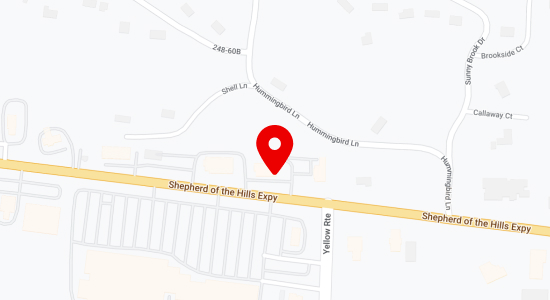
Please note that our law firm's address is for mail correspondence only. We do not accept in-office visits to this location. To schedule an appointment or consult with an attorney, please contact us via phone or email. Our contact information is readily available on our website. We look forward to hearing from you and strive to supply efficient and accessible legal services to our clients.
Branson, MO 65616