
Former Prosecutor
of 20 Years on
Your Side
of 20 Years on
Your Side







A criminal case in Missouri does not always begin with handcuffs, booking, and a night in jail. In many cases, especially misdemeanor and lower level criminal matters, the court may issue a summons instead of an arrest warrant. A summons tells a person to appear in court on a specific date. An arrest places the person in custody and can involve jail, bond, release conditions, and the immediate loss of freedom.
Both a summons and an arrest can lead to the same criminal courtroom. Both can involve real charges. Both can carry serious consequences. The difference is how the accused person is brought before the court.
For many people, receiving a summons creates confusion. Some assume that because they were not arrested, the case is minor. Others ignore the paperwork because they do not realize it is a court order. That can be a serious mistake. A summons is not a warning letter. It is a formal direction to appear in court, and failing to appear can turn a summons case into a warrant case.
Scrivner Law Firm, led by criminal defense attorney and former prosecutor Dayrell Scrivner, represents people facing criminal charges throughout Missouri. With decades of courtroom experience and a background on both sides of criminal cases, Dayrell Scrivner understands how prosecutors, judges, and law enforcement approach summonses, warrants, arrests, bond, and court appearances.
A criminal summons is a court document ordering a defendant to appear in court to answer a criminal charge. Instead of being taken into custody, the person receives notice of the charge and a court date. The summons gives the court authority to require the defendant’s appearance without the immediate use of an arrest warrant.
In practical terms, a summons allows a person to remain out of jail while the case begins. The document typically identifies the charge, the court, the case number, and the date and time the defendant must appear.
A summons is more likely when the court believes the person will appear voluntarily and does not pose a danger to a victim, witness, the public, or another person. A misdemeanor summons can still involve jail, probation, fines, a criminal record, license consequences, employment problems, immigration concerns, or other long term harm.
Missouri Supreme Court Rule 21.03 addresses misdemeanor cases. When an information is filed in a misdemeanor case, a summons is generally issued unless the court finds sufficient facts showing probable cause that a misdemeanor was committed and reasonable grounds to believe the defendant will not appear on a summons or poses a danger to a crime victim, the community, or another person. If those concerns exist, the court may issue a warrant instead.
That rule reflects an important point. In many misdemeanor cases, Missouri procedure favors a summons unless there is a reason to believe an arrest warrant is necessary.
An arrest is different because it involves taking a person into custody. Missouri Revised Statute section 544.180 defines an arrest as an actual restraint of the person or the person’s submission to the custody of an officer under authority of a warrant or otherwise.
An arrest may occur after a judge issues an arrest warrant. It may also occur without a warrant in certain situations. Missouri Revised Statute section 544.216 gives law enforcement officers authority to make arrests without a warrant in specific circumstances when there are grounds to believe a person has violated the law.
Once a person is arrested, the case becomes urgent. The person may be transported to jail, searched, fingerprinted, photographed, booked, and held until release is arranged or until the court takes further action. Missouri Revised Statute section 544.170 limits how long a person arrested without a warrant may be held without being charged by oath of a credible person and held by warrant. For many offenses, the limit is twenty hours. For certain offenses, it may be twenty-four hours.
An arrest can create immediate practical problems. A person may miss work, lose access to transportation, be separated from family, or face public embarrassment before ever speaking to a judge. For someone accused in Missouri, that difference can affect the entire start of the case.
A summons is often used when the court believes the defendant can be trusted to appear. This may happen in misdemeanor cases, traffic related offenses, nonviolent allegations, cases involving defendants with stable local ties, or situations where law enforcement investigated first and prosecutors filed charges later.
The court may consider practical concerns such as prior court appearances, ties to the community, the seriousness of the allegation, the risk of flight, victim safety, public safety, and whether the person has ignored prior court orders.
In misdemeanor cases, Rule 21.03 places the summons and warrant decision in a structured framework. The court considers whether there are reasonable grounds to believe the defendant will not appear or poses a danger. If those concerns are not present, a summons may be the proper way to begin the case.
A summons can also conserve law enforcement and jail resources. Not every person accused of a crime needs to be arrested to make the court process work. Missouri criminal procedure recognizes that some defendants can be brought into court through notice rather than custody. Still, a summons should never be treated casually. The court has opened a criminal case, and missing the date can change everything.
An arrest warrant is more intrusive than a summons because it authorizes law enforcement to take the defendant into custody. Courts may issue warrants when they believe a summons is not enough.
In misdemeanor cases, the issue often turns on failure to appear concerns or safety concerns. If the court finds reasonable grounds to believe the defendant will not appear upon a summons, a warrant may be issued. If the court finds reasonable grounds to believe the defendant poses a danger to a crime victim, the community, or another person, a warrant may also be issued.
Felony cases are often handled differently. Missouri Supreme Court rules governing felony cases allow the court to issue a warrant when a complaint is filed and the court finds sufficient facts to show probable cause that a felony has been committed by the defendant. Felonies usually carry greater penalties, greater flight concerns, and more significant public safety considerations.
Missouri Revised Statute section 544.060 addresses the issuance of warrants by a clerk upon indictments, and section 544.070 addresses issuance of process. Chapter 544 contains many of Missouri’s rules governing arrest, examination, commitment, and bail.
An arrest warrant may also be issued later in a case. If someone fails to appear after being summoned, violates a court order, fails to comply with bond conditions, or misses a required hearing, the court may issue a warrant. Missouri Revised Statute section 544.665 addresses failure to appear and makes it a separate offense in certain circumstances.
One of the biggest mistakes a person can make is assuming that a summons means the case is not serious. A summons is not a dismissal. It is not proof that prosecutors are uncertain. It is not a sign that the court will go easy on the person.
A summons simply means the court is ordering the person to appear without first directing police to arrest that person. The case can still result in conviction, probation, jail, fines, court costs, license consequences, firearm restrictions, protection order problems, employment issues, professional licensing consequences, and immigration complications.
The court date on the summons is mandatory. If the person appears as required, the case proceeds through the court process. If the person does not appear, the judge may issue a warrant. Once that happens, the person may be arrested at home, at work, during a traffic stop, or at another inconvenient and embarrassing time.
Probable cause is central to the difference between a summons and an arrest warrant. In Missouri criminal cases, a court generally needs sufficient facts showing probable cause before certain stages of a case can move forward or before an arrest warrant may issue.
Probable cause does not mean proof beyond a reasonable doubt. It does not mean the person is guilty. It means there is enough factual basis at that stage for the court to allow the case to proceed or for a warrant to issue.
For misdemeanors, Rule 21.03 requires sufficient facts to show probable cause that a misdemeanor has been committed before a warrant may issue, along with reasonable grounds related to failure to appear or danger. In felony cases, the probable cause showing is especially important when prosecutors seek an arrest warrant based on a complaint.
A summons usually avoids the immediate bond issue because the person has not been taken into custody. The defendant is simply ordered to appear. If the defendant appears, the court may address conditions later if necessary.
An arrest often raises immediate release questions. The court may set conditions of release designed to make sure the defendant appears and does not create a safety risk. Missouri Revised Statute section 544.455 addresses release of a person charged and conditions that may be imposed. Missouri Revised Statute section 544.453 identifies factors courts may consider in deciding bail or release conditions, including the nature and circumstances of the offense, the weight of the evidence, family ties, employment, financial resources, character, mental condition, residence in the community, prior convictions, prior court appearances, and whether the person was on probation, parole, or release when the alleged offense occurred.
Missouri Supreme Court Rule 33.01 also governs release and conditions in criminal cases. The rule is aimed at securing appearance in court and protecting safety. Bond is not supposed to punish someone before conviction. It is supposed to manage risk while the case is pending.
The way a case begins can affect how the judge views risk. A person who appears voluntarily after receiving a summons may be in a better position to argue that strict conditions are unnecessary. A person arrested on a warrant after missing court may face a harder argument.
A summons gives a defendant the opportunity to appear without being arrested. Failing to appear can erase that advantage. If the person does not come to court, the judge may issue a warrant. Depending on the circumstances, the person may also face a separate failure to appear allegation under Missouri law.
Missouri Revised Statute section 544.665 addresses failure to appear. The seriousness of a failure to appear allegation can depend on the underlying charge and the facts of the missed court date. Even when the original case was relatively minor, failing to appear can create new complications.
Ignoring the problem almost always makes it worse. A warrant can remain active until cleared. It can appear during a traffic stop, background check, employment issue, or law enforcement contact. What began as a summons can become an arrest at the worst possible time.
The difference between a summons and an arrest is not just procedural. It can affect the tone of the case. It can influence bond arguments, negotiations, scheduling, and the way the defendant is perceived by the court.
A person who responds promptly to a summons may show responsibility and stability. That can matter when asking the court for reasonable conditions or when negotiating with the prosecutor. A person who is arrested after a warrant may need to overcome concerns about flight, safety, or noncompliance.
The defense strategy may also differ. In a summons case, an attorney may have time to investigate, gather records, speak with witnesses, review the charging documents, and prepare for the first court appearance. In an arrest case, the first priority may be release from custody, bond reduction, or addressing urgent conditions.
Dayrell Scrivner’s experience as a former prosecutor is valuable in both situations. Prosecutors often evaluate cases based on risk, evidence, criminal history, victim concerns, and the likelihood of conviction. A defense lawyer who understands that mindset can respond with targeted advocacy rather than guesswork.
A summons should be treated as a legal emergency, even when the court date is weeks away. The first step is to read it carefully. The date, time, court location, case number, and charge matter. Missing one detail can lead to serious consequences.
The next step is to speak with a criminal defense lawyer before going to court. A lawyer can review the charge, explain the possible penalties, determine whether the summons is tied to a misdemeanor, felony, traffic offense, municipal matter, or state case, and begin preparing a defense.
After an arrest, the immediate focus is often release, bond, and protecting the person’s rights. The accused person should avoid making statements about the case to police, jail staff, other inmates, or anyone whose communications may not be private. Statements can be misunderstood, repeated, recorded, or used by prosecutors.
A defense lawyer can examine whether the arrest was lawful, whether the detention complied with Missouri law, whether the warrant was supported by probable cause, whether statements were obtained in violation of constitutional rights, and whether bond conditions are fair.
Whether your case begins with a summons or an arrest, the charge should be taken seriously from the start. A summons gives you the chance to appear without being taken into custody, but it is still a court order in a criminal case. An arrest creates immediate pressure, but it does not mean you are guilty or without options.
Scrivner Law Firm represents people facing criminal charges throughout Missouri, including Taney County, Stone County, Christian County, Branson, Forsyth, Hollister, Ozark, Nixa, Kimberling City, Reeds Spring, and surrounding communities. Attorney Dayrell Scrivner brings the perspective of a former prosecutor and decades of courtroom experience to the defense of people accused of crimes.
If you received a summons, learned there may be a warrant, or were arrested in a Missouri criminal case, contact Scrivner Law Firm to discuss your situation. Early legal guidance can help protect your rights, avoid preventable mistakes, and put your defense in the strongest position possible.
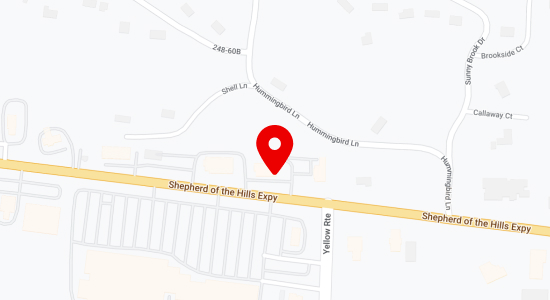
Please note that our law firm's address is for mail correspondence only. We do not accept in-office visits to this location. To schedule an appointment or consult with an attorney, please contact us via phone or email. Our contact information is readily available on our website. We look forward to hearing from you and strive to supply efficient and accessible legal services to our clients.
Branson, MO 65616