
Former Prosecutor
of 20 Years on
Your Side
of 20 Years on
Your Side









A check can be returned for many reasons: a delayed deposit, an unexpected automatic withdrawal, a bank hold, a bookkeeping error, or a dispute over goods or services. Missouri law does not treat every failed payment as criminal conduct. A prosecution for passing a bad check depends on what the person knew, what the person intended, and what happened after the payment was rejected.
When a payee reports a check, a financial problem may lead to written notice, a summons, or an arrest warrant. The amount, account status, and timing of multiple checks can determine whether the allegation is a misdemeanor or felony.
Scrivner Law Firm defends people accused of financial and other criminal offenses in Taney County and surrounding southwest Missouri communities. Attorney Dayrell Scrivner brings decades of legal experience, including two decades as a prosecutor, to evaluating the evidence behind a bad-check allegation and identifying weaknesses in the State’s case.
Missouri Revised Statutes Section 570.120 calls the offense “passing bad checks.” The law reaches checks, similar sight orders, and other forms of presentment that transmit account information for the payment of money. In practical terms, the statute is broader than the familiar image of someone handing over a paper personal check.
First, a person commits the offense by making, issuing, or passing an instrument with the purpose to defraud, while knowing it will not be paid by the drawee or that no drawee exists. A drawee is generally the bank or other institution directed to make the payment. Under this part of the statute, fraudulent purpose is an express element of the accusation.
Second, the statute addresses a person who makes, issues, or passes an instrument knowing that the account lacks enough money to pay it in full together with other outstanding instruments, or knowing that there is no account or drawee. For this route, the statute also requires a failure to pay the instrument within ten days after the person receives actual written notice that it was not paid for one of the specified reasons.
The precise theory matters. The State should not be allowed to replace proof of the required knowledge or purpose with the bare fact that a bank returned the payment.
Account balances change quickly. A person may reasonably expect a paycheck, transfer, customer payment, or deposit to clear before a check is presented. A joint account holder may withdraw money without the issuer’s knowledge. A bank may place a hold on deposited funds. None of those facts alone resolves criminal liability, but each may affect whether the person knew the check would not be covered.
Prosecutors may infer the issuer’s state of mind from bank records, prior returned checks, messages, deposits and withdrawals, or later statements. The defense can place those events in their full context.
For example, records showing regular deposits, an expected receivable, attempts to transfer funds, or prompt communication with the payee may be inconsistent with an allegation of deliberate deception. Conversely, an account that had already been closed presents a different factual question. A careful defense begins with the actual transaction history rather than assumptions based on the return code printed by a bank.
Under the insufficient-funds route in Section 570.120.1(2), the ten-day period begins after the defendant receives “actual notice in writing.” The statute defines this as notice of nonpayment actually received by the defendant. A written communication that is tendered but refused can satisfy the notice requirement.
The statute also allows the necessary notice to be included in a summons or warrant initiating prosecution, provided the document explains the ten-day payment period and states that payment within that period will result in dismissal of the charges. This means a case may already have entered the court system when the statutory opportunity to pay is communicated.
Paying promptly can therefore have major legal significance under the applicable provision. Still, a person who receives a demand should avoid guessing about the deadline, the required amount, or whom to pay. The notice, delivery history, returned instrument, and court documents should be preserved and reviewed. Ignoring or refusing correspondence generally does not make the issue disappear.
The ten-day language does not mean every returned check becomes criminal on day eleven. The State must still prove the applicable elements, including disputed issues involving knowledge, fraudulent purpose, identity, or authorization.
Passing a bad check is ordinarily a class A misdemeanor. Under Section 570.120, however, it becomes a class E felony when the face amount is $750 or more. The offense is also a class E felony when the issuer had no account with the drawee or no such drawee existed when the instrument was issued, regardless of whether the face amount independently reaches $750.
Multiple smaller payments cannot always be considered separately. When bad checks are passed as part of one course of conduct within a ten-day period, Missouri law permits their face amounts to be aggregated when determining the grade of the offense. Several transactions below $750 may therefore support a felony allegation if the statutory requirements for aggregation are met.
The sentencing ranges are materially different:
Section 558.002 also permits a fine based on gain in an amount not exceeding twice the money or property gained through the offense, subject to the statute’s rules. The maximum classification does not predict an individual sentence, which may depend on the evidence, criminal history, restitution, and other circumstances.
Not every payment dispute belongs under the passing-bad-check statute. Missouri Revised Statutes Section 570.125 addresses fraudulently stopping payment on an instrument. A person violates that provision by stopping payment on a check, draft, or debit device used to receive goods or services, with the purpose to defraud.
The offense is generally a class A misdemeanor. It becomes a class E felony when the instrument is for $750 or more, or when multiple instruments stopped as part of the same course of conduct total at least $750.
Section 570.125 also establishes prima facie evidence of a violation when a person stops payment and, within ten days after the payee’s written notice, fails either to make the transaction good or to return the property—or make and comply with reasonable arrangements to return it—in substantially the condition in which it was received. For this statute, written notice must be sent by certified or registered mail to the address shown on the instrument or the issuer’s last known address, and it must warn that failure to make good within ten days may lead to criminal prosecution.
A dispute about defective goods, incomplete work, authorization, or contract performance can complicate a stop-payment case. Communications, invoices, photographs, return attempts, and the parties’ agreement may become important evidence of intent.
Section 570.120 authorizes specified costs and charges in addition to the face amount. When a prosecuting or circuit attorney takes action under the statute, the issuer is assessed an administrative handling cost: $25 for a check under $100; $50 for a check of at least $100 but less than $250; and 10 percent of the face amount for a check of $250 or more, subject to a $75 maximum. The statute also provides for an additional $5 cost per check for the Missouri Office of Prosecution Services Fund.
A prosecutor may also collect a reasonable service charge, in addition to the check amount, to be turned over to the recipient. If the check is not referred for prosecutorial action, the recipient or another qualifying holder may collect a reasonable service charge of no more than $25 plus the actual fee charged by the depository institution for the returned instrument.
Separate civil remedies may be available under Missouri law. Civil liability, repayment, restitution, and criminal prosecution are not interchangeable, and payment does not necessarily resolve every matter.
A meaningful evaluation looks beyond the front and back of the check. Depending on the allegations, defense counsel may examine:
These facts may support different defense approaches. The evidence may fail to establish knowledge, purpose to defraud, actual receipt of the required notice, or a connection between the accused and the instrument. The amount or aggregation theory may be incorrect. In other cases, the objective may be to address repayment responsibly while pursuing dismissal, reduction, or another negotiated resolution. No single strategy fits every returned-check allegation.
If you learn that a check has been returned or referred for prosecution, preserve the relevant information immediately. Download account statements and transaction details before online access changes. Save the envelope and contents of every demand letter. Keep texts and emails in their original form. Gather deposit receipts, contracts, invoices, and proof of any attempt to pay or return property.
Do not alter records or invent an explanation. Avoid making statements without understanding how they could be used. A rushed apology may be treated as an admission, while an angry message can complicate the case. Do not miss court or assume repayment cancels a summons or warrant.
Early legal advice can be particularly useful because the notice period may be running while the accused is still trying to understand what happened. An attorney can review the allegation, identify the governing statutory route, and help determine what response is appropriate without making promises about an outcome.
Bad-check cases often turn on how prosecutors organize circumstantial evidence into a story about intent and knowledge. Dayrell Scrivner spent 20 years as a prosecutor, including service as Chief Assistant Prosecuting Attorney, before focusing his practice on representing people accused of crimes. That background informs his review of how the State may interpret banking records, communications, notice, and repayment efforts.
Scrivner Law Firm approaches each case according to its documents and timeline. The firm represents clients in Taney, Stone, and Christian Counties, providing clear guidance while preparing a defense grounded in the evidence.
A returned check can move from a private payment dispute to a criminal case faster than expected. Prosecutors may be reviewing banking records, written notices, transaction histories, and communications while deciding how to pursue the allegation. Having a defense attorney involved early provides an opportunity to preserve important records, examine the required elements, and respond carefully before the case progresses further.
Attorney Dayrell Scrivner brings experience as both a former prosecutor and criminal defense lawyer to these cases. If you received a bad-check notice, learned that a complaint was submitted, or have been charged with passing a bad check or fraudulently stopping payment, contact Scrivner Law Firm to discuss what happened, the possible consequences, and the available defense options. Call the firm or submit the online contact form to schedule a consultation.
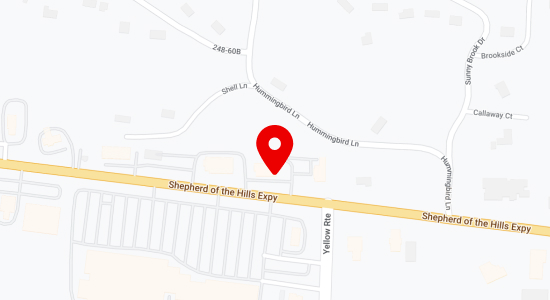
Please note that our law firm's address is for mail correspondence only. We do not accept in-office visits to this location. To schedule an appointment or consult with an attorney, please contact us via phone or email. Our contact information is readily available on our website. We look forward to hearing from you and strive to supply efficient and accessible legal services to our clients.
Branson, MO 65616