
Former Prosecutor
of 20 Years on
Your Side
of 20 Years on
Your Side







A package theft allegation can look minor from the outside. A box disappears from a porch. A delivery driver reports missing merchandise. Police review doorbell footage, talk to neighbors, and make an arrest. But in real life, these cases can move quickly from a local accusation to a much more serious criminal matter. What starts as an allegation involving a single parcel can turn into charges for stealing under Missouri law, tampering, receiving stolen property, or even identity theft if the package contained financial records, cards, or personal information.
If you are under investigation or have already been charged, the details matter. So does the timing of your response. Scrivner Law Firm defends people accused of theft and related offenses in Missouri. Attorney Dayrell Scrivner brings a perspective that few defense lawyers can offer. Before entering private practice, he spent nearly two decades in the Stone County Prosecutor’s Office, including many years as Chief Assistant Prosecuting Attorney. That background gives him firsthand knowledge of how law enforcement builds theft cases, how prosecutors evaluate evidence, and where weaknesses often appear. When your reputation, record, and freedom are on the line, that experience can make a meaningful difference.
Missouri does not rely on a single “porch piracy” statute for every package theft accusation. Instead, prosecutors usually start with Missouri’s general stealing law, § 570.030 RSMo. Under that statute, a person commits stealing if he or she appropriates the property of another with the purpose to deprive the owner of it, either without consent or by means of deceit or coercion. That broad language gives the state room to charge a wide range of conduct involving delivered packages, parcels taken from porches, goods removed from apartment mail areas, or items intercepted before reaching the intended recipient.
In practical terms, the charge may depend on what the police believe happened. If someone is accused of taking a delivered parcel off a front step, prosecutors often use § 570.030. If the allegation is that a person kept, sold, or held onto a package or its contents after learning it was stolen, the same statute may still apply because Missouri law also treats receiving, retaining, or disposing of property believed to be stolen as stealing. That matters in many package theft cases because not every defendant is accused of physically taking the item from the delivery location. Some are accused of receiving the property later.
The grading of the offense can also change based on value and surrounding facts. Under current Missouri law, stealing may be charged as a class D misdemeanor in lower-value situations, a class A misdemeanor in others, and a felony when value thresholds or other statutory aggravating factors are met under § 570.030. If prosecutors argue that several thefts were part of one scheme or course of conduct, Missouri law also allows aggregation of value in some situations. That means multiple package allegations can be combined to increase exposure.
A package theft arrest is rarely based on one fact alone. Police may claim they have a video clip, license plate image, online resale record, phone location data, or a witness statement. Prosecutors may then layer charges or aggravating facts into the case to make it appear stronger than it really is.
Section 570.030 allows the state, in certain circumstances, to treat thefts committed as part of one scheme or course of conduct as a single criminal episode for grading purposes. That can become a major issue in delivery theft prosecutions. If police believe a person took several packages over a short period from the same subdivision, apartment complex, or route, they may try to combine those allegations rather than treat each event in isolation.
That approach benefits the prosecution because it can push the claimed value over the threshold for a more serious charge. It can also create the impression that the accused was engaged in an ongoing theft pattern even when the proof is thin, the identification is weak, or the events involve different witnesses with different accounts.
Missouri’s stealing statute also addresses organized retail theft within § 570.030. In some cases, prosecutors may try to fit package or delivery theft into a broader theory that the accused was participating in an organized theft operation, especially where items were allegedly resold online, moved in groups, or taken from deliveries tied to retail purchases. When the state claims the theft was part of organized retail theft and the value and related damage reach certain levels, the charge can rise into felony territory.
That does not mean the label fits every case. Sometimes police see repeated thefts and assume organization where there was none. Sometimes they rely too heavily on associations, text messages, or proximity to other suspects. A careful defense has to test whether the evidence truly supports the prosecutor’s theory or merely invites speculation.
These prosecutions often look stronger on paper than they do in court. Once the evidence is examined closely, gaps can begin to appear.
Doorbell cameras, apartment surveillance systems, and delivery van footage are now central features in many package theft investigations. But video does not automatically prove identity. Grainy nighttime footage, side-profile clips, hooded clothing, obstructed views, or distant camera angles can leave real doubt about who is actually shown.
A prosecutor may say, “The person in the video is clearly the defendant.” That conclusion may rest on guesswork. Clothing is not identity. A vehicle near the scene is not identity by itself. A defense attorney can challenge whether the state can truly prove that the accused is the individual on the recording and whether the footage has been preserved, authenticated, and interpreted fairly.
Many people assume that once a retailer or carrier shows an item was “delivered,” the rest is simple. It is not. Delivery status does not prove where the package was left, whether it was misdelivered, whether a neighbor picked it up, or whether the recipient retrieved it and later misplaced it. Delivery photos can be incomplete. GPS data can be imprecise. A carrier’s internal records may raise as many questions as they answer.
In some cases, the defense may need to examine the timeline closely. Was the package actually delivered when the carrier said it was? Was it left at the correct address? Was the item visible from the street? Did more than one person have access to the location? Those questions matter because the state still has the burden to prove criminal appropriation, not just a missing item.
Missouri’s stealing statute reaches people who allegedly receive or retain stolen property, but that still requires proof of knowledge or belief that the property was stolen. In a package case, possession alone may not settle the issue. Someone may have accepted a package for another person, picked up a box believing it was abandoned, or purchased an item without knowing it came from a theft. Those are fact-specific situations, and they should not be brushed aside.
When police jump from possession to criminal intent, the defense has to examine how that jump was made. What did the accused allegedly know? What circumstances supposedly made the theft obvious? Is the state relying on actual proof or hindsight?
Package theft accusations do not always arrive as a single stealing count. Depending on the facts, prosecutors may add other Missouri charges.
Under § 569.090 RSMo, tampering in the second degree can apply when a person tampers with property of another for the purpose of causing substantial inconvenience. In some cases, prosecutors use this statute when the conduct involves interference with another person’s property rather than outright permanent deprivation. This can arise where police believe someone opened, moved, damaged, or interfered with a delivered parcel or receptacle even if the state’s proof of full theft is less direct.
If a stolen package contains credit cards, checks, account records, tax documents, or other identifying information, the case can expand beyond a property crime. Section 570.223 RSMo addresses identity theft and can apply when a person knowingly and with intent to deceive or defraud obtains, possesses, transfers, or uses another person’s means of identification without lawful authority. In other words, a package theft allegation can evolve into a much broader prosecution if the state claims the contents were used for fraud.
Sometimes a package theft case includes property damage, such as broken mail area locks, damaged package lockers, or destruction of containers. Those facts may influence charging decisions, plea negotiations, and the prosecution’s narrative. Even when the core accusation remains stealing under § 570.030, added allegations about damage can affect how the case is viewed by the court.
Not every delivery theft case stays entirely in state court. If the property was part of the United States mail system, federal exposure may also exist. That is especially true when the allegation involves mail taken from a mailbox, mail receptacle, postal route, or other protected mail stream. A state case may still proceed under Missouri law, but the presence of federal mail issues can increase pressure on the accused and complicate the defense.
That overlap is one more reason to involve counsel early. Statements made to local officers can later matter in a broader investigation. Evidence gathered in one forum can affect another. A defense strategy should take the full picture into account, not just the first charge listed on a summons or complaint.
Dayrell Scrivner’s background is especially valuable in theft and property cases because he knows how these prosecutions are assembled from the inside. Before devoting his practice to defending clients, he spent years prosecuting criminal cases in Missouri and served as Chief Assistant Prosecuting Attorney in Stone County. He knows how police reports are written, how prosecutors assess witness problems, how they use charging discretion, and where overcharging can occur.
He also brings decades of legal experience to the representation of individuals in Taney, Stone, Christian, and surrounding Missouri communities. That combination of courtroom experience, prosecutorial insight, and local familiarity is important when the state is pushing hard on a theft allegation and the defense needs a lawyer who can spot weaknesses early rather than react late.
If you have been accused of package theft, porch piracy, delivery theft, receiving stolen property, or a related Missouri offense, do not assume the case is straightforward and do not assume the police already have everything figured out. These cases often depend on rushed conclusions, incomplete timelines, questionable identification, and assumptions about intent. What you do next can affect whether the matter is reduced, dismissed, negotiated carefully, or taken to trial.
Scrivner Law Firm represents people facing criminal charges with the focused, informed advocacy they need at a stressful moment. Attorney Dayrell Scrivner understands how prosecutors approach theft cases because he used to stand in their position. Now he uses that knowledge to defend the accused. If you or a loved one is facing a package or delivery theft accusation in Missouri, contact Scrivner Law Firm to discuss the facts, protect your rights, and begin building a defense immediately.
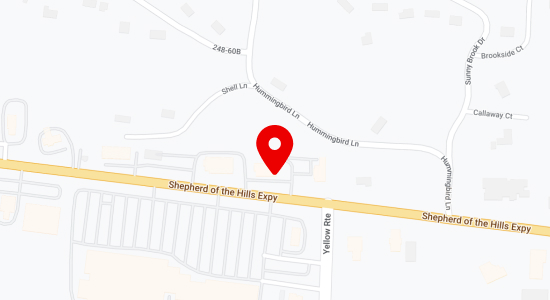
Please note that our law firm's address is for mail correspondence only. We do not accept in-office visits to this location. To schedule an appointment or consult with an attorney, please contact us via phone or email. Our contact information is readily available on our website. We look forward to hearing from you and strive to supply efficient and accessible legal services to our clients.
Branson, MO 65616