
Former Prosecutor
of 20 Years on
Your Side
of 20 Years on
Your Side







Organized retail theft allegations can hit hard and fast. A person may start by thinking the case is about a single shoplifting accusation, only to learn that law enforcement and prosecutors are treating it as part of a larger scheme involving multiple transactions, multiple people, multiple stores, online resale activity, or allegations that stolen goods were stored, moved, or sold for profit. In Missouri, that can elevate both the stakes and the complexity of the case because the stealing statute now specifically addresses organized retail theft and allows value to be aggregated across acts that are tied to an ongoing agreement.
When you are facing that kind of accusation, the details matter. The timeline matters. The alleged agreement matters. The claimed value matters. The source of the merchandise matters. So does the state’s proof that you knew what was happening and intentionally participated in it. Organized retail theft cases are rarely simple. They often involve store reports, surveillance footage, witness interviews, cell phone evidence, social media activity, online marketplace records, receipts, vehicle information, and statements made in stressful moments. A defense has to be built carefully and early.
Scrivner Law Firm is led by Dayrell Scrivner, a Missouri criminal defense attorney with more than 30 years of legal experience and decades as a prosecutor, including service as Chief Assistant Prosecutor in Stone County. He graduated from UMKC School of Law, has taught criminal law and criminal procedure as a Missouri state licensed specialist instructor for universities and police academies, and helped launch Stone County’s drug court and veterans court programs. That background matters in a theft case because it gives him practical insight into how prosecutors evaluate evidence, structure charges, and present intent-based allegations. The firm serves clients across Missouri, including communities in Taney, Stone, and Christian counties.
Missouri does not require prosecutors to use a separate stand-alone charge label outside the stealing statute to pursue an organized retail theft case. Instead, Section 570.030 of the Missouri Revised Statutes defines organized retail theft within the stealing statute itself. Under that law, organized retail theft can include stealing committed by one or more persons as part of an agreement to steal property from a business, receiving or possessing business property stolen as part of such an agreement while knowing or having reasonable grounds to believe it was stolen, or organizing, supervising, financing, leading, or managing people for profit in a scheme to transfer or sell stolen business property.
That is a broad definition. It means the state may try to build a case not only against the person accused of taking merchandise from a store shelf, but also against someone accused of coordinating trips, handling transportation, warehousing goods, processing returns, selling items online, or distributing proceeds. In other words, the prosecution may claim a person was part of the retail theft operation even if that person was not the one seen walking out of the store with unpaid merchandise.
Missouri law also allows separate acts that are part of an ongoing agreement to be aggregated for determining value, even when those acts occurred at different times or in different jurisdictions. That is one of the most important features of an organized retail theft case. Conduct that might appear minor when viewed as a single incident can become much more serious when the prosecution combines several alleged acts and claims they were all part of one coordinated scheme.
Under Section 570.030, stealing tied to organized retail theft becomes a class C felony when the value of the property taken, together with any property damage inflicted in the theft, is at least $750 but less than $10,000. It becomes a class B felony when the value of the property taken, together with any property damage inflicted in the theft, is $10,000 or more. By contrast, the same statute also provides that certain lower-value stealing conduct can fall at the misdemeanor level when no higher grading applies.
Those classifications matter because Missouri’s general sentencing statute, Section 558.011, authorizes imprisonment of up to 15 years for a class B felony, 3 to 10 years for a class C felony, up to 7 years for a class D felony, and up to 1 year for a class A misdemeanor. Not every case results in the maximum sentence, but a felony theft conviction can expose a person to prison, probation conditions, restitution demands, employment damage, professional licensing issues, and long-term reputational consequences.
Another major issue is count stacking. Section 570.030 states that appropriation of property worth $750 or more may be considered a separate felony and charged in separate counts, while the statute also allows value from one scheme or course of conduct to be aggregated in determining the grade of the offense. That creates room for aggressive charging decisions, especially when the state believes multiple incidents, multiple stores, or multiple participants were involved.
In many organized retail theft cases, the battle is not just over whether merchandise left a store without payment. The real fight is over intent, knowledge, participation, and agreement. Prosecutors often try to prove that the accused was not acting alone, not acting by mistake, and not merely present. They may try to show an organized pattern by using repeated store visits, matching merchandise, coordinated travel, text messages, cash app transfers, online marketplace listings, return activity, or possession of large quantities of retail goods. Missouri’s aiding and accomplice liability statute, Section 562.041, allows criminal responsibility when a person aids, agrees to aid, or attempts to aid another in planning, committing, or attempting to commit an offense with the purpose of promoting it.
The state may also rely on the conspiracy statute, Section 562.014, which says guilt may be based on an agreement made with the purpose of promoting or facilitating an offense, so long as an overt act is alleged and proved. That can become important where the prosecution claims the defendant was part of a theft ring, a resale operation, or a coordinated crew moving goods between stores, vehicles, storage locations, and online sales channels.
In practice, prosecutors often build these cases from pieces that do not always fit together as neatly as they suggest. A person may know someone who shoplifted without joining an agreement. A person may possess merchandise without knowing it was stolen. A person may appear in a vehicle, a group text, or a marketplace message without sharing the criminal purpose the state must prove. That gap between suspicion and proof is where a strong defense can make a real difference.
A retail theft arrest may begin with one merchant, one report, and one stop. It can quickly expand. Once law enforcement suspects an organized operation, officers may start comparing surveillance from different stores, reviewing license plate reader information, contacting loss prevention teams from multiple businesses, and searching phones or online resale platforms for patterns. The case may evolve from a straightforward store accusation into a multi-jurisdiction file with broader exposure.
Missouri law expressly permits aggregation across jurisdictions for organized retail theft, and Section 570.030 authorizes the attorney general to prosecute organized retail theft stealing cases when a local prosecutor or circuit attorney makes a written request. That means a person accused of being part of a larger theft operation may face a broader and more coordinated prosecution than expected.
This is one reason it is dangerous to treat the matter as minor or to assume that paying for merchandise later will make the case disappear. Once the state begins framing the facts as a scheme for profit, resale, or repeated theft, the defense must address the bigger theory of the case, not just the isolated event.
Organized retail theft cases are built from strategy as much as evidence. Prosecutors decide how to frame association, how to present timelines, how to argue value, and how to persuade a judge or jury that separate acts are really one coordinated enterprise. An attorney who has spent years inside a prosecutor’s office has seen how those charging decisions are made and where the weak points often are.
Dayrell Scrivner brings that perspective to the defense side. His decades in practice, long service as a prosecutor, work as Chief Assistant Prosecutor, training role in criminal law and procedure, and experience with Missouri courts give him a practical foundation for identifying weaknesses in the state’s proof and pushing back against inflated theories of criminal responsibility. He also brings a more personal approach reflected in the firm’s emphasis on accessible, client-focused representation across the Ozarks and surrounding Missouri communities.
That combination matters when a client needs more than a generic response. Organized retail theft cases often require close review of video, store documentation, police reports, digital evidence, timelines, and alleged co-defendant conduct. The defense may involve negotiation, motion practice, suppression issues, charge reduction efforts, trial preparation, or all of the above.
The first priority is to avoid making the case worse. Do not try to talk your way out of it with law enforcement. Do not contact store employees, witnesses, or alleged co-defendants to compare stories. Do not delete messages, marketplace listings, receipts, or phone data. Do not assume that because you were not the one inside the store, you cannot be charged.
Instead, take the accusation seriously from the beginning. Preserve documents. Save receipts and account information. Write down what happened while your memory is fresh. Identify where you were, who was present, what property is actually at issue, and whether any statements were made during a detention, stop, or search. Then get legal counsel involved as soon as possible so the defense can begin before the state’s narrative hardens.
An organized retail theft allegation can threaten your freedom, your record, your job, and your future. These cases are often more complicated than they appear because the state may try to combine separate incidents, connect multiple people, and treat ordinary association as proof of a criminal agreement. A careful defense can challenge those assumptions, test the claimed value, attack weak inferences about knowledge or intent, and force the prosecution to prove every required element under Missouri law.
If you have been arrested for organized retail theft or believe you are under investigation, contact Scrivner Law Firm right away. Dayrell Scrivner is a seasoned Missouri criminal defense attorney and former prosecutor who knows how theft cases are built and how they should be challenged. Early action matters. The sooner your defense begins, the better your opportunity to protect your rights, address the evidence, and work toward the strongest possible result.
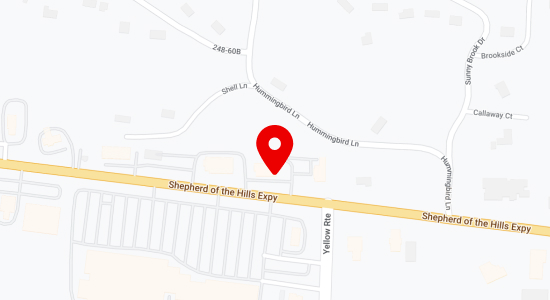
Please note that our law firm's address is for mail correspondence only. We do not accept in-office visits to this location. To schedule an appointment or consult with an attorney, please contact us via phone or email. Our contact information is readily available on our website. We look forward to hearing from you and strive to supply efficient and accessible legal services to our clients.
Branson, MO 65616