
Former Prosecutor
of 20 Years on
Your Side
of 20 Years on
Your Side







A livestock theft charge in Missouri is not a minor property allegation that will simply work itself out. For many people, it arrives with immediate pressure from law enforcement, angry accusations from neighbors or business associates, and real fear about felony exposure. In rural communities and agricultural areas, these cases can move fast. Animals may be counted, photographed, traced through sale barns, identified through brands, ear tags, veterinary records, transport paperwork, text messages, and bank transfers. By the time an arrest happens, investigators often believe they already know what occurred. That does not mean their case is complete, accurate, or easy to prove. Under Missouri law, stealing is defined broadly in § 570.030, and livestock is singled out for enhanced treatment in the grading of theft offenses. Missouri also defines “livestock” in § 144.010 to include cattle, calves, sheep, swine, ratite birds such as ostrich and emu, certain aquatic products, llamas, alpaca, buffalo, bison, elk from legal sources, goats, horses and other equine, honey bees, and rabbits raised in confinement for human consumption.
When the allegation involves livestock, the stakes often go beyond the value of a single animal. A conviction can threaten your freedom, your record, your livelihood, your standing in the community, and your ability to continue working in agriculture or related industries. Missouri law makes stealing livestock a class D felony even where general theft rules might otherwise produce a lesser grade, and the charge can rise higher depending on value and prior history. If the value exceeds $10,000, the offense can be charged as a class B felony. Missouri also provides a severe enhancement for a person previously found guilty of appropriating livestock or certain captive wildlife when the value of the animals exceeds $3,000, including a minimum prison term of not less than eighty percent of the sentence before eligibility for early release.
That is why it is critical to have counsel who knows how prosecutors build criminal cases and how to attack them. Dayrell Scrivner leads Scrivner Law Firm and brings more than two decades of experience to criminal defense work. His background includes service as an assistant prosecuting attorney in Stone County, and his firm emphasizes criminal defense representation in Taney, Stone, and Christian Counties. The firm also highlights his former-prosecutor perspective, which can matter in evaluating charging decisions, plea offers, and weaknesses in the state’s evidence.
Livestock is not treated like ordinary personal property in Missouri criminal law. Prosecutors do not view these cases as simple shoplifting or routine taking of movable goods. A single accusation may involve farm operations, breeding value, herd management, transportation records, veterinary evidence, auction documentation, and disputed ownership interests. In some cases, the real conflict is not theft at all. It may be a business breakup, a family farm dispute, confusion over consignment authority, an argument over partnership assets, or a disagreement about who had permission to move or sell animals.
Section 570.030 matters immediately in these cases because Missouri specifically lists livestock as a category that can elevate stealing charges. Under the current statute, stealing is a class D felony when the property appropriated consists of any animal considered livestock under § 144.010. If the value of the livestock exceeds $10,000, the offense becomes a class B felony. Missouri’s sentencing statute, § 558.011, authorizes up to seven years for a class D felony, up to four years for a class E felony, and five to fifteen years for a class B felony.
That grading structure changes the defense strategy. The case is not only about whether an animal was taken. It is also about identity, value, authorization, purpose, prior record allegations, and whether the state can prove each statutory element beyond a reasonable doubt.
Missouri’s general stealing statute in § 570.030 requires proof that a person appropriated property or services of another with the purpose to deprive the owner of it, either without consent or by deceit or coercion. In livestock cases, prosecutors often attempt to prove that intent through circumstantial evidence rather than a direct confession. They may point to nighttime movement of animals, altered tags, transportation to another county, quick resale activity, inconsistent explanations, false paperwork, or cash transactions that seem designed to hide the trail.
But suspicion is not proof. Animals are moved for many lawful reasons. A person may transport livestock for temporary boarding, medical treatment, breeding, pasture rotation, auction, emergency care, or sale under claimed authority. A criminal defense lawyer will closely examine whether the state can actually prove a purpose to deprive, as opposed to confusion, mistake, or a civil disagreement over possession.
Ownership is often more complicated than law enforcement first assumes. In real farm operations, animals may be jointly owned, leased, boarded, financed, bred under contract, or transferred informally between relatives and business partners. Calves may not yet be separately documented in a way that is immediately clear. Ear tags can be missing. Records may be incomplete. If the state cannot establish that the animals were unequivocally the property of another, the prosecution can weaken significantly.
Permission is just as important. If a defendant had actual permission, apparent permission, or a reasonable basis to believe he had authority to move, sell, or possess the animals, that issue can cut directly against criminal intent. The difference between a felony theft and a business dispute may rest on texts, invoices, gate access, feed bills, prior course of dealing, or witness testimony from people familiar with the farm.
Value can shape the grade of the offense. Under § 570.030, livestock over $10,000 can support a class B felony. That means the state’s valuation evidence deserves close scrutiny. Are they using fair market value at the relevant time? Are they inflating worth based on replacement cost, breeding projections, or sentimental claims? Are multiple animals being valued accurately and individually? Are they relying on a complaining witness who has every reason to overstate the loss?
In agricultural cases, value is not always simple. Weight, age, breed, condition, pregnancy status, registration, training, health, and market timing all matter. A strong defense may require challenging the state’s figures with records, sale data, or industry-based testimony.
A livestock theft investigation may not stop with a single stealing count. Prosecutors may look for evidence they believe supports additional accusations such as tampering, forgery, receiving stolen property theories under § 570.030, or even trespass allegations tied to how the animals were accessed or removed. Section 570.030 also covers receiving, retaining, or disposing of property of another while knowing or believing it has been stolen. That means a person can face exposure not only for allegedly taking livestock, but also for later handling animals prosecutors say were already stolen.
These cases can also involve aggregation and separate charging decisions. Section 570.030 states that property taken as part of one scheme or course of conduct may be aggregated in determining the grade of the offense, while certain thefts can also be charged in separate counts. In practical terms, that can turn a messy factual dispute into a much more serious felony file if prosecutors claim multiple acts were connected.
That is one reason early intervention matters. The sooner the defense begins reviewing the facts, the better the chances of pushing back before the narrative hardens.
Dayrell Scrivner’s former-prosecutor background matters in a livestock theft case because these prosecutions are often built step by step through witness interviews, document collection, and inferences about intent. A lawyer who has worked on the prosecution side can evaluate where the state may think it has leverage and where its proof is actually thin. Scrivner Law Firm emphasizes this insight into prosecution strategy, along with strategic planning and negotiation in local courts.
That kind of review can reveal important weaknesses, including overcharging, valuation problems, shaky witness credibility, and gaps in ownership proof. It can also help frame productive discussions with prosecutors when the evidence points toward a reduced charge, dismissal, or a resolution designed to limit long-term damage.
Livestock cases are won or improved through details. Defense work may include reviewing bills of sale, animal registration papers, transport records, veterinary documentation, electronic communications, photographs, prior dealings between the parties, and sale market information. Witnesses who know the day-to-day realities of a farm or ranch operation can also matter a great deal.
In some cases, the defense goal is full acquittal. In others, it is reducing the charge, preventing a high-value enhancement, challenging a prior-offense allegation, or presenting the case as a civil dispute rather than criminal theft. The right path depends on the evidence, not on assumptions.
People accused of livestock theft often think they can talk their way out of it with investigators or smooth things over directly with the complaining witness. That can backfire badly. Statements made in frustration or panic may be used later as admissions. Informal explanations can accidentally fill holes in the state’s case. Turning over documents without legal guidance can create new problems if context is missing.
A defense attorney can help you respond in a way that protects your rights while still positioning the case for the best possible outcome.
A felony livestock theft conviction can affect far more than the immediate sentence. Section 558.011 sets the authorized prison ranges, including up to seven years for a class D felony and five to fifteen years for a class B felony. For class D and E felonies, Missouri law also gives the court discretion in some cases to impose a special term not exceeding one year in county jail rather than committing the person to the Department of Corrections, but that is not guaranteed and depends heavily on the facts, the charge level, and the person’s background.
Beyond sentencing, a conviction can damage employment prospects, lending relationships, firearm rights in some circumstances, reputation in a small community, and the ability to continue in agricultural work or businesses that depend on trust. For many defendants, the record itself is as frightening as the jail exposure.
That is why the defense should not focus only on the question of guilt versus innocence in the abstract. It should also focus on charge level, enhancement exposure, sentencing options, collateral consequences, and how to preserve as much of your future as possible.
If you are contacted by law enforcement about alleged livestock theft, do not assume the facts will sort themselves out. Do not agree that the case is “just a misunderstanding” and then start explaining details without counsel. Do not destroy records, alter tags, move animals again, or contact witnesses in ways that could later be framed as intimidation or tampering.
Instead, preserve documents, identify potential witnesses, gather transaction records, and speak with a criminal defense attorney as soon as possible. In a case involving farm animals, timing matters. Records can disappear. Sales can occur quickly. Witness memories shift. The earlier your lawyer can begin reconstructing the facts, the stronger the defense position may be.
A livestock theft accusation can put your freedom, your name, and your livelihood at risk. Missouri law treats these allegations seriously, and prosecutors may pursue felony punishment even where people assume a theft case would be minor. Dayrell Scrivner brings the perspective of a former prosecutor and a long-time Missouri criminal defense lawyer to cases where the facts are disputed and the consequences are real.
If you have been arrested, charged, or are under investigation for livestock theft in Taney County, Stone County, Christian County, or the surrounding area, contact Scrivner Law Firm right away. Early action can make a difference. A careful, strategic defense can expose weak proof, challenge inflated valuations, and fight for a result that protects your future.
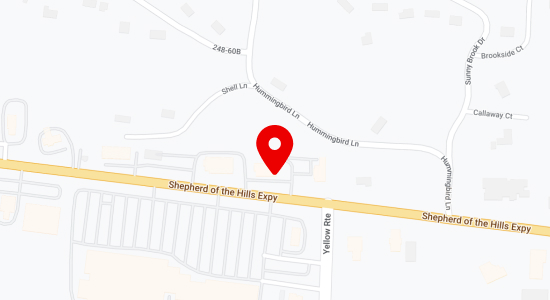
Please note that our law firm's address is for mail correspondence only. We do not accept in-office visits to this location. To schedule an appointment or consult with an attorney, please contact us via phone or email. Our contact information is readily available on our website. We look forward to hearing from you and strive to supply efficient and accessible legal services to our clients.
Branson, MO 65616