
Former Prosecutor
of 20 Years on
Your Side
of 20 Years on
Your Side







A firearm theft charge in Missouri is not a routine property crime allegation. The moment police believe a gun was taken, bought, hidden, transferred, or kept unlawfully, the case often becomes more aggressive, more emotionally charged, and more dangerous for the accused. Judges, prosecutors, and law enforcement tend to view firearm-related cases through a public safety lens. That means a person may face immediate suspicion, tough bond conditions, and little patience from the State even before the facts are fully examined.
That is exactly why early, strategic defense work matters.
Scrivner Law Firm represents people accused of serious criminal offenses throughout southwest Missouri. Attorney Dayrell Scrivner brings more than three decades of legal experience to the table, including nearly twenty years as a prosecutor. He also served in senior leadership as a chief assistant prosecutor, taught criminal law and criminal procedure, and helped develop problem-solving court programs. That background matters in a firearm theft case because these prosecutions are rarely handled by instinct alone. They are built from police reports, witness statements, search warrants, recovery evidence, digital records, and assumptions about intent. A defense lawyer who understands how those cases are assembled from the inside is in a stronger position to challenge them.
In Missouri, stealing a firearm is treated seriously regardless of whether the weapon was an inexpensive handgun, an older hunting rifle, or a valuable custom firearm. Under section 570.030, stealing any firearm is a felony-level offense classification. In other words, the State does not need a high dollar value to argue that the case belongs in felony court. And depending on the facts, a firearm theft accusation may come packaged with additional counts involving possession, unlawful transfer, tampering, trespass, burglary, or receiving stolen property.
When that happens, the defense has to do more than deny the accusation. It has to dismantle the prosecution’s theory piece by piece.
Many theft allegations begin with a missing item and a simple suspicion. A stolen gun case usually develops faster and more aggressively. Officers may enter the case assuming the weapon could be used in another crime. They may prioritize tracing the firearm, interviewing multiple people, reviewing messages, checking surveillance footage, and seeking search warrants for homes, vehicles, or phones.
That urgency creates risk for the accused. People say too much. Families try to explain things informally. Friends attempt to “help” by turning over partial information. Statements get taken out of context. A borrowed gun becomes a stolen gun in a police narrative. A planned purchase becomes an alleged cover story. Mere possession becomes evidence of theft.
Missouri law gives prosecutors room to pursue several theories under section 570.030. The State may claim a person directly appropriated the firearm from the owner. It may instead allege the person received, retained, or disposed of the firearm knowing it had been stolen, or believing it had been stolen. Those are very different factual theories, but both can lead to the same stealing charge. That distinction is important because the defense may focus on ownership, consent, knowledge, identification, or proof of intent depending on how the case is charged.
A strong response starts with identifying which theory the State is actually using and where its proof is weakest.
Missouri’s primary stealing statute is section 570.030. Under that law, a person commits stealing by appropriating property or services of another with the purpose to deprive the owner of them, either without consent or by means of deceit or coercion. The same statute also covers receiving, retaining, or disposing of property of another while knowing or believing it has been stolen.
For many theft offenses, the grade of the charge turns heavily on value. Firearms are different. Section 570.030 specifically lists any firearm as property that makes the offense a class D felony. That means a prosecutor does not need to prove the gun was worth hundreds or thousands of dollars to pursue a felony.
That one statutory feature changes the entire posture of the case. It affects charging leverage, plea negotiations, sentencing exposure, and the practical consequences of a conviction.
Under section 558.011, a class D felony carries a potential prison term of up to seven years. In some cases, class D felonies may be handled with other sentencing outcomes, but it is still a felony accusation with lasting consequences. A conviction can affect employment, licensing, housing, immigration status, and firearm rights. It can also become the kind of prior offense that worsens exposure in future cases.
Some firearm theft cases are not charged as a direct taking. Instead, prosecutors argue that the accused came into possession of a gun after the theft and kept it, sold it, traded it, or hid it while knowing it was stolen. Missouri law allows that theory inside the same stealing statute.
This matters because the defense may not need to prove where the gun originally came from in order to attack the case. Sometimes the most important issue is knowledge. Did the accused actually know the weapon was stolen? Was there a legitimate purchase? Was the gun transferred through a friend or family member? Did the accused have any reason to believe the property was unlawfully obtained? Suspicion is not enough. The State still has to prove the required mental state.
A firearm theft allegation can become even more dangerous if the accused has prior felony history. Section 558.016 allows enhanced sentencing treatment for certain prior and persistent offenders. That does not automatically apply in every case, but prior felony record issues can increase pressure and change the range of possible outcomes.
For that reason, the defense must evaluate not just the present charge, but the client’s full exposure from the beginning.
A person accused of stealing a firearm may face much more than a single count.
If the police believe the accused was not legally allowed to possess a gun at all, section 571.070 may come into play. That statute makes unlawful possession of a firearm a separate offense for certain persons, including many people with felony convictions. That means the State may try to argue both that the person stole the weapon and that possession itself was unlawful.
Other cases involve allegations that the gun was taken during a break-in, from a vehicle, from a family member’s residence, or from a store. In those situations, prosecutors may also consider burglary, trespass, property damage, or tampering charges depending on the facts they claim to have. If the weapon was later displayed, carried into a restricted location, or handled in a threatening way, section 571.030 concerning unlawful use of weapons may create additional exposure.
This stacking effect is one reason firearm theft cases cannot be treated like ordinary shoplifting or general property disputes. Even a thin set of facts can be turned into a much broader prosecution if the defense does not move quickly.
Not every missing gun was stolen. Not every person holding a gun is the thief. Not every suspicious transfer was criminal.
Firearm theft cases often involve messy real-world facts. A gun may have been loaned and never returned on time. A family dispute may cause one person to report theft when the other believes there was permission. An estate issue may arise after a death, with relatives disagreeing about who had the right to take possession. A former partner may report a firearm stolen out of anger or fear. A person may purchase a weapon informally and have no idea that the seller lacked authority to transfer it.
Those details matter.
The prosecution may try to simplify the case into a clean story of taking and keeping property that belonged to someone else. The defense often has to reintroduce the real complications. Was there consent? Was there confusion over ownership? Was the reporting witness credible? Did the accused even know the firearm was present? Was the identification reliable? Were multiple people with access to the property? Did law enforcement jump to conclusions before completing the investigation?
In many cases, the outcome turns not on one dramatic fact, but on several smaller weaknesses in the State’s proof.
Firearm theft prosecutions regularly depend on physical recovery of the weapon. That recovery might happen during a traffic stop, a consent search, execution of a warrant, or entry into a home after a complaint. Those moments can define the case.
If officers violated constitutional limits when they stopped a vehicle, searched a room, seized a phone, or obtained a warrant based on incomplete or misleading information, the defense may have grounds to challenge the evidence. A gun recovered through an unlawful search does not become automatically admissible simply because the charge involves a firearm.
That is an area where experience matters. Dayrell Scrivner’s background in prosecution and criminal procedure gives him a practical sense of how officers document probable cause, how affidavits are prepared, and where investigative shortcuts tend to appear. In some cases, the best defense begins with the paper trail rather than the accusation itself.
Today, firearm theft cases may include text messages, social media posts, private marketplace communications, photographs, location history, and call logs. The State may argue these records show intent to steal, arrange a sale, or conceal the weapon. Sometimes they do. Sometimes they show the opposite.
A message that appears incriminating in isolation may look far different when read in full context. A joking statement may be treated as an admission. A photograph may prove possession but not theft. A conversation about buying a gun may show an expectation of a lawful transaction rather than guilty knowledge.
Digital evidence must be reviewed carefully, not selectively.
Sentencing Exposure Is Not the Only Danger
People often focus on whether they are going to jail. That matters, of course, but it is not the whole picture.
A felony conviction tied to a firearm can damage employment prospects immediately. It can affect commercial opportunities, professional applications, housing searches, and public reputation. For some defendants, the case also threatens hunting rights, future firearm access, and family relationships. In custody disputes or protective order matters, even an unresolved firearm accusation can create serious problems.
That is why a careful defense looks beyond the courtroom hearing date. It considers the long-term effect of every plea offer, every statement, and every conviction risk.
A firearm theft prosecution is not just about what happened. It is also about how the State chooses to frame what happened. That framing process begins early, often before formal charges are filed. A lawyer with years of prosecutorial experience understands how officers present cases, what details prosecutors care about, when charging decisions harden, and where the defense can still alter the trajectory.
Dayrell Scrivner has spent more than thirty years in the legal profession, including nearly twenty years as a prosecutor and service as a chief assistant prosecutor. He has taught criminal law and criminal procedure and has worked extensively in Missouri courts. That combination of courtroom experience, prosecutorial insight, and practical judgment gives clients more than a general defense. It gives them a lawyer who knows how criminal cases are actually built.
For someone facing a firearm theft accusation, that perspective can make an immediate difference. It can affect whether the case is investigated more fully, whether weak assumptions are challenged early, whether the client avoids damaging statements, and whether the defense identifies the issue most likely to change the outcome.
If police contact you about a stolen gun, the safest move is usually the simplest one. Do not try to talk your way out of it. Do not try to return property without legal advice. Do not guess about ownership, possession, or where the gun may have traveled. And do not assume the officers already know everything.
Early mistakes can create the evidence the State was missing.
Instead, protect yourself, preserve any documents or communications that may help your defense, and speak with counsel before making decisions. A fast, informed response may help prevent the case from getting worse.
A firearm theft allegation can threaten your freedom, your record, and your future long before your case reaches trial. Missouri prosecutors take these accusations seriously, and the law gives them multiple paths to pursue felony charges. That does not mean the State’s version is correct, complete, or provable.
Scrivner Law Firm provides focused criminal defense for people facing serious charges in Missouri. If you have been arrested, questioned, or charged in connection with a stolen firearm, now is the time to act. Contact Scrivner Law Firm to speak with Dayrell Scrivner about the accusation, the possible defenses, and the steps that can be taken right away to protect your case.
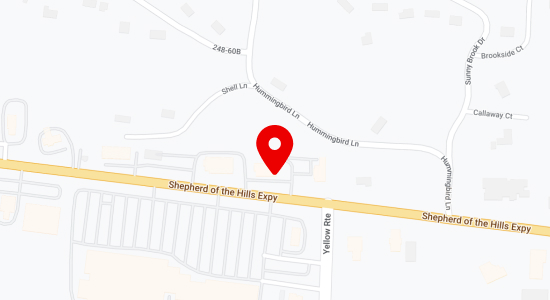
Please note that our law firm's address is for mail correspondence only. We do not accept in-office visits to this location. To schedule an appointment or consult with an attorney, please contact us via phone or email. Our contact information is readily available on our website. We look forward to hearing from you and strive to supply efficient and accessible legal services to our clients.
Branson, MO 65616