
Former Prosecutor
of 20 Years on
Your Side
of 20 Years on
Your Side







A statutory rape accusation can alter the course of a person’s life almost immediately. In Missouri, these allegations are treated with extraordinary seriousness by law enforcement, prosecutors, judges, and the public. The charge itself carries a stigma that can follow someone long before a case ever reaches a courtroom. Even before the State proves anything, the accusation alone can feel crushing. Missouri’s primary statutory rape provisions are section 566.032 for first-degree statutory rape and section 566.034 for second-degree statutory rape. First-degree statutory rape involves sexual intercourse with a person under fourteen. Second-degree statutory rape applies when a person who is twenty-one or older has sexual intercourse with a person under seventeen.
What makes these cases especially dangerous is that they often turn on age, timing, communications, digital evidence, and highly charged allegations rather than the kind of physical evidence people expect to see in other serious felonies. In many prosecutions, the State attempts to build a case through text messages, social media records, witness interviews, recorded statements, and inferences about what happened. Missouri law also contains related statutes that can appear alongside or near a statutory rape allegation, including statutory sodomy under sections 566.062 and 566.064, child-related sexual offense provisions in chapter 566, and evidentiary rules such as section 491.075 that can affect the admission of statements by a child under eighteen.
Scrivner Law Firm represents people facing serious criminal charges in southwest Missouri. Dayrell Scrivner brings decades of legal experience to the defense of high-stakes cases, including many years as a prosecutor in Stone County and service as Chief Assistant Prosecutor before entering private practice. He also serves clients in Taney, Stone, and Christian Counties, which matters because local practice, local courts, and local charging habits can have a real impact on how a defense should be built.
A person accused of statutory rape should assume that the case may move faster than expected. Sometimes an investigation begins quietly, with law enforcement asking for an interview or requesting a phone. Sometimes an arrest comes first, followed by a bond hearing and strict release conditions. In either situation, the earliest decisions can shape the entire defense. A statement made in an attempt to explain away suspicious facts can become the centerpiece of the prosecution’s theory. Consent is not the issue in the way many people assume in a statutory rape case. Instead, prosecutors often focus on the ages involved, the nature of the alleged act, the timeline, and whether they can prove the statutory elements beyond a reasonable doubt.
That does not mean the defense is hopeless. Far from it. It means the defense must be disciplined from the start. The prosecution still has to prove identity, age, sexual intercourse as defined by the statute, venue, timing, and other essential facts. The State also has to overcome evidentiary weaknesses, inconsistent statements, unreliable digital interpretations, memory problems, and motives to exaggerate or misstate events. A strategic defense begins by refusing to let the accusation substitute for proof.
Section 566.032 states that a person commits statutory rape in the first degree if he or she has sexual intercourse with another person who is less than fourteen years of age. Missouri law treats this offense with exceptional severity. The statute provides that first-degree statutory rape, and even an attempt to commit it, carries a punishment of life imprisonment or a term of years not less than five years, with even greater punishment in certain circumstances. That level of exposure means every factual detail matters and every early mistake in the defense can become costly.
Section 566.034 makes it a crime for a person who is twenty-one years of age or older to have sexual intercourse with another person who is less than seventeen years of age. The offense is classified as a class D felony. On paper, that may sound less severe than a first-degree charge, but no felony sex offense allegation should ever be treated lightly. Even a lower felony classification can carry life-changing consequences in court, at work, in licensing matters, and in the community.
A prosecutor is not limited to labeling a case as statutory rape and stopping there. Depending on the allegations, the State may also investigate statutory sodomy, child molestation, sexual misconduct involving a child, promoting online sexual solicitation, or other offenses in chapter 566. That is one reason a defense lawyer must look beyond the single count listed on the complaint. A statutory rape investigation often has spillover risk. Messages, photographs, searches, prior contacts, and witness statements can be used to support additional counts or enhancement arguments.
In a criminal defense case, the label is not enough. The State must prove each required element. In a first-degree statutory rape case under section 566.032, prosecutors must prove sexual intercourse and that the other person was under fourteen. In a second-degree statutory rape case under section 566.034, prosecutors must prove sexual intercourse, that the accused was at least twenty-one, and that the other person was under seventeen. Age is not a side issue. It is an element. If the State cannot prove the required ages at the relevant time, it has a serious problem.
Proof in these cases can become surprisingly technical. Birth records, school records, timelines, device data, travel records, and witness accounts may all be examined. So can metadata from photographs, app logs, and the chronology of conversations. In some cases, the defense challenge is not whether the prosecution has some evidence, but whether the evidence truly proves the precise statutory elements and the exact timing alleged. Criminal cases are won and lost on those distinctions.
Prosecutors often rely heavily on texts, direct messages, and social media conversations. But a message thread is not self-explanatory simply because it exists. Context matters. Slang matters. Timing matters. Who actually controlled the device matters. Whether the messages are complete matters. A partial thread can create a misleading impression. A screenshot can omit surrounding content. Deletions, edits, account sharing, and informal language can all distort meaning.
Law enforcement may try to obtain a statement from the accused early, sometimes before the person fully grasps the seriousness of the investigation. That can be disastrous. People who think they are clarifying innocent facts often volunteer details that prosecutors later frame as admissions. In cases involving minors, Missouri evidentiary law can also affect how out-of-court statements are presented. Section 491.075 allows certain statements made by a child under eighteen relating to offenses under chapters including 566 to be admitted under specified circumstances, which makes pretrial litigation especially important.
Some statutory rape prosecutions include medical evidence, forensic testing, or other physical proof. Many do not. The absence of physical evidence does not prevent a charge, but it can create real room for the defense. Cases built primarily on accusation, recollection, and interpretation must be tested carefully. Dates may shift. Stories may develop over time. Outside influence from parents, friends, school officials, or investigators may affect what is said and how it is later repeated.
A person charged with a sex offense often faces punishment long before conviction. Social isolation, job loss, educational disruption, restrictions on contact, and intense reputational harm can begin almost immediately. A conviction can also trigger sex offender registration consequences under Missouri law. Section 589.414 expressly includes first-degree statutory rape under section 566.032 and second-degree statutory rape under section 566.034 among offenses tied to registration duties. That is one reason these cases require serious defense work from the beginning rather than a wait-and-see approach.
In practical terms, registration consequences can affect housing, employment, reporting obligations, and long-term public exposure. Even where a case appears manageable at first glance, the downstream effects can be devastating. Any plea discussion, motion practice decision, or trial assessment must take those realities into account.
A former prosecutor often sees weaknesses in a case differently than someone who has only handled defense work. That background can matter in statutory rape cases because prosecutors tend to organize these files around a narrative. They decide which messages matter, which witnesses sound strongest, and which admissions they believe a jury will seize on. A defense lawyer who has worked inside that system is often quicker to identify what the State will emphasize and where its proof may quietly be thin.
Dayrell Scrivner’s background includes nearly two decades in the Stone County prosecutor’s office, including years as Chief Assistant Prosecutor, before opening his private practice in 2018. That experience gives him familiarity with how charging decisions are made, how investigators build sex offense cases, and where those cases can be challenged.
This is one of the most dangerous mistakes in any serious felony investigation. People often believe that only guilty people ask for a lawyer. That is false. In a statutory rape investigation, counsel is not a luxury. It is protection against misunderstandings, overstatements, and preventable damage.
Phones and computers can contain information that goes far beyond the allegation under investigation. Even when a person believes the device will clear everything up, turning it over without legal advice can expose private data, unrelated communications, and material prosecutors may try to repurpose. Device issues require careful judgment, not panic.
Not all digital evidence helps the prosecution. Location data, full message histories, call records, photographs, and third-party communications can support the defense. But that material can disappear if it is not preserved promptly. Waiting can cost a defendant valuable proof.
No two statutory rape cases are identical. Some involve disputed identity. Some involve a contested timeline. Some involve conflicting descriptions of what occurred. Others turn on whether the prosecution can prove the exact elements of the charged statute. The defense has to be built around the real file, not the public label attached to it.
That means examining the charging document, reviewing discovery in detail, testing witness credibility, challenging unreliable interpretations, and preparing for both negotiation and trial. It also means being realistic. Some cases require aggressive pretrial litigation. Some require a focused strategy to limit damage. Some require taking the case to a jury because the evidence simply does not justify a conviction. What should not happen is sleepwalking through a sex offense prosecution as though the result will work itself out.
A statutory rape allegation in Missouri is not the kind of case to handle casually or postpone until the next court date. The stakes are too high. The statutes are too serious. The consequences can extend far beyond jail or prison and affect nearly every part of a person’s future. When the accusation involves sections 566.032 or 566.034, the defense needs to begin immediately, with a lawyer who knows how prosecutors build these cases and how to challenge them effectively.
Scrivner Law Firm defends clients facing serious criminal accusations in southwest Missouri. If you or someone you care about is under investigation or has already been charged with statutory rape, contact Dayrell Scrivner as soon as possible. Early action can protect your rights, preserve evidence, and put a strategic defense in motion before the State’s version of events hardens into the case against you.
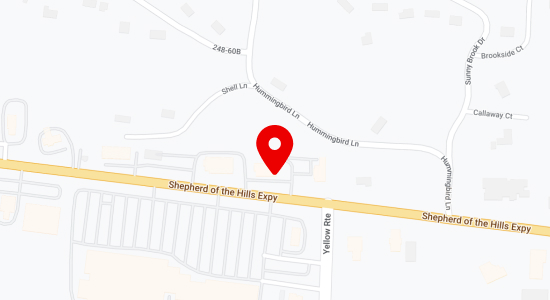
Please note that our law firm's address is for mail correspondence only. We do not accept in-office visits to this location. To schedule an appointment or consult with an attorney, please contact us via phone or email. Our contact information is readily available on our website. We look forward to hearing from you and strive to supply efficient and accessible legal services to our clients.
Branson, MO 65616