
Former Prosecutor
of 20 Years on
Your Side
of 20 Years on
Your Side









Being accused of sexual misconduct in Missouri can affect every part of your life before a court ever decides whether the allegation is true. These cases are frightening because they involve not only the possibility of jail, probation, fines, and court supervision, but also embarrassment, family strain, job concerns, professional licensing issues, and the fear of being treated like a sex offender because of an accusation. In Taney County, a sexual misconduct charge may arise from an incident at a hotel, bar, parking lot, lake area, campground, restaurant, entertainment venue, private gathering, or tourist location where another person claims to have seen or experienced conduct that violated Missouri law.
Sexual misconduct cases often begin with a fast police response and a short report that does not tell the full story. A witness may have seen only a few seconds of an event. A person may have misinterpreted conduct as public indecency that was accidental, private, obstructed, or not sexual in nature. Alcohol, poor lighting, crowds, anger, embarrassment, or confusion may influence what gets reported. By the time prosecutors review the case, the accusation may sound much more certain than the evidence actually is.
Scrivner Law Firm represents people facing criminal charges in Taney County, Branson, and the surrounding Missouri communities. The firm is headed by attorney Dayrell Scrivner, a former prosecutor with more than 30 years of legal experience. His background on both sides of criminal cases helps him evaluate how prosecutors may view a sexual misconduct allegation, where the evidence may be weak, and what defense strategy may best protect the client’s record and future.
Missouri law uses the term “sexual misconduct” for several offenses. The charge most commonly connected to allegations of public sexual behavior, exposure, or sexual conduct in front of another person is sexual misconduct in the first degree under Missouri Revised Statutes Section 566.093.
Under that statute, a person may be accused of sexual misconduct in the first degree if the state claims that the person exposed his or her genitals under circumstances in which the person knew the conduct was likely to cause affront or alarm. The statute also applies when the state claims that a person had sexual contact in the presence of another person or persons under circumstances in which the accused knew the conduct was likely to cause affront or alarm. It also covers sexual intercourse or deviate sexual intercourse in a public place in the presence of a third person.
Those elements matter. A sexual misconduct charge is not proven simply because someone was offended, embarrassed, or upset. The prosecution must prove the conduct described in the statute and, depending on the subsection charged, must also prove the required knowledge or public-place element. A defense lawyer may challenge what occurred, whether the accused person was correctly identified, whether the conduct fits the statutory definition, and whether the state can prove the required mental state beyond a reasonable doubt.
Missouri Revised Statutes Section 566.093 is the central statute in many sexual misconduct defense cases. It covers three categories of conduct.
First, it covers exposing genitals under circumstances in which the person knows the conduct is likely to cause affront or alarm. This can lead to disputes about what was actually exposed, whether the exposure was intentional, whether anyone saw it clearly, and whether the accused person knew another person was likely to be affronted or alarmed.
Second, the statute covers sexual contact in the presence of a third person or persons under circumstances in which the person knows the conduct is likely to cause affront or alarm. Missouri Revised Statutes Section 566.010 defines “sexual contact” in a specific way. Not every touch, movement, or awkward interaction qualifies. The purpose of the contact, the body part involved, the surrounding circumstances, and the credibility of the witness may all be important.
Third, the statute covers sexual intercourse or deviate sexual intercourse in a public place in the presence of a third person. Missouri law also defines these terms. When the state relies on this part of the statute, the defense may need to examine whether the location legally qualifies as public, whether a third person was actually present, whether that person could see what allegedly occurred, and whether the evidence supports the more serious description used by the prosecution.
Sexual misconduct in the first degree is generally a class B misdemeanor under Missouri law. A class B misdemeanor may carry up to six months in jail under Missouri’s general misdemeanor sentencing statute. However, the charge can become more serious if the person has previously been found guilty of an offense under Chapter 566 of the Missouri Revised Statutes, or a comparable offense in another jurisdiction. In that situation, sexual misconduct in the first degree may be treated as a class A misdemeanor. A class A misdemeanor may carry up to one year in jail.
The formal jail range is only part of the concern. A conviction for sexual misconduct may appear on background checks and may create difficulties with employment, housing, education, government benefits, professional licensing, security clearances, custody disputes, immigration for noncitizens, and future criminal cases. The words “sexual misconduct” can be damaging even when the offense is charged as a misdemeanor.
For many defendants, the defense goal is not limited to avoiding jail. A careful strategy may also focus on avoiding a sex-related conviction, reducing the charge, challenging the facts, seeking dismissal when possible, limiting the public record, and preventing the accusation from defining the client’s future.
Several Missouri statutes may be relevant in a sexual misconduct case. Missouri Revised Statutes Section 566.093 defines sexual misconduct in the first degree. Missouri Revised Statutes Section 566.010 contains definitions used in Chapter 566, including definitions for sexual contact, sexual intercourse, deviate sexual intercourse, and related terms.
Missouri Revised Statutes Section 566.083 addresses sexual misconduct involving a child. That is a separate and more serious offense. It should not be confused with a general adult sexual misconduct accusation under Section 566.093. If a case involves a minor, the defense must examine the exact charge, the alleged age of the child, the conduct alleged, and whether the facts fit the offense charged.
Missouri Revised Statutes Sections 589.400 through 589.425 address sex offender registration requirements. Not every sex-related accusation automatically leads to registration, but registration questions must be reviewed before any plea is entered. The consequences can depend on the offense, the facts, prior convictions, the age of any alleged victim, federal registration law, and whether the person has a prior obligation to register.
Missouri Revised Statutes Section 191.918 is also important because Missouri law states that breastfeeding or expressing breast milk in a place where the mother and child are otherwise authorized to be is not public indecency, indecent exposure, sexual conduct, lewd touching, obscenity, or a similar act under state or municipal law.
Other related allegations may include peace disturbance, trespassing, resisting arrest, furnishing false information, alcohol-related offenses, public display of explicit sexual material, or municipal ordinance violations. A defense lawyer should review the full charging decision, not just the title of the offense.
Sexual misconduct cases in Taney County can arise in many different ways. Some begin with allegations of exposure in a vehicle, parking lot, public restroom, hotel hallway, short-term rental, campground, pool area, boat ramp, or entertainment district. Others involve claims that sexual activity occurred in a location where another person could see it. Some cases begin as public urination complaints and escalate because of how the officer interprets the facts.
In Branson and surrounding communities, visitors and residents may be in crowded public areas, nightlife settings, tourist attractions, lake areas, and hotels. Police may be called quickly, especially if someone believes a child or family saw something inappropriate. However, a fast police response does not guarantee an accurate report. Officers often arrive after the alleged conduct has ended. They may rely heavily on a complaining witness who was upset, intoxicated, distracted, or mistaken.
The setting may create reasonable doubt. A hotel room may feel private even if a curtain was open. A vehicle may be partially blocked. A person accused of exposure may have been changing clothes, dealing with a bathroom emergency, or responding to a medical issue. A witness may have assumed sexual intent where none existed. These details matter.
People accused of sexual misconduct often want to explain themselves immediately. That instinct is understandable, but it can be dangerous. A statement that seems harmless may be interpreted as an admission. An apology meant to calm someone down may be used to suggest guilt. A text message to a witness may be viewed as pressure, intimidation, or consciousness of guilt.
If you are accused, avoid discussing the facts with police, witnesses, friends, coworkers, or online audiences until you have spoken with a defense lawyer. Do not post about the incident. Do not contact the complaining witness. Do not try to retrieve video from a business in a way that creates new accusations. Instead, write down what you remember, save potential evidence, and get legal advice quickly.
Helpful evidence may include receipts, photos of the location, names of witnesses, rideshare records, hotel information, event tickets, medical records, text messages, phone location data, or video. Surveillance footage may be deleted quickly, so prompt action can be important.
Sexual misconduct allegations require a defense strategy that is both thorough and discreet. The defense must protect the client in court while also considering reputation, employment, licensing, family consequences, and long-term record issues. A rushed plea can create consequences that last much longer than the court sentence itself.
Scrivner Law Firm reviews the facts, the charging document, police reports, witness statements, body camera footage, surveillance footage, and the statutory elements the prosecutor must prove. Attorney Dayrell Scrivner’s experience as a former prosecutor helps him evaluate how the state may approach the case and where the prosecution may be vulnerable.
Some cases may be prepared for trial. Others may be resolved through negotiations that reduce the charge, avoid the most damaging language, or limit the client’s exposure. The best path depends on the evidence, the client’s record, the risks of conviction, and the client’s goals.
A sexual misconduct accusation is serious, but it is not the same as proof. The prosecution must prove each required element beyond a reasonable doubt. Before you speak with police, contact witnesses, or make decisions about your case, you should understand the charge, the evidence, and the possible consequences.
Scrivner Law Firm represents clients facing criminal charges in Taney County, Branson, and the surrounding Missouri communities. If you have been accused of sexual misconduct, exposure, public sexual conduct, or a related offense, contact Scrivner Law Firm to discuss your case and begin protecting your rights, reputation, and future.
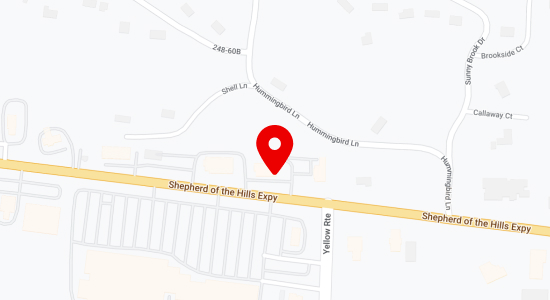
Please note that our law firm's address is for mail correspondence only. We do not accept in-office visits to this location. To schedule an appointment or consult with an attorney, please contact us via phone or email. Our contact information is readily available on our website. We look forward to hearing from you and strive to supply efficient and accessible legal services to our clients.
Branson, MO 65616