
Former Prosecutor
of 20 Years on
Your Side
of 20 Years on
Your Side







A sextortion accusation can destroy a person’s reputation almost instantly. In many cases, the allegation starts with screenshots, text chains, social media messages, or claims about demands for money, sexual images, or silence. The accusation may involve a former partner. It may involve an online scam. It may involve a misunderstanding, an altered record, or a situation where the State is trying to force a complicated digital dispute into a criminal charge. Whatever form it takes, the stakes are serious from the beginning.
In Missouri, sextortion is not just a media label. Depending on the facts the prosecution claims to have, the case may be built around several different statutes. Section 573.112 addresses threatening the nonconsensual dissemination of private sexual images. Section 573.110 addresses nonconsensual dissemination of private sexual images. Other allegations may be paired with harassment under section 565.090, stalking under section 565.225, or identity theft under section 570.223. If the accusation involves a person alleged to be underage, the exposure can become even more severe under statutes such as section 566.151, section 573.023, section 573.025, or section 573.037.
Scrivner Law Firm defends people facing serious criminal accusations in southwest Missouri. Dayrell Scrivner brings decades of legal experience to that work, including nearly two decades as Chief Assistant Prosecuting Attorney. That background matters in a sextortion case because the government often tries to build a powerful emotional narrative out of digital fragments. A defense lawyer who knows how prosecutors review messages, package evidence, and frame intent is in a stronger position to challenge the State’s case before it hardens into something even more dangerous.
Sextortion accusations tend to move quickly because they combine fear, embarrassment, and digital evidence. A complaining witness may tell police that someone threatened to post intimate photos unless money was paid, more images were sent, contact continued, or demands were met. Investigators often react aggressively to those facts, especially when there are screenshots that appear incriminating on first review.
But what looks obvious at the start is not always what the evidence ultimately proves. Messages can be taken out of sequence. Images can be edited. Accounts can be spoofed. Someone else may have had access to a phone, cloud account, or social media profile. In other situations, law enforcement receives only selective screenshots, not the full conversation. Context disappears. Sarcasm disappears. Mutual argument becomes one-sided on paper. A defense that begins early has a better chance to preserve the full record and expose gaps before they are overlooked.
Another reason these cases intensify is that sextortion accusations often lead investigators into other parts of a person’s life. Police may seek search warrants for phones, computers, messaging apps, social media accounts, email accounts, cloud storage, and payment records. They may search for prior communications with the accuser or with other people. Even when the original allegation is narrow, the investigation can broaden rapidly.
Section 573.112 is one of the most direct Missouri statutes in this area. It addresses threatening the nonconsensual dissemination of private sexual images in order to gain or attempt to gain anything of value, or to coerce or attempt to coerce another person to act or refrain from acting. That matters because the prosecution does not always need to claim that images were actually posted. A threat itself may become the centerpiece of the case if the State alleges it was used to obtain money, leverage, compliance, or additional explicit material.
A defense may focus heavily on the exact language used, the context of the exchange, and whether the communication truly amounted to a threat under the statute. In heated personal disputes, people say reckless things. That does not automatically mean the State can prove the required criminal purpose beyond a reasonable doubt.
Section 573.110 covers nonconsensual dissemination of private sexual images. If prosecutors claim a person actually sent, posted, forwarded, or published intimate images without consent, this statute may be charged either by itself or alongside section 573.112. These cases often turn on proof of identity, consent, privacy expectations, and the origin of the files.
The prosecution still has work to do. It must tie the alleged dissemination to the accused, address the circumstances under which the image was obtained, and show that the law applies to the facts rather than merely pointing to online embarrassment and demanding punishment.
Prosecutors sometimes add section 565.090 or section 565.225 when repeated messages, threats, or emotionally charged communications are alleged. That layering can make the case look more serious than the core conduct actually supports. A person may find themselves accused of image-related misconduct plus harassment or stalking based on repeated contacts arising from a breakup, a financial dispute, or a chaotic online exchange.
Those added counts should never be treated as automatic. Repeated communication is not the same thing as criminal stalking. Disturbing language is not the same thing as a legally sufficient threat. The defense has to test every element and separate actual proof from prosecutorial overreach.
Section 570.223 may enter the picture when the State alleges that a person used another individual’s identifying information, impersonated someone online, or used another person’s credentials to obtain access or inflict damage. In some sextortion investigations, police suspect false profiles, spoofed accounts, or impersonation. In others, the accused may actually be the victim of impersonation. Either way, account attribution becomes critically important.
A sextortion prosecution usually rises or falls on electronic evidence. That does not mean electronic evidence is always trustworthy. Screenshots can be cropped. Message threads can be renamed. Dates and times can be misleading if records come from different platforms or time zones. Deleted material may leave holes in the story. Cloud synchronization can make files appear on one device that were actually created or transmitted from another.
A careful defense will look at more than surface-level images. It may examine metadata, extraction methods, chain of custody, device access history, IP logs, account recovery information, and whether the police actually obtained the full data set. It may also question whether investigators preserved exculpatory information or focused only on the most inflammatory fragments.
This is where early representation matters. A person who tries to explain everything casually to law enforcement can make the situation worse. Statements given before the evidence is fully known can be misinterpreted and later used as admissions. In a digital case, precision matters. The timeline matters. Who controlled the device matters. Who knew the passwords matters. Whether the alleged threat was serious, conditional, fabricated, or impossible to carry out matters.
Sextortion cases are not only about what was said or sent. They are about why the State claims it was said or sent. Prosecutors often try to show a deliberate effort to gain something of value or to force another person into compliance. The defense, in turn, may challenge whether the evidence truly proves coercive intent.
For example, a message sent during an emotionally explosive breakup may be ugly and immature without meeting the elements of section 573.112. An accusation that someone demanded money may fall apart if the conversation instead shows an argument over property, loans, shared expenses, or allegations of cheating. A claim that the accused threatened disclosure to force sexual images may weaken when the broader thread shows something very different.
Intent can also be distorted by missing data. If police only have selected screenshots from one participant, they may miss provocation, earlier demands, threats from the other side, or evidence that the exchange was manipulated. That is why the defense should never accept the police summary as the final version of events.
A strong sextortion defense begins with disciplined case assessment. That means identifying exactly what the State is claiming happened and what statute it believes applies. It also means finding out what law enforcement has already seized, what search warrants were issued, and whether there are parallel allegations involving other counties, other states, or federal authorities.
The defense should examine the communications themselves, not merely the police description of them. Full message threads matter. Deleted messages matter. Payment app records matter. Social media logs matter. If the accusation involves a phone or laptop, the timeline of possession and access matters. If the complaining witness shared passwords, shared devices, or continued voluntary communications after the alleged threat, that may matter too.
Witness credibility is also central. Some sextortion allegations arise from genuine victimization. Others arise from revenge, panic, relationship collapse, or attempts to gain leverage in family, business, or personal conflicts. A defense lawyer has to evaluate the accuser’s history with the defendant, prior communications, motives, inconsistencies, and whether the story changed over time.
In a case like this, experience is not just about being familiar with criminal law in the abstract. It is about knowing how prosecutors think when they decide whether to file charges, what evidence they believe is persuasive, and where they may be overstating their case. Dayrell Scrivner’s years as a prosecutor and Chief Assistant Prosecuting Attorney give him insight into how the State evaluates witness statements, digital evidence, leverage points, and plea positions.
That perspective can make a real difference. Sometimes the best defense move is aggressive early intervention before charges are filed. Sometimes it is attacking a warrant. Sometimes it is exposing weaknesses in account attribution or intent. Sometimes it is positioning the case for trial because the accusation sounds stronger than the evidence really is. The right path depends on the facts, but it should be chosen with a clear view of how the prosecution is likely to proceed.
If you believe you are being investigated for sextortion, do not assume you can talk your way out of it with police. Do not delete messages, wipe accounts, or destroy devices. Do not contact the accuser to argue, explain, apologize, or demand that they recant. Those moves often create new problems and can be interpreted as consciousness of guilt, tampering, or further harassment.
Instead, preserve what you have. Save communications, account notices, payment records, usernames, dates, and device information. Write down a timeline while events are still fresh in your mind. Then get legal counsel involved as early as possible. The period before formal charges are filed is often one of the most important stages in the entire case.
A sextortion allegation can threaten your freedom, your reputation, your employment, your family life, and your future all at once. It can also expand quickly from one accusation into a larger digital investigation involving phones, social media, cloud accounts, and multiple criminal statutes. Waiting usually does not improve the situation. Early, focused defense work often does.
If you are under investigation or have been charged with sextortion or a related offense, contact Scrivner Law Firm as soon as possible to discuss your defense, protect your rights, and start building a strategy grounded in the facts rather than the accusation alone.
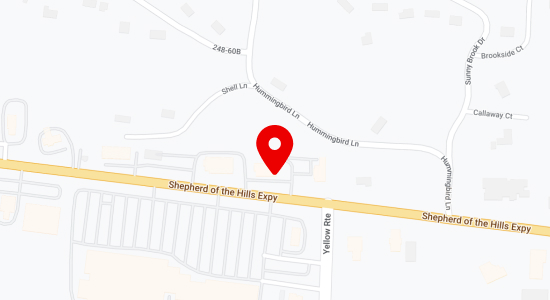
Please note that our law firm's address is for mail correspondence only. We do not accept in-office visits to this location. To schedule an appointment or consult with an attorney, please contact us via phone or email. Our contact information is readily available on our website. We look forward to hearing from you and strive to supply efficient and accessible legal services to our clients.
Branson, MO 65616