
Former Prosecutor
of 20 Years on
Your Side
of 20 Years on
Your Side







An accusation involving revenge porn can detonate a person’s life almost overnight. In Missouri, these allegations are not treated as a mere personal dispute. They can lead to felony exposure, civil liability, and a prosecution built around digital evidence, screenshots, metadata, and statements made in anger or panic. Missouri specifically criminalizes nonconsensual dissemination of private sexual images under section 573.110 and separately criminalizes threatening that kind of dissemination under section 573.112.
Scrivner Law Firm represents people facing serious criminal accusations in southwest Missouri. Dayrell Scrivner is a longtime Missouri attorney and former prosecutor who spent many years in the prosecutor’s office before moving into private practice. His background includes decades in criminal law, service as a prosecutor, and teaching criminal law and procedure to universities and Missouri police academies. That experience matters in a revenge porn case because these prosecutions often turn on how the State organizes electronic proof, frames motive, and tries to turn a messy relationship conflict into a clean felony narrative.
Missouri’s central statute in this area is section 573.110, titled nonconsensual dissemination of private sexual images. The State does not prove this offense merely by showing that an image existed or that a relationship ended badly. Prosecutors must establish several specific elements. Under the statute, the State must prove an intentional dissemination of the image, an intent to harass, threaten, or coerce another person, that the depicted person was at least eighteen, that the person was identifiable from the image or connected information, that the image showed a sexual act or exposed intimate parts in whole or in part, that the image was obtained in circumstances where a reasonable person would understand it was to remain private, and that the accused knew or should have known the person did not consent to dissemination. The offense is classified as a class D felony. The same statute also creates potential civil exposure, including a private cause of action for at least $10,000 or actual damages plus attorney’s fees.
Those details are not technical filler. They are the defense roadmap. If the prosecution cannot prove intent to harass, threaten, or coerce, that failure matters. If the image does not make the person identifiable, that matters. If the State cannot show the image was supposed to remain private, that matters too. In many cases, the fight is not about whether an image existed. The fight is about identity, intent, consent, context, and what exactly happened between the people involved.
A person does not always need to publish an image to face felony allegations. Missouri section 573.112 separately covers threatening the nonconsensual dissemination of private sexual images. That statute applies when a person gains or attempts to gain anything of value, or coerces or attempts to coerce another person to act or refrain from acting, by threatening to disseminate a qualifying private sexual image against that person’s will. The threatened person must be at least eighteen, identifiable, and engaged in a sexual act or have intimate parts exposed in whole or in part. The offense is a class E felony.
That is why texts, DMs, emails, and voice messages often become the center of the case. A prosecutor may point to statements such as demands for money, threats to stay in a relationship, pressure to withdraw from a breakup, or attempts to force silence after an argument. Even when no image is actually sent to anyone else, the State may argue that the threat itself completed the offense under section 573.112.
Revenge porn prosecutions often arrive in court looking deceptively simple. The State may have screenshots. It may have a witness claiming an image was sent. It may have a complaint saying a defendant threatened to post material online. But screenshots can omit surrounding messages, fail to show timestamps accurately, exclude deleted content, and hide whether someone else had access to the account or device. A cropped image can distort meaning. A forwarded message can appear original. A screenshot of a social media post does not automatically prove who created it, who controlled the account at the relevant time, or whether the content was altered before law enforcement ever saw it.
An effective defense often requires slowing the case down and forcing precision. Who first possessed the file? Where was it stored? Was it sent from the defendant’s device, or merely associated with an account using the defendant’s name? Was the device shared? Was the content reposted by someone else? Did the complaining witness preserve the full conversation, or only the worst excerpts? Those are not side issues. They can determine whether the State can prove dissemination, intent, and authorship beyond a reasonable doubt.
Phones change hands. Passwords are shared. People stay logged in on multiple devices. Cloud backups synchronize automatically. A defense lawyer examining a case under section 573.110 will often want to know not only what was found, but how it was found. If officers obtained material through a consent search, a warrant, a platform return, or a forensic extraction, each step matters. A problem in the search process can affect admissibility. A weakness in chain of custody can affect reliability. And a mismatch between the State’s theory and the underlying device data can expose serious holes in the accusation.
Missouri’s revenge porn statute is not a strict liability law. Section 573.110 requires proof that the image was intentionally disseminated with the intent to harass, threaten, or coerce another person.
In real life, digital relationships are messy. Sometimes former partners exchange intimate images mutually during the relationship. Sometimes content is stored carelessly. Sometimes a device is lost, borrowed, synced, or hacked. Sometimes a person sends an image in anger but not for the reason the State claims. Sometimes an image is transmitted in the course of an argument with no intent to harass, threaten, or coerce, or the State’s evidence of who transmitted it is thin. None of that automatically creates a defense, but it does mean the prosecution has more work to do than simply showing that a file surfaced after a breakup.
A disciplined defense asks hard questions. What conduct allegedly shows intent? What words did the accused supposedly use? Did the complaining witness provoke, edit, or selectively preserve messages? Was there a motive to exaggerate after custody litigation, divorce conflict, a new relationship, or a dispute over property? In a highly emotional case, motive to accuse can be just as important as motive to offend.
Section 573.110 also requires proof that the image was obtained under circumstances where a reasonable person would know or understand it was to remain private, and that the accused knew or should have known the depicted person did not consent to dissemination. It also requires that the person be identifiable from the image itself or information displayed in connection with the image.
That means privacy cannot simply be assumed. In some cases, an image may have been voluntarily shared among more than two people before the alleged offense. In others, the file may have been posted in a way that did not actually identify the depicted person. Prosecutors may try to bridge that gap by using captions, usernames, context, or testimony from people who claim they recognized the person. The defense may challenge whether the image truly identified anyone within the meaning of the statute.
Consent questions can be equally complex. Consent to create an image is not the same as consent to distribute it. But the State still has to prove lack of consent to dissemination, and that the defendant knew or should have known consent was absent. Where communications between the parties are inconsistent or incomplete, the prosecution may not have the neat proof it suggests at the outset.
One of the most dangerous mistakes in this area is assuming every image based case is just a revenge porn case. Missouri’s revenge porn statutes apply to depicted persons who are at least eighteen. If the material involves a minor, the case can move into a very different and much more severe category of offenses. Missouri’s statutes addressing child pornography and related sexual offenses can come into play, including section 573.037 on possession of child pornography, as well as other Chapter 573 or Chapter 566 offenses depending on the facts. In internet based investigations, allegations can also expand into enticement of a child under section 566.151 if the State claims the communications were aimed at sexual conduct with a child.
That distinction is critical. A person may believe law enforcement is investigating a private relationship dispute, only to learn officers are treating the matter as a child exploitation case. Once that happens, the stakes increase sharply. Search warrants become more aggressive. Devices receive more extensive forensic review. Registration consequences may become relevant depending on the charges. Early defense intervention can be crucial because statements made in panic often make the problem worse.
Revenge porn accusations do not always arrive alone. Prosecutors sometimes stack related allegations around the main charge. If a person allegedly used a threat to obtain money, property, or some other benefit, the State may look at coercion based theories elsewhere in Missouri law. Missouri’s stealing statute, section 570.030, expressly refers to appropriation by deceit or coercion, and section 570.010 broadly defines coercion in terms that include threats to expose someone to hatred, contempt, or ridicule.
That does not mean every revenge porn accusation becomes a theft case. It does mean the facts can migrate. A case that begins as a humiliating relationship dispute can become a multi count prosecution if the government believes there was a demand for money, property, silence, or leverage. That is another reason not to approach these allegations casually.
Revenge porn and digital sexual image cases are often emotionally charged, but they are still prosecutions built piece by piece. Dayrell Scrivner’s background as a former prosecutor gives him direct insight into how the State develops that kind of case, evaluates plea leverage, and presents motive to a judge or jury. His decades in Missouri criminal practice and his experience teaching criminal law and procedure provide a practical foundation for dissecting digital evidence rather than just reacting to the accusation.
That kind of perspective can matter early. Before a filing decision. Before a client says too much. Before a device search turns into a broader investigation. In many cases, the first moves shape the entire outcome.
A revenge porn accusation is not something to brush aside and hope disappears. Missouri has a specific felony statute for nonconsensual dissemination of private sexual images in section 573.110 and a separate felony statute for threats to disseminate them in section 573.112. Depending on the facts, the case may also carry civil exposure, device forfeiture issues, and related allegations that make the situation even more serious.
Scrivner Law Firm defends people whose lives, reputations, and futures are on the line. If you are being investigated, have been contacted by law enforcement, or have already been charged, now is the time to act. Contact Dayrell Scrivner for a confidential consultation and begin building a defense before the prosecution’s version of events becomes the only one in the file.
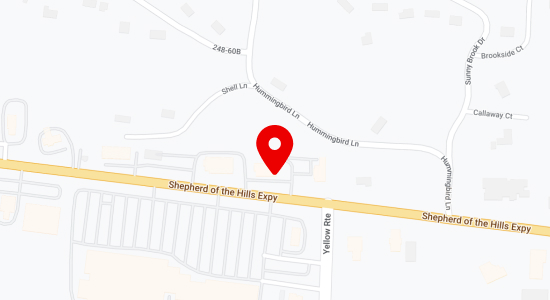
Please note that our law firm's address is for mail correspondence only. We do not accept in-office visits to this location. To schedule an appointment or consult with an attorney, please contact us via phone or email. Our contact information is readily available on our website. We look forward to hearing from you and strive to supply efficient and accessible legal services to our clients.
Branson, MO 65616