
Former Prosecutor
of 20 Years on
Your Side
of 20 Years on
Your Side









Being accused of indecent exposure can feel humiliating before the case even reaches court. These allegations often begin with a misunderstanding, a report from a stranger, an incident in a public place, or a situation that escalated quickly because someone felt offended or alarmed. Even when the charge is filed as a misdemeanor, the consequences can be serious. A person may face jail time, fines, probation, employment problems, damage to personal relationships, and the lasting stigma of being associated with a sex-related offense.
In Missouri, what people commonly call “indecent exposure” is usually charged under the sexual misconduct statutes. The precise charge depends on the facts alleged by law enforcement and the prosecutor. Some cases involve alleged exposure of genitals. Others involve accusations of sexual contact in view of another person, sexual conduct in a public place, solicitation, or allegations involving a child. Because these laws contain specific mental state requirements, factual details matter. The question is not only what allegedly happened, but whether the State can prove the required legal elements beyond a reasonable doubt.
Scrivner Law Firm defends people facing criminal charges in Taney County, Stone County, Christian County, and surrounding Southwest Missouri communities. Attorney Dayrell L. Scrivner is a former prosecutor with decades of legal experience, including many years handling criminal cases from the prosecution side. That background matters in an indecent exposure defense because a strong defense often begins by identifying what the State thinks it can prove, where the evidence is weak, and how the case may be viewed by local judges, prosecutors, witnesses, and jurors.
Missouri does not use one single statute titled “indecent exposure” for every possible exposure-related allegation. Instead, these cases are often prosecuted under Chapter 566 of the Missouri Revised Statutes, which covers sexual offenses. The most common statute in adult indecent exposure cases is RSMo § 566.093, sexual misconduct in the first degree.
Under RSMo § 566.093, a person commits sexual misconduct in the first degree if the person exposes his or her genitals under circumstances in which the person knows the conduct is likely to cause affront or alarm. The statute also covers having sexual contact in the presence of a third person under circumstances in which the person knows the conduct is likely to cause affront or alarm, as well as having sexual intercourse or deviate sexual intercourse in a public place in the presence of a third person.
That wording is important. The statute does not automatically criminalize every accidental exposure, wardrobe malfunction, private act, or poorly understood situation. The State must prove the required conduct and the required knowledge. A defense may focus on whether the exposure actually occurred, whether the accused person knew the conduct was likely to cause affront or alarm, whether the event happened as described, whether there were reliable witnesses, and whether the surrounding circumstances support the charge.
For a first offense, sexual misconduct in the first degree under RSMo § 566.093 is a class B misdemeanor. Under Missouri sentencing law, a class B misdemeanor may carry up to six months in jail. Missouri law also authorizes fines of up to $1,000 for a class B misdemeanor.
The charge can become more serious if the person has previously been found guilty of an offense under Chapter 566 or a similar offense in another jurisdiction. In that situation, sexual misconduct in the first degree is a class A misdemeanor. A class A misdemeanor in Missouri may carry up to one year in jail and a fine of up to $2,000.
Even when the possible jail sentence is measured in months rather than years, the practical consequences can be much broader. A conviction for a sexual misconduct offense may appear on background checks, affect employment, create problems with professional licensing, strain a marriage or family relationship, and make ordinary interactions feel uncomfortable. For people who work with the public, travel for work, serve in education, healthcare, ministry, hospitality, entertainment, or law enforcement-adjacent fields, the reputational damage may be one of the most frightening parts of the case.
Some cases involve accusations of inappropriate requests or solicitations rather than physical exposure. RSMo § 566.095 defines sexual misconduct in the second degree as soliciting or requesting another person to engage in sexual conduct under circumstances in which the person knows that the request or solicitation is likely to cause affront or alarm.
Sexual misconduct in the second degree is a class C misdemeanor. Under Missouri law, a class C misdemeanor may carry up to fifteen days in jail and a fine of up to $750. While that penalty range is lower than a class A or class B misdemeanor, the words “sexual misconduct” still carry serious weight. A person charged with this offense should not assume that the case is minor simply because the classification is lower.
These cases may depend heavily on context. A text message, conversation, social media exchange, joke, misunderstanding, or disputed statement may be interpreted differently by different people. A defense attorney may need to examine the full communication, not just the portion highlighted by the complaining witness or officer. Tone, timing, prior relationship, intoxication, incomplete screenshots, deleted messages, and witness bias may all matter.
Exposure allegations become far more serious when the alleged victim is a child. RSMo § 566.083 addresses sexual misconduct involving a child. This statute applies to several forms of alleged conduct involving a child under fifteen years of age, including knowingly exposing genitals to a child under circumstances likely to cause affront or alarm, exposing genitals for the purpose of sexual arousal or gratification, or coercing or inducing a child to expose certain body parts. The statute also states that it applies whether the alleged conduct occurs in person or through the internet or other electronic means.
Sexual misconduct involving a child is generally a class E felony. If the person has a prior qualifying offense under Chapter 566 or a similar offense from another jurisdiction, it may be charged as a class D felony. A class E felony in Missouri may carry up to four years in prison, while a class D felony may carry up to seven years in prison. Felony allegations may also create concerns about sex offender registration, bond conditions, no-contact orders, child custody issues, professional licensing, and long-term restrictions.
A case involving a child requires immediate and careful attention. The defense may involve witness interviews, forensic review of phones or computers, analysis of statements made by a child, review of law enforcement interview techniques, and a close look at whether the State can prove intent, knowledge, identity, and the exact conduct alleged. These cases are often emotionally charged, which makes it even more important to separate assumptions from admissible evidence.
In a sexual misconduct case based on alleged exposure, the State must prove more than embarrassment or discomfort. It must prove the elements of the charged offense. For sexual misconduct in the first degree, that may include proof that the accused exposed genitals and did so under circumstances in which the accused knew the conduct was likely to cause affront or alarm.
That knowledge requirement can be central. A person who accidentally exposed themselves, believed they were in private, suffered a medical problem, was changing clothes in a location they reasonably thought was secluded, or was misidentified may have defenses that go directly to the State’s burden. The law does not allow a conviction based only on a witness being upset. The prosecution must prove the accused person committed the charged act with the required mental state.
The defense may also examine whether the alleged exposure involved “genitals” as required by the statute, whether the witness had a clear opportunity to observe, whether the lighting or distance made identification unreliable, whether there are inconsistencies in the witness accounts, and whether law enforcement jumped to conclusions before completing a full investigation.
After an arrest or summons, the first court date may feel routine, but early decisions can affect the entire case. The accused may be asked to enter a plea, address bond conditions, or comply with no-contact orders. In some cases, the court may restrict contact with the complaining witness, prohibit entry into certain locations, or impose other conditions while the case is pending.
It is important not to contact the complaining witness in an effort to “clear things up” without legal guidance. Even a polite message can be misunderstood or treated as a violation of a court order. Social media posts can also create problems. A person accused of indecent exposure should avoid discussing the case online, texting witnesses, deleting potential evidence, or trying to explain the situation to law enforcement without counsel.
A Missouri criminal defense lawyer can review the charge, request discovery, examine whether the arrest or stop was lawful, evaluate bond conditions, and begin gathering favorable evidence. Early action can be especially important in a place like Southwest Missouri, where visitors may be accused while traveling and then return home before realizing how serious the case may become.
Local experience matters in criminal defense. Taney County and the surrounding area have their own court procedures, prosecutor practices, law enforcement agencies, and local concerns. A case that begins in Branson, Forsyth, Hollister, Rockaway Beach, Kimberling City, Ozark, Nixa, or another nearby community may involve local officers, sheriff’s deputies, municipal issues, or county-level prosecution.
Scrivner Law Firm represents people facing criminal allegations throughout Taney, Stone, and Christian Counties. Dayrell Scrivner’s background includes more than 30 years in the legal profession and approximately 20 years as a prosecutor, including service as Chief Assistant Prosecutor. He has handled serious criminal matters, taught criminal law and procedure as a Missouri state-licensed specialist instructor, and now uses that experience to defend people accused of crimes.
For an indecent exposure defense, that kind of practical experience can help clients understand not just the statute, but the process. The questions often come quickly. Will I go to jail? Will this be on my record? Will my employer find out? Can I travel? Can I speak to the witness? Is this a sex offense? Can the case be dismissed? What happens if the report is exaggerated or false? A defense attorney can help answer those questions based on the actual charge and facts, not fear.
An indecent exposure allegation can create a crisis even before guilt has been proven. People may feel ashamed, angry, frightened, or desperate to explain themselves. The legal system, however, moves according to evidence, statutes, procedure, and negotiation. The best response is usually not panic. It is preparation.
Protecting your record may involve challenging the State’s evidence, negotiating for a lesser offense, seeking a disposition that avoids the most damaging consequences, preparing mitigation, or taking the case to trial when the evidence does not support a conviction. The right path depends on the details. What matters is that the defense begins with a careful review of what the State can actually prove.
If you were accused of indecent exposure, sexual misconduct, or a related offense in Taney County, Stone County, Christian County, or the surrounding Southwest Missouri area, do not assume the case will go away on its own. These charges can affect your freedom, your record, your reputation, and your future.
Scrivner Law Firm can review the allegations, explain the statute involved, evaluate the evidence, and help you understand your defense options. Contact Scrivner Law Firm to speak with criminal defense attorney and former prosecutor Dayrell L. Scrivner about your case and the steps you can take to protect yourself.
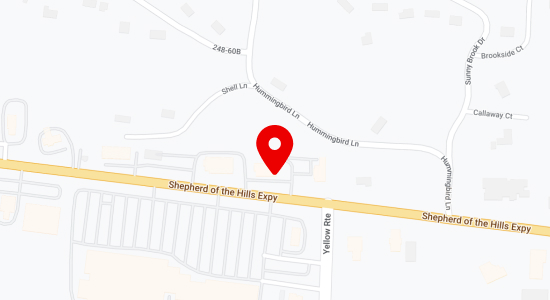
Please note that our law firm's address is for mail correspondence only. We do not accept in-office visits to this location. To schedule an appointment or consult with an attorney, please contact us via phone or email. Our contact information is readily available on our website. We look forward to hearing from you and strive to supply efficient and accessible legal services to our clients.
Branson, MO 65616