
Former Prosecutor
of 20 Years on
Your Side
of 20 Years on
Your Side









A charge for failure to register as a sex offender in Missouri can feel different from many other criminal accusations. The allegation may not involve a new sexual offense. It may arise from a missed deadline, a move, a misunderstanding about reporting rules, a change in phone number, a temporary address, or a disagreement over whether a person was required to register at all. Even so, Missouri treats these cases seriously, and a conviction can add a new felony record, create additional registry problems, and expose a person to jail or prison.
Scrivner Law Firm represents people facing criminal charges in Taney County and throughout Southwest Missouri, including Branson, Forsyth, Hollister, Merriam Woods, Rockaway Beach, and surrounding communities. The firm is led by attorney Dayrell L. Scrivner, a former prosecutor with more than 30 years of legal experience, including approximately 20 years in prosecution. That background matters because these prosecutions often turn on records, timelines, notice, prior convictions, county reporting procedures, and the exact language of Missouri’s registration statutes.
If you have been accused of failing to register, do not assume the case is only a paperwork issue. The state still has to prove the charge. A defense may exist if the prosecution cannot establish a valid duty to register, proper notice, a missed statutory requirement, venue, identity, or the facts necessary to support the level of the offense.
Missouri’s registration rules are mainly found in RSMo Sections 589.400 through 589.425. These statutes identify who must register, when registration must occur, what information must be provided, when a registrant must update information, and what penalties can apply if the state alleges noncompliance.
Under RSMo Section 589.400, a person who is subject to Missouri’s registration laws generally must register with the chief law enforcement official of the county or city not within a county where the person resides. The statute includes a short initial deadline. A person covered by the law must register within three days of conviction, release from incarceration, or placement on probation, unless the person has already registered in that county for the same offense. A person who is not currently registered in the county of residence must also register within three days.
This short deadline is one reason these cases require careful factual review. The defense may need to examine release records, probation documents, county intake forms, jail discharge paperwork, transportation issues, and any instructions the person was actually given.
RSMo Section 589.407 addresses the registration statement and related identifying information. The registration process can involve fingerprints, palm prints, photographs, offense information, residence information, employment information, vehicle information, online identifiers, phone numbers, and other details required by law. A signed registration form may become important evidence because it can be used to argue that the person understood the duty to register. At the same time, the form itself may create defense questions if it was incomplete, confusing, inaccurate, not signed, not translated, or not connected to the alleged violation.
RSMo Section 589.425 defines the offense of failing to register as a sex offender. A person commits the offense when the person is required to register under Sections 589.400 to 589.425 and fails to comply with any requirement of those statutes.
That language is broad. Prosecutors may file a charge based on an alleged failure to complete initial registration, failure to verify information, failure to report a change of address, failure to report employment or student status, failure to update phone numbers or electronic identifiers, failure to report temporary lodging, failure to report vehicle information, or failure to appear for a required in-person verification.
Not every mistake equals a provable felony. The state must connect the alleged conduct to a specific statutory duty. A defense lawyer should ask what exact requirement was supposedly violated, when the deadline began, when it expired, what the defendant knew, what the county records show, and whether the alleged omission was actually material under the law.
Many failure to register cases arise from changes after the initial registration. RSMo Section 589.414 requires a registrant to appear in person within three business days if there is a change in name, residence, employment, volunteer or intern status, student status, or termination of those items. The statute also requires notice within three business days for changes involving vehicle information, temporary lodging, temporary residence, email addresses, instant messaging addresses, other designations used in internet communications, telephone numbers, cellular numbers, and new forms of electronic communication.
Address changes can be especially complicated. If a registrant changes residence or address to a different Missouri county, the person must notify both the prior chief law enforcement official and the new chief law enforcement official within three business days. If the person moves to another state, territory, federal jurisdiction, tribal jurisdiction, military jurisdiction, the District of Columbia, or a foreign country, Missouri’s statute also contains reporting obligations connected to the old and new jurisdictions.
These rules can create real world problems. Someone may stay with a relative for a few days, leave a relationship, sleep in a vehicle, enter treatment, take temporary work, change hotels, lose a phone, create a new email address, or misunderstand whether an address is temporary or permanent. The defense may need to build a timeline that shows where the person actually lived, what was temporary, what was reported, and whether law enforcement records accurately reflect the person’s compliance efforts.
Missouri uses tier classifications that affect how often a registrant must appear to verify information. Under RSMo Section 589.414, Tier I offenders generally report annually in the month of their birth. Tier II offenders generally report semiannually, meaning in the month of birth and six months later. Tier III offenders generally report in person every 90 days.
A missed verification appointment may become the basis for a criminal charge. The defense should not stop at the calendar entry. It may be necessary to review whether the person was properly classified, whether the county gave correct instructions, whether the date fell on a weekend or holiday, whether the person appeared but the record was entered incorrectly, and whether the alleged violation was a failure to verify or some other type of registration issue.
The penalties under RSMo Section 589.425 depend on the alleged violation and prior failure to register history. A first failure to register offense is generally a class E felony. However, it becomes a class D felony if the registration requirement is based on a Chapter 566 offense that was an unclassified felony, a class A or class B felony, or a felony involving a child under the age of fourteen.
A second failure to register offense is also generally a class E felony, but it can be charged as a class D felony under similar circumstances when the underlying offense involved certain serious Missouri Chapter 566 offenses or comparable offenses from another state, foreign country, federal jurisdiction, tribal jurisdiction, or military jurisdiction.
A third failure to register offense carries much more severe consequences. Under the statute, a person with two or more prior guilty pleas or findings of guilt for failure to register faces a felony punishable by imprisonment for not less than ten years and not more than thirty years.
Because the penalty level can change based on prior history and the underlying offense, defense counsel should carefully review certified records. The defense may need to determine whether the prior convictions are legally valid for enhancement, whether the underlying offense actually fits the enhancement language, and whether the prosecutor can prove those facts beyond a reasonable doubt.
A failure to register charge in Taney County may involve the sheriff’s office, local law enforcement, probation and parole, the prosecutor’s office, and the circuit court. The facts may also involve neighboring counties if the person moved between Taney, Stone, Christian, Greene, or other Missouri counties. Because registration duties often follow a person across county lines, local knowledge can be valuable.
Dayrell Scrivner’s background as a former prosecutor can help when evaluating how the state may try to prove the case. A prosecutor may rely on registry records, testimony from a registration officer, certified prior conviction documents, jail release records, probation documents, and statements made by the accused. The defense needs to test each part of that proof and identify whether the state can establish every required element.
If you are contacted about a possible failure to register charge, be careful about giving explanations before speaking with counsel. People often try to fix the situation by talking through what happened. That may feel natural, but statements about where you stayed, when you moved, whether you had a phone, or what you believed the rules required can later be used against you.
You should gather documents, but avoid altering or backdating anything. Helpful records may include registration receipts, jail release paperwork, probation paperwork, court orders, lease documents, hotel receipts, employment records, phone records, emails, text messages, calendars, travel receipts, and names of people who know where you were living or working. These materials may help your lawyer identify a defense, negotiate with the prosecutor, or challenge the charge in court.
A failure to register case can threaten your freedom, your record, your supervision status, and your ability to move forward. It can also create panic because the accusation is tied to a prior sex offense, even when the current allegation is about reporting or paperwork. You do not have to face that process alone.
Scrivner Law Firm represents individuals accused of crimes in Taney County and throughout Southwest Missouri. Attorney Dayrell L. Scrivner brings decades of legal experience, including significant prosecutorial experience, to the defense of serious criminal cases. The firm takes a personalized approach, explains the process clearly, and works to protect each client’s rights at every stage.
If you have been charged with failure to register as a sex offender, or if law enforcement is investigating whether you missed a Missouri registration requirement, contact Scrivner Law Firm to discuss your situation and the defenses that may be available.
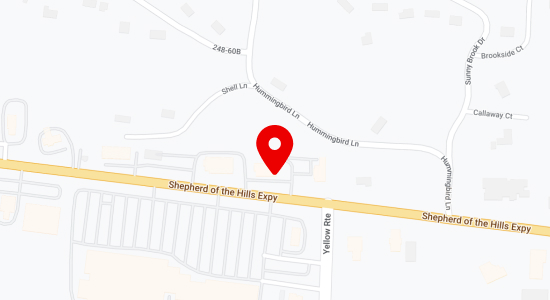
Please note that our law firm's address is for mail correspondence only. We do not accept in-office visits to this location. To schedule an appointment or consult with an attorney, please contact us via phone or email. Our contact information is readily available on our website. We look forward to hearing from you and strive to supply efficient and accessible legal services to our clients.
Branson, MO 65616