
Former Prosecutor
of 20 Years on
Your Side
of 20 Years on
Your Side







An enticement charge can sound deceptively narrow. In reality, it is one of the most dangerous accusations a person can face because it often combines sexual allegations, claimed communication with a minor, and a prosecution narrative built around intent. In Missouri, the charge can arise from in-person contact, online messages, text exchanges, social media communications, gaming platforms, or other alleged efforts to persuade, solicit, coax, or lure a child into prohibited conduct. What makes these cases especially serious is not only the charge itself, but how quickly an allegation can harden into a life-changing criminal matter before the defense has had any real chance to respond.
Missouri law addresses enticement of a child in section 566.151. Depending on the facts alleged, related statutes may also come into play, including section 566.153 involving age misrepresentation with intent to solicit a minor and section 566.103 concerning promoting online sexual solicitation. In some cases, prosecutors also stack related allegations involving attempted sexual offenses, electronic communications, or other claimed conduct they believe supports their theory of intent. The State may use one statute, several, or a combination of charges if it believes the facts support them. That makes enticement cases especially serious from the first investigative contact, not just after formal charges are filed.
Scrivner Law Firm defends individuals facing serious sex offense allegations and internet-based accusations in Missouri. Dayrell Scrivner’s background as a former prosecutor gives the firm valuable perspective into how law enforcement and prosecutors build these cases, especially where digital evidence, undercover operations, communications, and claimed intent are central to the State’s theory. In a case like this, perspective matters. The prosecution will try to present the evidence as obvious and the accused as dangerous. A disciplined defense has to slow that process down, test every assumption, and force the State to prove what the law actually requires.
Enticement prosecutions frequently focus as much on what the State says a person meant to do as on what was actually done. A text message, joke, flirtatious comment, invitation, or discussion about a meeting may be framed as proof of criminal purpose. That can make these prosecutions highly fact specific and highly contestable.
Intent is a powerful word in criminal court. It allows prosecutors to take ambiguous conduct and place it into a darker narrative. A person may believe a conversation was reckless, immature, inappropriate, or misunderstood. The State may describe that same conversation as targeted grooming, solicitation, or calculated enticement. Those are very different conclusions, and they are not interchangeable.
That is why the exact language matters. The timing matters. The sequence matters. Whether the other person’s age was clearly stated matters. Whether the accused acknowledged or challenged that claimed age matters. Whether the communication drifted, stopped, or was pushed forward by someone else matters. The prosecution often highlights the lines that sound worst in isolation. The defense has to examine whether those lines still mean the same thing when viewed in full context.
The State still has to prove what section 566.151 and any related statute require. It is not enough to rely on suspicion, innuendo, disgust, or selective excerpts from a longer exchange. A defense lawyer must carefully review the actual words used, the broader context of the communication, whether age knowledge can truly be shown, whether law enforcement shaped the conversation, and whether the prosecution is stretching uncertain evidence into a more sinister story than the facts support.
Many enticement investigations begin and end with digital evidence. That sounds concrete, but digital cases are not always as straightforward as they first appear. Screenshots may be incomplete. Platforms may not preserve full threads. Messages can be deleted, edited, forwarded, or stripped of context. Slang may be misread. Sarcasm may disappear on the page. One party may exaggerate. Another may bait. Tone is often impossible to judge from text alone.
A conversation that looks incriminating in a police report may not look the same when fully reconstructed. There may be long gaps in communication. There may be parts where the accused expresses hesitation or confusion. The claimed minor may have initiated certain topics. The conversation may have shifted repeatedly. The age issue may have been unclear, contradicted, or manipulated.
That does not mean every online enticement case is weak. It does mean the evidence must be read carefully rather than dramatically. Prosecutors want the court to focus on the most inflammatory snippets. The defense must focus on chronology, meaning, authorship, and whether the State’s interpretation is truly the only reasonable one.
Many enticement prosecutions arise out of sting operations. An undercover officer may pose as a minor in a chat room, on a dating app, through a gaming platform, on social media, or by text. The State then argues that the resulting messages prove the accused intended to entice a child.
These cases raise major defense questions from the outset.
In a sting case, it matters who steered the conversation. Did the accused first mention sexual activity, or did the undercover officer repeatedly invite it? Did the accused propose a meeting, or did the supposed minor keep pressing for one? Did the accused retreat, hesitate, or try to end the exchange? A police summary may smooth over those distinctions. The full conversation may tell a different story.
Some cases turn heavily on whether the accused knew or believed the other person was underage. If the claimed age appeared once in a flood of messages, changed during the exchange, or was presented ambiguously, that may matter. If the user profile appeared adult, if photos were misleading, or if the conversation created uncertainty, those are facts a defense attorney should examine carefully.
Entrapment defenses are difficult, but that does not mean undercover tactics are beyond challenge. If the officer repeatedly re-initiated contact, encouraged escalation, used emotional manipulation, or created an unusual level of pressure, those facts deserve close attention. Even when entrapment is not ultimately successful as a formal defense, aggressive police tactics can still shape motions, negotiations, cross-examination, and the way a judge or jury sees the evidence.
Digital attribution is one of the most overlooked issues in internet-based criminal cases. Prosecutors often act as if linking a username, account, or device to a defendant is automatic. It is not.
Phones are shared. Computers are borrowed. Accounts are accessed by multiple people. Passwords are reused. Messages can be sent from saved logins. Devices can be remotely accessed. Internet connections identify locations, not necessarily individuals. Even where police recover a phone or computer, the State still has to prove that the accused was the person actually using it at the relevant time.
Forensic handling matters too. How was the device seized? Was there a valid warrant? Was consent valid and limited? Did the extraction process preserve the full data set or only selected content? Were there chain-of-custody issues? Were metadata and timestamps interpreted correctly? Sloppy digital handling can create evidentiary weaknesses that are invisible unless the defense looks for them early.
In a case built on messages, attribution is not a side issue. It is often central to guilt or innocence.
An enticement accusation is not the kind of case a person can treat casually. A conviction can expose an individual to prison, sex-offender-related consequences, restrictions on residence or presence, conditions on internet and device use, employment damage, professional licensing problems, harm to family relationships, and a lasting public stigma that follows long after the courtroom process ends.
Even before conviction, the practical damage can be severe. A person may lose a job, be removed from a home, be cut off from children, face bond restrictions, or be forced to explain the accusation to family members who are already reacting in fear and anger. In many situations, the punishment starts socially long before any judge has ruled on the evidence.
That is one reason early legal intervention matters so much. These are not cases to explain away casually or manage by speaking freely with law enforcement in hopes of clearing things up. Investigators are not neutral listeners once they suspect enticement. They are gathering admissions, narrowing timelines, and building a record they can later use in court.
Enticement cases are sometimes improved, reduced, or defeated not through broad emotional arguments, but through careful work on narrow details that turn out to be critical.
A partial excerpt may sound devastating. The full conversation may show hesitation, confusion, ambiguity, or pressure from the other side. Sequence, timing, deleted content, and response patterns can change how a message is interpreted.
The State must prove who controlled the relevant account, phone, application, or platform. That proof should never be assumed. Login history, device access, saved credentials, IP data, and forensic extraction methods may all matter.
How police obtained the phone, account content, cloud data, or platform records can matter enormously. Warrants, consent, scope, and preservation methods should be reviewed closely. Digital overreach can create suppression issues.
If the prosecution must prove that the accused knew or believed the other person was underage, the evidence on that point becomes critical. Ambiguity can matter more than the State wants to admit.
What the accused said during the investigation often becomes one of the most important pieces of evidence in the case. Panic, attempts to explain, awkward denials, or ill-considered apologies can all be framed by prosecutors in the worst possible light. Early legal guidance can prevent that damage.
Dayrell Scrivner understands how the State builds sex-related and internet-based cases. As a former prosecutor with decades of legal experience, he knows these prosecutions are often designed to feel overwhelming from the outset. The government may lean on raw message excerpts, alarming charging language, investigator testimony, and the social stigma of the allegation to create a sense that the result is inevitable.
A strong defense brings structure back into the case. What does section 566.151 actually require? What do the full communications show? Can the State prove identity? Can it prove age knowledge? Can it prove intent beyond speculation? Was the investigation fair, or was the evidence selectively framed from the beginning?
That kind of disciplined review is especially important in modern digital prosecutions, where the government may have a large volume of data but not necessarily a clear, reliable, or legally sufficient story. Scrivner Law Firm approaches these cases with the seriousness they demand. The firm does not treat them as cases to be managed by fear. It treats them as cases to be dissected, challenged, and defended strategically from the ground up.
An enticement accusation can escalate quickly. By the time formal charges are filed, law enforcement may already have interviews, search warrants, device extractions, subpoenaed platform records, and a narrative it intends to present as settled fact. The defense should not wait for that version of the case to fully harden.
Early intervention can matter in very practical ways. Devices may need independent forensic review. Message threads may need to be preserved before accounts disappear or platforms alter retention. Witnesses may need to be identified before memories shift. The accused may need protection from making damaging statements while under enormous emotional pressure. In some matters, early defense work can also shape charging decisions, negotiation posture, and how aggressively the State proceeds.
If you are being investigated for or charged with enticement of a child in Missouri, do not assume the State has the whole story simply because it has messages, screenshots, or a dramatic accusation. These cases are often decided by context, authorship, timing, statutory detail, and the quality of the defense response.
Scrivner Law Firm represents individuals facing serious allegations that threaten their freedom, reputation, and future. Dayrell Scrivner and his team can examine the communications, identity evidence, undercover tactics if any, search and seizure issues, and the specific Missouri statutes the State is relying on. When a digital conversation is being used to threaten the rest of your life, you need a defense that is careful, aggressive, and prepared from the start. Contact Attorney Scrivner today.
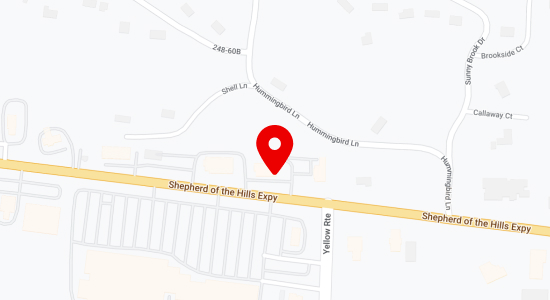
Please note that our law firm's address is for mail correspondence only. We do not accept in-office visits to this location. To schedule an appointment or consult with an attorney, please contact us via phone or email. Our contact information is readily available on our website. We look forward to hearing from you and strive to supply efficient and accessible legal services to our clients.
Branson, MO 65616