
Former Prosecutor
of 20 Years on
Your Side
of 20 Years on
Your Side







An accusation involving child pornography can alter a person’s life almost immediately. Before any conviction, people facing these allegations often deal with search warrants, seized phones and computers, frozen routines, public suspicion, strain inside the family, and intense fear about what comes next. The charge alone can threaten employment, housing, professional licenses, child custody positions, and personal relationships. Once the State files the case, the pressure becomes even more severe because Missouri treats these offenses as serious felonies, and prosecutors frequently pursue them aggressively.
These are not cases to approach casually. They usually involve digital evidence, forensic analysis, statements made during law enforcement interviews, allegations about intent, and disputes over who actually controlled a device or account. What looks simple in an affidavit can become much more complicated when the evidence is tested carefully. A thumbnail image, a shared device, an automatically saved file, cloud syncing, cached data, or access by another person can raise important factual and legal issues. The prosecution still has the burden to prove every element of the charged offense beyond a reasonable doubt.
Attorney Dayrell Scrivner brings decades of legal experience to the defense, including many years as a prosecutor and service as Chief Assistant Prosecutor. That background matters in a high stakes case like this. A former prosecutor knows how these investigations are built, how charging decisions are made, what weaknesses may exist behind a search warrant, and where the defense must apply pressure. Dayrell Scrivner also serves clients in Taney, Stone, and Christian Counties and has extensive familiarity with the local legal system in this region.
A child pornography case often starts long before an arrest. It may begin with an internet tip, a report from a social media platform, a cybercrime investigation, a subpoena to an internet service provider, a device examination after an unrelated arrest, or a complaint from someone with access to a phone or computer. By the time law enforcement contacts a suspect, officers may already believe they have enough information to seek a search warrant or file charges.
That early stage is critical. A person under investigation may think cooperation will make the matter go away. In reality, an interview can give the State admissions it did not previously have. Statements about downloading, viewing, saving, forwarding, or even recognizing an image can become central evidence. So can attempts to explain away files without first understanding what law enforcement has actually recovered.
A defense lawyer needs to examine the sequence carefully. When did the investigation begin? What data allegedly tied the material to the accused? Who had access to the device, home network, password, or account? Was the warrant broad enough? Was the search properly executed? Was the client questioned after a valid waiver of rights? Those questions are not side issues. They can shape the entire case.
Missouri uses several statutes in this area, and the exact charge depends on what the State claims happened.
Section 573.037 addresses possession of child pornography. Under that statute, a person commits the offense if he or she knowingly or recklessly possesses child pornography involving a minor under eighteen, or obscene material portraying what appears to be a minor under eighteen. The grading of the offense can change significantly based on the number and type of alleged items.
If the allegation involves one still image, the offense is a class D felony. It can become a class B felony if the person is alleged to possess more than twenty still images, a moving image such as a video, or if there is a prior conviction under that section. Missouri law also states that separate punishments may be imposed for each item possessed. That alone makes the exposure in a possession case potentially enormous.
Section 573.025 covers promoting child pornography in the first degree. This statute applies when a person, knowing the content and character of the material, possesses it with intent to promote or actually promotes child pornography involving a child less than fourteen years old, or obscene material portraying what appears to be a child less than fourteen.
This is a class B felony, and it rises to a class A felony if the person knowingly promotes the material to a minor. Missouri law also provides that a person found guilty under this section is not eligible for probation, parole, or conditional release for three calendar years. That is a severe consequence and one reason these cases must be treated with urgency from the beginning.
Section 573.035 addresses promoting child pornography in the second degree. It applies to material involving a minor under eighteen when the case does not fall under the first degree statute tied to a child less than fourteen. It is generally a class D felony, but it becomes a class B felony if the person knowingly promotes the material to a minor. The statute further states that a person found guilty under this section is not eligible for probation.
In some cases, prosecutors go beyond possession or promotion and file a production type charge. Section 573.023 addresses sexual exploitation of a minor. That statute covers knowingly or recklessly photographing, filming, videotaping, producing, or otherwise creating obscene material with a minor or child pornography. It is a class B felony unless the minor is a child, in which case it becomes a class A felony.
When the State alleges creation rather than passive possession, the exposure is even more serious. These cases often involve disputes over who created the image, who controlled the device, and whether the prosecution can prove the age of the person depicted and the defendant’s role in producing the material.
The public often assumes that if files appear on a device, guilt is automatic. That is not how a criminal case is supposed to work. The State must prove the elements of the charged offense, and in a digital evidence case those elements can become highly contested.
Knowledge is frequently one of the central issues. Missouri’s statutes use words like knowingly, recklessly, and intent to promote. That matters. A defense may focus on whether files were intentionally downloaded, automatically cached, unknowingly received, stored by an app without clear user awareness, or left on a shared device by someone else.
Control is another major issue. Many households have multiple users. Phones get borrowed. Laptops are shared. Cloud accounts sync across devices. External drives circulate among family members or roommates. A prosecutor may try to reduce the case to a single person and a single device, but the defense may be able to show access by others or uncertainty about who actually possessed or transferred the material.
Age can matter as well. In some prosecutions, the State must prove the depicted person was under the age threshold required by the statute. Missouri law in section 573.050 contains rules that help the prosecution in certain pornography related cases, including proof of age and the fact that the State does not have to show the material appeals to prurient interest or lacks serious value in a prosecution for promoting child pornography in the first or second degree. Even so, the prosecution must still satisfy the elements that apply to the specific charge.
Most child pornography prosecutions live or die on electronic evidence. That makes the warrant and forensic process extremely important.
A search warrant is not just a formality. It must be supported by probable cause and must adequately describe the place to be searched and the items to be seized. In a digital case, a warrant may authorize the seizure of phones, tablets, computers, hard drives, cameras, memory cards, routers, and cloud related data. If the warrant is defective, overly broad, stale, or based on unreliable information, the defense may be able to challenge the search and the evidence obtained from it.
Once devices are seized, the government typically relies on a forensic examiner to recover files, metadata, browsing history, downloads, chat data, and traces of deleted content. But a forensic report is not beyond challenge. Defense review may focus on whether files were actually opened, where they were stored, whether they were deliberately saved, the dates associated with the files, whether another user profile existed, and whether the report overstates what the data truly proves.
In some cases, the question is not whether a file existed but whether the defendant knowingly possessed it. A recovered image in unallocated space, temporary internet files, or cache data may raise very different issues than a file stored in an intentionally named folder. That distinction can matter greatly.
Law enforcement often tries to obtain admissions during the search or afterward. A person may be frightened, embarrassed, or trying to sound cooperative. That can produce statements that are incomplete, confused, or damaging. A defense lawyer will want to review whether Miranda rights were implicated, whether questioning was custodial, whether the statement was voluntary, and whether officers used tactics that distorted the response.
A conviction in this area can carry prison exposure, probation limits, registration consequences, and long term stigma that follows a person for years. It can also lead to restrictions that extend well beyond the formal sentence.
Missouri’s registration statute, section 589.400, imposes registration requirements for qualifying offenses, with durations tied to the tier system. Depending on how the offense is classified and how the law applies to the person’s case, registration can last for many years and in some situations for life. Registration obligations can affect residence choices, employment prospects, travel, school attendance, and everyday privacy.
A conviction can also trigger problems with internet use, contact with minors, family court issues, professional licensing, firearm rights, and public reputation. Even before conviction, a pending allegation may damage a marriage, disrupt parenting time, and create immediate problems in the workplace. These realities are why the defense cannot be built only around the courtroom appearance. It has to account for the broader consequences too.
Child pornography prosecutions are not ordinary cases. They require a lawyer who understands both the seriousness of the allegation and the mechanics of how the State builds the case. Dayrell Scrivner brings more than courtroom presence. He brings decades in the legal profession, including many years as a prosecutor and service as Chief Assistant Prosecutor. He has handled a wide range of criminal matters, taught criminal law and criminal procedure as a Missouri licensed specialist instructor for universities and police academies, and worked extensively within the local justice system.
That combination can be especially valuable when the defense needs to identify how prosecutors will frame the facts, what evidence they will try to emphasize, and where a charging document or warrant affidavit may be vulnerable. Scrivner Law Firm also serves clients in Taney, Stone, and Christian Counties and understands the local courts where many clients will have to fight these cases.
Just as important, a person accused of a sex related internet offense needs straight answers and careful guidance, not panic and not false reassurance. A serious defense requires preparation, communication, and a lawyer willing to confront difficult facts without losing sight of the client’s rights.
The hours and days after contact with law enforcement matter. Do not assume the case is hopeless because officers seized a device or mentioned forensic evidence. Do not try to talk your way out of it with investigators. Do not guess about what was found. Preserve records, identify who had access to devices and accounts, and speak with defense counsel as early as possible.
A fast response can help protect the defense. It may allow counsel to evaluate the warrant, preserve favorable evidence, advise the client about further contact with police, and begin building a strategy before the State’s version of events hardens into the accepted narrative.
A child pornography accusation can place every part of your future at risk. Prison exposure, mandatory registration issues, digital evidence disputes, and public stigma make these cases some of the most difficult in Missouri criminal law. But an accusation is not a conviction, and the State still has to prove its case.
Scrivner Law Firm defends people facing serious criminal charges with the benefit of Dayrell Scrivner’s decades of experience, including his years as a former prosecutor. If you are under investigation, have been served with a search warrant, or have already been charged in Taney County, Stone County, Christian County, or elsewhere in Missouri, now is the time to act. Contact Scrivner Law Firm to discuss your case and begin building a defense designed to protect your rights, your freedom, and your future.
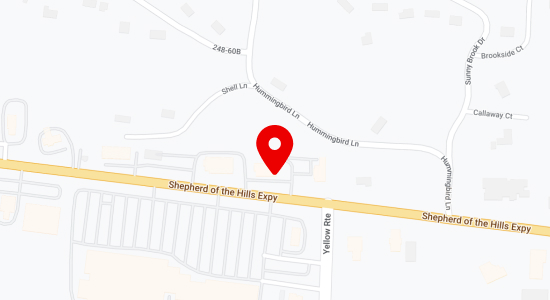
Please note that our law firm's address is for mail correspondence only. We do not accept in-office visits to this location. To schedule an appointment or consult with an attorney, please contact us via phone or email. Our contact information is readily available on our website. We look forward to hearing from you and strive to supply efficient and accessible legal services to our clients.
Branson, MO 65616