
Former Prosecutor
of 20 Years on
Your Side
of 20 Years on
Your Side









A person can become the focus of a theft investigation without being accused of taking anything from the original owner. A used vehicle bought from a private seller, tools stored for a friend, electronics resold online, or merchandise handled for someone else can all lead police to ask the same question: did the person know, or believe, that the property was stolen?
That distinction matters under Missouri law. A receiving-stolen-property case is not simply about who possessed an item after a theft. The State must connect the accused to the property and prove the mental state required by the stealing statute. The source of the property, the price paid, communications between the parties, ownership records, resale activity, and what the accused did after learning of a possible theft can all become important.
Scrivner Law Firm represents people facing theft and property-crime allegations in Taney County and surrounding Southwest Missouri communities. With more than 30 years in the legal profession, including 20 years spent prosecuting criminal cases, Attorney Dayrell Scrivner approaches receiving stolen property allegations by closely examining how the property changed hands, what the accused knew about its origin, and whether the evidence supports the State’s theory of criminal intent.
Missouri previously had a separate statute titled “Receiving Stolen Property,” Section 570.080 of the Revised Statutes of Missouri. That provision has since been repealed, and the conduct is now addressed under Missouri’s broader stealing statute, Section 570.030.
Under Section 570.030.1(3), a person commits stealing when, for the purpose of depriving the owner of a lawful interest in property, the person receives, retains, or disposes of property of another while knowing that it has been stolen or believing that it has been stolen.
Police reports or everyday conversations may still use the phrase “receiving stolen property,” but the current statutory analysis generally begins with Section 570.030. The same statute also determines offense grading based on the value and type of property, prior stealing-related findings of guilt, and certain special circumstances.
A person does not have to be the original thief to face prosecution under this provision. At the same time, later possession of stolen property does not automatically establish every element of stealing. The State still has to prove the required purpose and the required knowledge or belief.
Receiving cases frequently develop differently from a conventional theft accusation. The alleged theft may have occurred hours, days, or weeks before law enforcement encounters the person who now has the property. That gap creates a second factual story: how the property moved from the original owner to the accused.
Investigators may trace that chain through marketplace listings, text messages, pawn transactions, vehicle records, surveillance footage, payment applications, location data, or witness statements. A serial number or vehicle identification number may connect an item to a reported theft, but that only answers part of the case. The prosecution must still address how the accused obtained control of the item and what the accused understood about its origin.
Ordinary transaction details can therefore matter. Was there a receipt or electronic payment record? Did the seller provide a plausible explanation of ownership? Was the price low because the item was stolen, or because it was damaged, used, incomplete, or sold quickly? What was said before and after the transaction?
The defense analysis should reconstruct that sequence rather than treating possession as the beginning and end of the case.
Section 570.030 does not criminalize unknowingly acquiring stolen property. The statute requires proof that the person knew the property had been stolen or believed that it had been stolen, together with the purpose of depriving the owner of a lawful interest.
Because a person’s state of mind is rarely captured by direct evidence, prosecutors may rely on surrounding circumstances. They may point to an unusually low purchase price, altered serial numbers, inconsistent explanations, concealment, rapid resale, cash-only transactions, communications with the alleged thief, or conduct after police make contact.
Those facts still require context. A bargain price is not the same thing as knowledge. Possessing property for another person is not necessarily ownership. Selling an item does not establish that the seller knew its history. Even an apparently inconsistent statement may look different when the complete conversation or timeline is reviewed.
The distinction between suspicion and actual knowledge or belief can be critical. A defense may focus on whether the State’s evidence proves the required mental state beyond a reasonable doubt rather than merely showing that the transaction looks questionable in hindsight.
The current statute reaches more than the moment property changes hands. It covers receiving, retaining, or disposing of stolen property when the other statutory elements are present.
That means timing can matter. Someone may acquire property without reason to suspect it was stolen and later learn information that changes the situation. What happens after that point may become part of the prosecution’s theory. Continuing to conceal, keep, transfer, or sell property after learning credible information about its origin presents a different issue from an innocent purchase followed by an effort to return the item or clarify ownership.
Section 570.010 is also relevant because Missouri defines “appropriate” to include taking, obtaining, using, transferring, concealing, retaining, or disposing of property. The statutory language therefore allows prosecutors to examine a broad range of conduct involving control over property, not simply physical receipt.
For the defense, chronology is essential: when was the property obtained, when did the accused first receive information suggesting it might be stolen, and what happened afterward?
Section 570.020 generally defines value as the market value of the property at the time and place of the offense. If market value cannot be satisfactorily determined, replacement cost within a reasonable time may be used. For merchandise belonging to a merchant, value is generally the price at which the merchant would normally sell the property.
Under the current version of Section 570.030, stealing is generally a Class C felony when the property or services are valued at $25,000 or more. It is generally a Class D felony when the value is $750 or more. A Class D misdemeanor may apply when the property is worth less than $150, is not a specially listed type of property, and the accused has no previous finding of guilt for a stealing-related offense. If another grading provision does not apply, stealing is a Class A misdemeanor.
Value is not the only consideration. Certain property can trigger felony treatment regardless of ordinary thresholds. Section 570.030 identifies motor vehicles, watercraft, aircraft, firearms, credit or debit devices, certain utility wire and equipment, controlled substances, and other listed items as grounds for Class D felony treatment. The statute also provides Class E felony treatment for categories including catalytic converters, animals, certain delivered packages or sealed articles, and qualifying cases involving prior stealing-related findings of guilt.
Receipts, condition, age, missing parts, depreciation, comparable sales, and the statutory valuation method may therefore affect the level of the charge.
Missouri law addresses organized retail theft within Section 570.030. The provision can apply to coordinated theft from businesses as well as to receiving or possessing property obtained through such an agreement when the person knows or has reasonable grounds to believe the property was stolen from a business.
The statute permits separate acts connected to an ongoing organized-retail-theft agreement to be aggregated when determining value. When the value of property taken plus qualifying property damage reaches at least $750 but remains below $10,000, the provision can support Class C felony treatment. At $10,000 or more, it can support Class B felony treatment.
This matters when investigators claim repeated purchases, storage, resale, or online distribution were part of a larger retail-theft operation rather than isolated transactions. The defense should examine whether the State can establish the alleged agreement, the accused’s role, the required knowledge or grounds for belief, and the values it seeks to combine.
A receiving-stolen-property defense often begins by organizing the evidence chronologically. A marketplace listing may show how the transaction was presented. Bank or payment-app records may document what was paid. Messages may reveal whether the seller claimed ownership or explained the sale. Photographs can establish the item’s condition. Vehicle or title records can show efforts to transfer ownership. Location information may contradict an allegation that the accused participated in the original theft.
Police evidence also needs context. Body-camera footage can show the exact questions asked and answers given. Search-warrant records may identify where property was found and who had access to that location. Statements from co-defendants or informants can be compared with objective records and earlier versions of their accounts. Serial-number reports should be checked to confirm that the recovered item is actually the property reported stolen.
These details may support a challenge to knowledge, possession, purpose, value, identity, or the prosecution’s broader theory of the transaction.
The criminal exposure changes substantially depending on how the stealing offense is graded. Under Missouri’s current sentencing statutes, a Class C felony carries three to ten years of imprisonment. A Class D felony carries up to seven years, and a Class E felony carries up to four years. A Class A misdemeanor carries up to one year in jail. A Class D misdemeanor has no authorized jail sentence.
Missouri law also allows fines of up to $10,000 for Class C, D, and E felonies, up to $2,000 for a Class A misdemeanor, and up to $500 for a Class D misdemeanor, subject to other statutory provisions. Special enhancements, prior-offender rules, multiple counts, or related charges can change the analysis.
A theft conviction can also create practical problems involving employment, professional opportunities, housing, reputation, and future criminal proceedings. That makes it important to determine whether the State has correctly identified the property, valued it properly, and developed evidence that proves the required mental state.
Receiving-stolen-property allegations often depend on the interpretation of many smaller facts rather than one decisive fact. That makes prosecutorial perspective particularly useful when evaluating the case.
Attorney Dayrell Scrivner has more than 30 years in the legal profession, including 20 years as a prosecutor and service as Chief Assistant Prosecutor in Stone County. He has also taught criminal law and criminal procedure as a Missouri state-licensed specialist instructor for universities and police academies. That background can help identify how investigators developed the theory of the case, which facts a prosecutor may view as evidence of knowledge, and where the proof may be incomplete or open to another explanation.
Scrivner Law Firm represents clients in Taney County, Stone County, Christian County, and other Missouri communities. In a receiving-stolen-property case, the defense can begin with the transaction itself and work outward: where the property came from, who controlled it, what the accused knew, how value was calculated, and whether the State can prove each statutory requirement.
A receiving stolen property allegation can become serious once law enforcement begins tracing where an item came from, reviewing communications, or questioning the circumstances surrounding a purchase or transfer. Getting a defense attorney involved early can help clarify how the property was obtained, preserve important records, and begin assessing whether the evidence actually supports the State’s allegations.
Attorney Dayrell Scrivner has experience as both a former prosecutor and criminal defense lawyer handling theft-related cases. If you are being investigated or have been charged with stealing based on allegations that you received, retained, or disposed of stolen property, contact Scrivner Law Firm to discuss the evidence, the possible consequences, and the defenses that may apply. Call the firm or submit the online contact form to schedule a consultation.
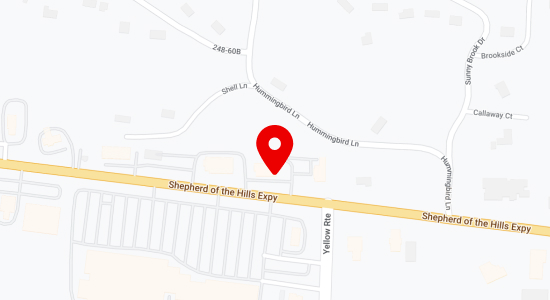
Please note that our law firm's address is for mail correspondence only. We do not accept in-office visits to this location. To schedule an appointment or consult with an attorney, please contact us via phone or email. Our contact information is readily available on our website. We look forward to hearing from you and strive to supply efficient and accessible legal services to our clients.
Branson, MO 65616