
Former Prosecutor
of 20 Years on
Your Side
of 20 Years on
Your Side









Being accused of criminal mischief in Missouri may sound like a relatively minor property offense. Under Missouri law, however, the term has a very specific meaning. Criminal mischief under Missouri Revised Statutes § 569.200 involves unlawfully detaining, occupying, or trespassing upon a residential dwelling. It is a Class A misdemeanor and can expose a defendant to jail, fines, a criminal record, and complications that may extend well beyond the immediate case.
The law is also relatively new. Because the statute focuses specifically on residential dwellings, a criminal mischief prosecution may develop out of circumstances involving disputed permission to remain at a house, unauthorized occupancy, conflicts over possession, or allegations that someone refused to leave residential property.
These cases can be more complicated than the initial police report suggests. Who had permission to be inside the residence? When, if ever, was that permission withdrawn? Who controlled the property? Was the situation actually a landlord-tenant or domestic dispute? Did the defendant believe he or she had a legitimate right to remain there? The answers can materially affect how the prosecution attempts to establish the offense.
Scrivner Law Firm represents people facing criminal allegations in Taney County and surrounding Southwest Missouri communities. Attorney Dayrell Scrivner spent many years as a Missouri prosecutor before concentrating his practice on criminal defense. That background gives him firsthand knowledge of how prosecutors examine witness statements, law enforcement reports, credibility issues, and the evidence they believe will establish each element of a criminal charge.
Missouri Revised Statutes § 569.200 states that a person commits criminal mischief when he or she unlawfully detains, occupies, or trespasses upon a residential dwelling.
Unlike broader trespassing statutes, § 569.200 specifically identifies a residential dwelling. It therefore targets conduct associated with homes and residential occupancy rather than simply entering another person’s land.
The statute identifies three types of conduct: unlawfully detaining a residential dwelling, unlawfully occupying it, or unlawfully trespassing upon it. Prosecutors must connect the accused person’s conduct to one of those statutory theories and establish that the conduct was unlawful.
That last point can become particularly important. Presence inside someone else’s residence is not necessarily criminal. People enter and stay in homes for countless lawful reasons. Guests are invited inside. Family members live together. Romantic partners stay at each other’s homes. Property owners allow friends to use residences. Tenants possess leased property. Permission can also be given informally.
A criminal investigation may therefore depend heavily on the history between the parties rather than simply the fact that the defendant was found inside the dwelling.
Missouri classifies criminal mischief under § 569.200 as a Class A misdemeanor.
Under Missouri’s general sentencing law, a Class A misdemeanor may carry up to one year of incarceration. Missouri law also generally authorizes a fine of up to $2,000 for a Class A misdemeanor.
That does not mean every person charged with criminal mischief will receive either maximum penalty. Sentencing depends on the circumstances of the case, the defendant’s history, negotiations between the parties, the evidence, and the resolution ultimately reached in court.
Still, the classification matters. A Class A misdemeanor is the highest ordinary misdemeanor classification under Missouri law. A conviction can create consequences involving employment background checks, professional licensing, housing, immigration status in some circumstances, and future encounters with the criminal justice system.
The goal of a defense should therefore extend beyond simply avoiding time in jail. Whenever possible, counsel should consider how the manner in which the case is resolved may affect the client’s record and longer-term interests.
Criminal mischief cases frequently turn on facts that existed before law enforcement arrived.
Imagine, for example, that someone has been staying at another person’s house for several weeks. One person claims the arrangement ended and demanded that the guest leave. The other claims permission to stay was never clearly withdrawn. Police arrive after an argument and are presented with two very different accounts.
Another case might involve relatives disputing who has the right to occupy a residence. Someone may possess a key, receive mail at the location, keep personal belongings there, or claim authorization from an owner or another occupant.
None of those facts automatically establishes a defense. They can, however, become important when determining whether the defendant was actually occupying or trespassing upon the dwelling unlawfully.
Missouri’s Chapter 569 definition of entering or remaining unlawfully generally concerns whether a person lacks a license or privilege to be on the premises. That makes the existence and scope of permission an obvious issue in many residential cases.
Evidence that may help clarify permission can include text messages, emails, leases, rental agreements, utility records, prior communications between the parties, photographs, security footage, witness testimony, property records, and statements made to responding officers.
The timeline matters as well. Permission that existed months earlier does not necessarily establish that someone was authorized to remain indefinitely. At the same time, a complainant’s later assertion that the defendant was “never allowed there” may be contradicted by messages, witnesses, or other evidence.
A defense investigation should attempt to reconstruct what actually occurred rather than accepting the final argument between the parties as the complete story.
The situations leading to criminal mischief allegations do not always begin as conventional crimes.
A disagreement can develop between former romantic partners over who may remain at a home. Family members can dispute possession of property after a death or separation. A homeowner may accuse a former guest of refusing to leave. Someone occupying a property may believe an arrangement gives them continuing rights while the owner insists otherwise.
Missouri’s criminal mischief statute was enacted as part of legislation addressing unlawful occupancy of residential property. The same legislation created procedures through which certain property owners can seek court intervention concerning allegedly unlawful occupants.
This context is important because criminal mischief should not automatically be treated as synonymous with burglary, vandalism, or breaking into a house. Section 569.200 does not require the prosecution to prove that the defendant damaged the dwelling or intended to steal property from inside it.
Instead, the focus is on the unlawful detention, occupation, or trespass of the residential dwelling itself.
Missouri already had trespassing laws before § 569.200 was enacted. Those statutes continue to exist and can arise from similar conduct.
Under § 569.140, a person generally commits first-degree trespass by knowingly entering unlawfully or knowingly remaining unlawfully in a building or inhabitable structure or upon real property.
For trespass involving real property, Missouri law also addresses circumstances involving fencing, enclosure, direct notice against trespassing, or posted notice.
Ordinary first-degree trespass is generally a Class B misdemeanor, although Missouri law provides enhanced classifications in certain circumstances.
Criminal mischief differs because § 569.200 specifically concerns residential dwellings and classifies the offense as a Class A misdemeanor.
Second-degree trespass occurs when a person enters unlawfully upon the real property of another. Missouri designates this offense as an infraction.
The differences between second-degree trespass, first-degree trespass, and criminal mischief show why the exact location and alleged conduct can significantly affect the charge.
A person accused of being unlawfully present on open land is in a different statutory situation from someone accused of unlawfully occupying a residential dwelling.
An investigation involving a home can produce charges beyond § 569.200 if prosecutors believe additional facts are present.
Second-degree burglary can apply when someone knowingly enters unlawfully or knowingly remains unlawfully in a building or inhabitable structure for the purpose of committing a crime inside.
The distinction is critical. Criminal mischief under § 569.200 focuses on unlawful detention, occupancy, or trespass upon a residential dwelling. Burglary requires additional criminal purpose.
Second-degree burglary involving a building or inhabitable structure is generally a Class D felony.
If police believe someone unlawfully entered a residence intending to steal property, assault someone, damage property, or commit another offense, prosecutors may investigate burglary rather than treating the incident solely as criminal mischief.
First-degree burglary involves unlawful entry or remaining for the purpose of committing an offense plus an aggravating circumstance specified by Missouri law. Those circumstances include situations involving a deadly weapon or explosives, causing or threatening immediate physical injury, or the presence of another nonparticipant in the structure.
First-degree burglary is a Class B felony.
The difference between a misdemeanor occupancy allegation and a felony burglary prosecution can therefore depend heavily on what the state claims the defendant intended to do inside the residence.
Criminal mischief does not require property destruction. If the state alleges that someone damaged the residence, however, prosecutors may consider separate Missouri property damage statutes.
Second-degree property damage under § 569.120 generally involves knowingly damaging another person’s property and is ordinarily a Class B misdemeanor. First-degree property damage under § 569.100 can apply to specified circumstances including knowing property damage exceeding $750 and carries substantially greater potential consequences.
Breaking a door, damaging a lock, smashing a window, or destroying belongings could therefore expand an investigation beyond the occupancy allegation itself.
An effective defense begins by identifying exactly what the prosecution must prove and testing the evidence supporting that theory.
The defense may need to determine who owned or controlled the residence, how the defendant entered, whether anyone gave permission, how long the defendant had been staying there, whether rent or other compensation was paid, and precisely when permission was allegedly withdrawn.
Police body-camera footage can be particularly important. Residential disputes are often emotionally charged, and statements made during the first few minutes of an investigation may differ from later versions.
Electronic communications can be equally significant. A text inviting someone to stay at the residence, discussing rent, requesting that the person move out on a particular date, or acknowledging that the defendant had been living there can substantially change the factual picture.
The defense should also determine whether the state is improperly transforming a complicated property or relationship dispute into a straightforward criminal trespassing narrative.
Someone confronted by police at a residence may understandably want to explain why he or she has a right to be there.
The problem is that statements made during a rapidly developing investigation can later become prosecution evidence. A person may attempt to explain the situation but inadvertently admit facts concerning entry, notice, permission, or refusal to leave.
You have the right to remain silent and the right to seek legal counsel. Exercising those rights is not an admission of guilt.
Once a criminal investigation has begun, it is often safer to allow a defense attorney to evaluate the underlying facts and determine how supporting documents, witnesses, or other evidence should be presented.
The wording of § 569.200 is short, but criminal cases arising under it can involve complicated histories between property owners, occupants, former partners, relatives, tenants, and guests.
A police report may reduce months of interactions to a few paragraphs. Effective representation requires looking beyond that summary.
Dayrell Scrivner brings the perspective of a former prosecutor to criminal defense. He served for years in prosecution, including as an Assistant Prosecuting Attorney and Chief Assistant Prosecutor, and has handled a wide range of criminal matters. Scrivner Law Firm now represents defendants throughout Taney County as well as neighboring Stone and Christian Counties.
That prosecutorial background can be especially useful in a case built around competing accounts. Understanding what prosecutors look for when assessing credibility, evaluating probable cause, deciding what charges to pursue, and preparing a case for court can help identify where the state’s theory deserves closer scrutiny.
Not under § 569.200. Missouri criminal mischief specifically involves unlawfully detaining, occupying, or trespassing upon a residential dwelling. Damage to property can instead fall under Missouri’s property damage statutes and may be charged separately depending on the circumstances.
Potentially. Section 569.200 is not limited to forced entry. The statute includes unlawfully detaining or occupying a residential dwelling as well as trespassing upon one. Whether your presence was actually unlawful may therefore become one of the central issues in the case.
Criminal mischief under § 569.200 is a Class A misdemeanor. Missouri law permits up to one year of incarceration for a Class A misdemeanor and generally authorizes a fine of up to $2,000. The actual outcome depends on the facts of the case and how the charge is resolved.
A dispute over who was entitled to enter or remain in a residence can quickly become a criminal investigation. Once that happens, the details surrounding permission, occupancy, communications between the parties, and what officers were told may determine how the case proceeds.
Scrivner Law Firm represents people accused of criminal offenses in Taney County and throughout the surrounding area. Former prosecutor and criminal defense attorney Dayrell Scrivner can review the circumstances that led to the allegation, examine whether the state can establish an unlawful detention, occupation, or trespass of a residential dwelling, and identify related charges or consequences that may need to be addressed.
If you have been charged with criminal mischief under Missouri Revised Statutes § 569.200 or believe you are under investigation, contact Scrivner Law Firm to discuss your case and your options for responding to the accusation.
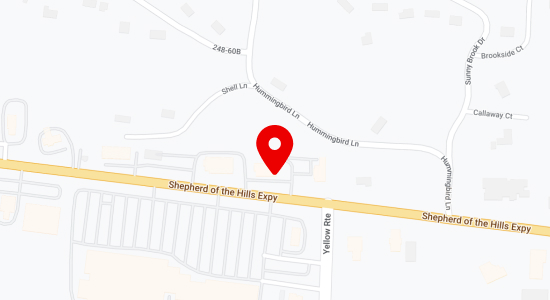
Please note that our law firm's address is for mail correspondence only. We do not accept in-office visits to this location. To schedule an appointment or consult with an attorney, please contact us via phone or email. Our contact information is readily available on our website. We look forward to hearing from you and strive to supply efficient and accessible legal services to our clients.
Branson, MO 65616