
Former Prosecutor
of 20 Years on
Your Side
of 20 Years on
Your Side







Few juvenile cases look less serious at first glance than trespassing. A parent may hear that a teenager cut across private land, went into an abandoned building with friends, stayed on school property after being told to leave, entered a vacant house, or wandered onto posted property without permission. It is easy to treat that as minor teenage behavior. In Missouri, though, juvenile trespassing allegations can move quickly from a warning or police contact into a court matter that affects a child’s record, school life, and future opportunities. The fact that the accusation sounds less dramatic than theft, assault, or drug charges does not mean it should be handled casually. Missouri divides trespass into different offenses, and the exact setting, notice given, and conduct involved all matter.
Scrivner Law Firm represents juveniles and families in criminal and juvenile matters in Taney, Stone, and Christian Counties. The firm is led by Dayrell L. Scrivner, a Branson criminal defense attorney who has decades of legal experience, prior service as a prosecutor, and local practice focused on these southwest Missouri courts. That background can be especially valuable in juvenile trespassing cases because what appears small on paper often becomes more complicated once law enforcement, school officials, property owners, and the juvenile office have all added their own version of events.
A trespassing allegation usually begins with a property owner, a neighbor, school staff, or police officer deciding that a young person crossed a line he or she had no right to cross. Sometimes the allegation follows a complaint about kids in a subdivision under construction. Sometimes it starts with teenagers exploring a vacant building, hanging out behind a business, walking across farmland, or staying somewhere after being told to leave. The parent who gets the call may immediately think the matter is no big deal because nothing was stolen and no one was hurt.
That reaction is understandable, but risky. In juvenile court, the issue is not limited to whether the child caused physical harm. The court can still impose supervision, rules, community service, counseling, restitution in some situations, and other conditions that affect daily life. Missouri juvenile courts have exclusive original jurisdiction over many proceedings involving a child alleged to have violated a state law or municipal ordinance before age seventeen. In practical terms, that means a trespass accusation can become a delinquency matter even when the family initially expected only a warning.
There is another reason these cases deserve prompt attention. Trespass facts can overlap with more serious accusations. A juvenile found inside a structure may suddenly face allegations suggesting attempted burglary, property damage, tampering, or stealing. A teenager who refused to leave may also be accused of peace disturbance or resisting. A case that begins with “they were just messing around” can escalate fast once the state starts building a narrative around intent. That is why early legal guidance matters.
Missouri recognizes first-degree trespass under Section 569.140 and second-degree trespass under Section 569.150. Although both involve unlawful entry, they are not the same, and the difference can matter to how a juvenile case is evaluated.
Section 569.140 states that a person commits trespass in the first degree if he or she knowingly enters unlawfully or knowingly remains unlawfully in a building or inhabitable structure or upon real property. The statute then adds an important limitation for real property. A person does not commit first-degree trespass on real property unless the land is fenced or otherwise enclosed in a manner designed to exclude intruders, or unless notice against trespass is given by actual communication or posting in a way reasonably likely to come to the attention of intruders. The offense is generally a class B misdemeanor, though the statute has enhanced treatment in certain targeted-law-enforcement circumstances and a felony provision involving nuclear power plant property.
For juveniles, that language is significant. It means many trespass cases turn on details that people gloss over. Was the child actually inside a building, or only nearby? Was the property posted clearly? Was there a fence or enclosure meant to keep people out? Did someone personally tell the child to leave? Did the child know he or she had no right to be there, or is the state assuming that knowledge? Those are not technical side issues. They may decide whether the state can prove the allegation at all.
Section 569.150 is narrower and simpler in some ways. It states that a person commits trespass in the second degree if he or she enters unlawfully upon the real property of another, and it describes the offense as one of absolute liability. It is classified as an infraction. Even though that sounds less serious than first-degree trespass, a second-degree trespass allegation still should not be shrugged off in the juvenile setting. A referral to juvenile authorities can still place a child into the court system, create school consequences, and invite extra scrutiny if the facts suggest something more than merely walking onto property.
Trespassing allegations involving minors rarely come from a single stereotypical scenario. The facts vary widely, and that is one reason cookie-cutter defenses do not work well.
Teenagers are often accused of trespassing after entering an empty home, a house under renovation, an apartment under construction, or an abandoned structure. Sometimes they are exploring. Sometimes they are following friends. Sometimes they believe the building is unused and open to the public because a door was already unlocked or a fence gap already existed. Prosecutors and property owners often view these situations harshly because they see a risk of vandalism, theft, squatters, or unsafe conditions. The defense, however, may focus on what the juvenile actually knew, whether the entry was truly unlawful, and whether the case is being exaggerated beyond what happened.
Juvenile trespass accusations also arise on school grounds. A student may return after suspension, remain on campus after being told to leave, enter a restricted area, or go onto athletic fields, rooftops, maintenance spaces, or closed buildings. These cases can be tricky because the child may already be associated with the school and may not immediately recognize where permission ends. A student who belongs on campus at one time of day may not be authorized to remain there later or to enter certain spaces. The factual nuance matters.
In rural Missouri counties, teenagers sometimes end up accused of trespassing on farmland, hunting property, wooded land, or private roads. A young person may say it was just a shortcut, a place to ride, or a place to hang out. The property owner may describe the incident very differently. If the state is relying on first-degree trespass, the defense may closely examine whether the land was fenced or enclosed, or whether notice against trespass was actually communicated or properly posted as required by Section 569.140.
A juvenile may also be accused of trespassing for being behind a store, inside a closed business area, on a rooftop, in a stock area, or in a place the public does not have permission to enter. These cases sometimes start with a security guard or business owner assuming the juvenile intended to steal or damage property. That assumption is not proof. It may also lead to attempts to stretch a straightforward trespassing case into something more serious than the evidence supports.
Missouri’s juvenile process often begins before a family understands how formal the matter has become. A child may be taken into custody, released to a parent, referred by police to the juvenile office, or become the subject of a petition after an inquiry. Under Section 211.081, when a person informs the juvenile officer in writing that a child appears to fall within the juvenile court’s authority, the juvenile officer makes a preliminary inquiry into the facts and may either pursue an informal adjustment or file a petition. That means not every juvenile trespassing matter becomes formal immediately, but families should never assume informality is guaranteed.
If the child is taken into custody, Missouri law provides protections that matter right away. Section 211.059 addresses a child’s rights when taken into custody. Section 211.061 provides that a juvenile generally may not remain in detention more than twenty-four hours unless the court orders a detention hearing, and if that hearing is not held within three days, excluding weekends and legal holidays, the juvenile is to be released unless the court finds good cause to continue it. These early stages can shape everything that follows, especially if the child made statements before the family understood the stakes.
A juvenile trespassing case is often less about trespass alone and more about what the state believes the child intended. Once law enforcement suspects a young person went onto property to steal, damage, fight, hide, or interfere, additional allegations may surface. A child inside a structure may be accused of burglary-related conduct. A broken window can bring property damage allegations. A confrontation with a homeowner can lead to assault or peace disturbance accusations. A refusal to comply with commands can create resisting-related issues.
That possibility is one of the strongest reasons not to treat trespassing as a throwaway charge. The family may think the case is minor while the state is using it as the opening move in a broader theory of misconduct. A defense lawyer with prosecutorial insight can often spot that risk early and respond before the case develops in a more damaging direction.
In many juvenile matters, the most important work happens before the case fully hardens into a formal court battle. Counsel can investigate where the child was, how the area was marked, whether the property was truly enclosed, what officers and witnesses actually observed, whether statements were lawfully obtained, and whether the matter should be pushed toward informal adjustment rather than formal delinquency proceedings. Sections 211.081 and 211.211 are especially important here because one governs preliminary juvenile-officer decision-making and the other secures the child’s right to counsel in delinquency proceedings.
Missouri law gives juveniles meaningful protection regarding legal representation. Section 211.211 provides that a child is entitled to counsel in proceedings under subdivisions (2) or (3) of subsection 1 of Section 211.031. It also sets out rules for waiver and makes clear that counsel cannot be waived in certain hearings, including adjudication hearings for felony offenses, dispositional hearings, and certain detention or revocation-related hearings. That matters because families sometimes believe they should first “see how serious it gets.” In reality, getting counsel involved early may be the best way to keep the matter from becoming more serious.
If your child has been accused of entering private land, going into a building without permission, remaining on property after being told to leave, or trespassing in connection with a school, neighborhood, or business incident, it is smart to take the matter seriously from the beginning. Missouri’s trespass statutes in Sections 569.140 and 569.150 may look straightforward, but juvenile cases often turn on fine factual details involving notice, boundaries, intent, and what the child actually knew. The juvenile court process under Chapter 211 can also create consequences that reach far beyond the day of the incident.
Scrivner Law Firm represents juveniles and families in Taney, Stone, and Christian Counties. With Dayrell Scrivner’s local experience and former-prosecutor insight, the firm can evaluate the facts, explain the process, and work toward an outcome that protects your child’s future as much as possible. Contact Scrivner Law Firm to speak about your case.
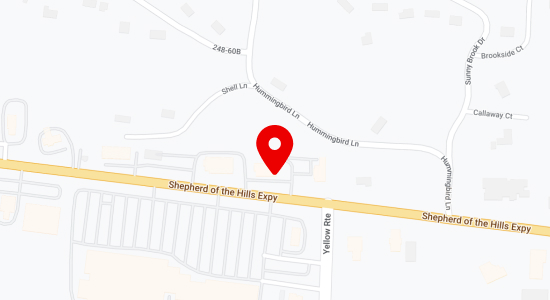
Please note that our law firm's address is for mail correspondence only. We do not accept in-office visits to this location. To schedule an appointment or consult with an attorney, please contact us via phone or email. Our contact information is readily available on our website. We look forward to hearing from you and strive to supply efficient and accessible legal services to our clients.
Branson, MO 65616