
Former Prosecutor
of 20 Years on
Your Side
of 20 Years on
Your Side







When a juvenile is accused of stalking in Missouri, the legal consequences can move quickly and the personal fallout can be immediate. Families often find themselves dealing with school problems, social media accusations, law enforcement contact, and court dates all at once. What may have begun as repeated messages, showing up at the same places, online monitoring, threats, or escalating conflict can suddenly become a juvenile delinquency case with serious implications for a child’s record, education, and future. Under Missouri law, stalking allegations are not treated lightly, and even when the case stays in juvenile court, the stakes are high.
A strong defense starts with taking the accusation seriously from the beginning. Juvenile cases are different from adult criminal matters, but they can still involve detention, restrictive court orders, probation conditions, counseling requirements, electronic evidence, and in some situations efforts to certify a youth for prosecution as an adult. Missouri juvenile courts have exclusive original jurisdiction in many delinquency matters, yet that does not mean the process is informal or harmless. It means the defense must be carefully built around the facts, the child’s age, the alleged pattern of conduct, the digital evidence, and the actual statutory elements the state must prove.
Scrivner Law Firm represents individuals and families across Missouri in serious criminal matters, including cases involving juveniles whose futures are at risk before they have even reached adulthood. The firm is led by Dayrell Scrivner, a longtime Missouri criminal defense attorney and former prosecutor whose professional background gives him a practical grasp of how the state builds cases, how prosecutors evaluate charges, and how judges often respond to allegations that involve fear, threats, repeated contact, or emotionally charged accusations. Families facing a juvenile stalking case are not simply looking for a lawyer to appear in court. They are often looking for someone who can assess the case from every angle, identify weak points in the state’s evidence, explain the process clearly, and step in before a bad situation gets worse.
Dayrell Scrivner brings decades of legal experience to criminal defense work. His background as a former prosecutor is especially important in cases like these because juvenile stalking allegations are often presented in a way designed to make the child’s conduct appear more deliberate, threatening, and organized than it may actually have been. A lawyer with prosecutorial experience understands how the other side is likely to frame digital evidence, witness statements, school reports, and police narratives. That insight can make a meaningful difference when the defense needs to challenge overcharging, expose exaggeration, and keep a teenager’s immature or impulsive behavior from being unfairly portrayed as something far more sinister. Scrivner Law Firm approaches these cases with the seriousness they deserve and the recognition that a juvenile’s future may depend on what is done early.
Missouri recognizes stalking in the first degree under section 565.225 and stalking in the second degree under section 565.227. The distinction matters because the level of the alleged conduct affects everything from detention risk to certification concerns and the long-term seriousness of the case. In broad terms, stalking accusations usually focus on repeated unwanted conduct directed at a specific person that causes fear, alarm, or emotional distress, often paired with an alleged credible threat, course of conduct, or purposeful behavior that makes the complainant feel unsafe.
In juvenile court, the issue is not whether the child is convicted in the same way an adult would be in criminal court. Instead, the court looks at whether the juvenile committed acts that would amount to an offense if committed by an adult. That distinction can cause parents to underestimate the seriousness of the case. A delinquency adjudication can still affect liberty, school life, family stability, driving privileges, future background concerns in limited circumstances, and the way the child is treated by the court system going forward. Missouri law gives juvenile courts authority over these delinquency proceedings and allows the court to impose a wide range of dispositions if the allegations are sustained.
Second-degree stalking under section 565.227 is generally a class A misdemeanor, though it can be elevated in certain repeat-offense or law-enforcement-targeting situations. First-degree stalking under section 565.225 is generally a class E felony, and it can also be elevated in certain circumstances. Even when a juvenile remains in the juvenile system, the felony-level nature of alleged conduct can influence detention decisions, judicial attitudes, supervision terms, and whether the state explores certification to adult court.
That is why the defense cannot simply argue that the child did not mean anything by it. The court will focus on the actual conduct, the surrounding circumstances, the communications, the complainant’s reactions, and whether the state can prove the required statutory elements. A teenager may view repeated texting, location tracking, surprise appearances, or online posting as emotional behavior after a breakup or friendship conflict. The state may describe the same facts as a deliberate course of stalking conduct.
Juvenile stalking accusations are often filed alongside or near other allegations. Missouri harassment in the first degree under section 565.090 may become part of the conversation when the state believes emotional distress was intentionally caused. If there are threats, school issues, or claims of repeated digital contact, law enforcement and juvenile officers may also pursue protective-order remedies or separate counts based on the same incident pattern. In real cases, the state often tries to tell one broad story of obsession, intimidation, or escalating conduct. A defense lawyer must break that story apart and test each allegation separately.
Many juvenile stalking cases now grow out of digital behavior. Repeated direct messages, burner accounts, location-based posts, tagging, anonymous harassment, screenshots circulated among peers, and constant monitoring through apps or shared passwords can become central evidence. What makes these cases especially dangerous is that children often create digital trails without realizing how those records will look to police or a judge later.
But not every repeated contact is stalking. Context matters. A teenager may keep messaging someone because of a misunderstanding, immaturity, jealousy, or pressure from peers. A group conflict may produce mutual contact rather than one-sided stalking. An accusation may arise after a breakup, an argument at school, a rumor campaign, or parental intervention. In some cases, the complaining witness may have continued responding, meeting voluntarily, or engaging in the same online exchanges. None of that automatically defeats the allegation, but it can be critical to the defense because stalking statutes still require proof of specific elements, not just uncomfortable social dynamics.
Juvenile stalking accusations frequently involve classmates, former dating partners, teammates, or social circles that overlap every day. That can make the factual picture messy. A child may be accused of showing up everywhere, even though both students attend the same school, the same extracurricular activities, and the same community events. A defense may need to show that proximity was incidental rather than purposeful.
Social media complicates things further. Reposts, vague captions, geotags, disappearing messages, shared group chats, and edited screenshots can distort what really happened. Part of a strong juvenile stalking defense is identifying what is complete evidence and what is selective evidence. The difference can determine whether the court sees an actual course of criminal conduct or a heated adolescent dispute that has been exaggerated.
Stalking allegations can also lead to ex parte or full orders of protection under Missouri law. In some situations, the family may be dealing with a juvenile delinquency case and a protective-order proceeding at the same time. Those orders can restrict contact, communication, proximity, school attendance logistics, and even family routines. Missouri statutes authorize broad protective relief in stalking-related situations, including orders restraining contact or communication through any medium.
This is one reason early defense action matters so much. Families sometimes assume they can work things out informally with the other side, but any attempted contact can create new allegations or complicate an existing protective order. Counsel can help coordinate a lawful response, protect the child from avoidable mistakes, and make sure the juvenile case is not quietly being damaged by events in a separate court proceeding.
Most juvenile stalking cases stay in juvenile court, but not every case does. Missouri law allows certification proceedings in certain situations, particularly when the child is between twelve and seventeen and the alleged offense would be a felony if committed by an adult. When first-degree stalking is alleged, the felony-level classification may increase concern about how the state approaches the case, especially if aggravating facts are asserted.
Certification is never automatic simply because the allegation sounds serious. Still, families should not treat the possibility lightly. The earlier defense counsel becomes involved, the better positioned the child is to contest the facts, present mitigating evidence, address school and counseling issues strategically, and argue that juvenile court remains the proper place for the matter to be handled.
Families confronting that kind of risk benefit from a law firm that can evaluate both the legal and strategic dimensions of the case. Scrivner Law Firm does not simply react to what has already happened. The goal is to position the child as effectively as possible for what comes next. Dayrell Scrivner’s former prosecutorial perspective can help in assessing how the state may try to push a case, what factors may influence certification arguments, and how to present the juvenile’s circumstances in a stronger, more persuasive way.
Parents often ask whether a juvenile stalking case will disappear automatically. The real answer is more nuanced. Missouri law protects juvenile records in important ways, but confidentiality is not the same thing as irrelevance. Detention, court supervision, school consequences, and family disruption can be significant even where records are generally protected. Missouri also has statutory rules about juvenile records, limited disclosure, and in some situations the handling of fingerprints, photographs, and later expungement-related issues.
That is why the goal should not be merely to get through the case. The goal should be to protect the child as fully as possible from the start, challenge what can be challenged, and pursue the outcome that best limits legal and practical damage.
By the time parents call a lawyer, damage may already be spreading beyond court. Schools may be reacting. Phones may have been seized. Friends may be repeating rumors. Social media evidence may be disappearing or being manipulated. A parent may also be torn between disciplining the child and protecting the child’s rights. Those are difficult moments, and they are exactly when calm legal guidance can make a difference.
Scrivner Law Firm is well positioned to guide families through that pressure. Dayrell Scrivner is not approaching these cases as a lawyer who has only seen one side of the system. He has spent years working inside the criminal justice process and now uses that experience to defend people facing serious allegations. That background can be invaluable when a family needs honest advice, realistic case assessment, and a defense strategy grounded in how juvenile courts and prosecutors actually operate. Rather than offering generic answers, the firm can evaluate the evidence, the procedural posture, the personalities involved, and the legal exposure in a way that is practical and direct.
Families also benefit from having an attorney who appreciates that a juvenile case is rarely just about one hearing date. It may involve school discipline, mental health concerns, parental stress, device searches, social media evidence, and the possibility that one mistake will snowball into several legal problems at once. Scrivner Law Firm can help families slow that process down, separate panic from legal reality, and respond in a way that protects both the child’s rights and the child’s future. That kind of counsel is particularly important in stalking-related cases, where the accusation alone can carry a heavy emotional charge long before the court has determined what actually happened.
A juvenile stalking allegation can place enormous pressure on a child and the entire family. The accusation may involve criminal-style statutes, juvenile court procedures, protective orders, school consequences, and digital evidence that can be easy to misread. What happens in the first days and weeks after an accusation often shapes what happens later. A careful defense can challenge the state’s assumptions, protect the child during questioning and hearings, and work toward an outcome that preserves the child’s future.
Scrivner Law Firm represents clients in Missouri criminal matters with the kind of serious, informed approach families need when a juvenile is suddenly facing a stalking allegation. Dayrell Scrivner’s background as a criminal defense attorney and former prosecutor gives him insight into how these cases are investigated, charged, negotiated, and litigated. That experience matters when the state is building a narrative around fear, repeated contact, and digital communications, and the family needs an attorney who can see the case from both sides of the courtroom.
If your child is facing a juvenile stalking accusation in Missouri, contact Scrivner Law Firm to discuss the situation with Dayrell Scrivner. Early action can matter enormously. The right defense strategy may help challenge the allegations, reduce the damage, and protect your child’s future before the case gains momentum.
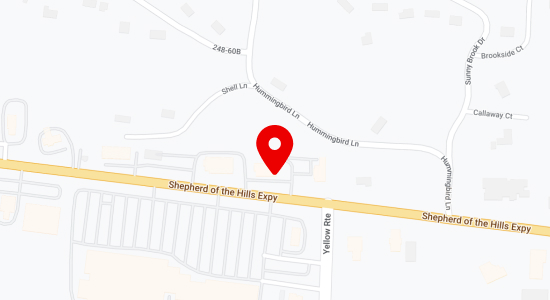
Please note that our law firm's address is for mail correspondence only. We do not accept in-office visits to this location. To schedule an appointment or consult with an attorney, please contact us via phone or email. Our contact information is readily available on our website. We look forward to hearing from you and strive to supply efficient and accessible legal services to our clients.
Branson, MO 65616