
Former Prosecutor
of 20 Years on
Your Side
of 20 Years on
Your Side







A juvenile loitering allegation may sound minor at first. Many parents hear the word and assume the case will amount to a warning, a quick lecture, or a small fine. In reality, these cases can become far more serious than families expect. A teenager who was simply standing outside a store, hanging around a park after hours, or walking home late at night can end up pulled into the juvenile court system, questioned by police, and accused of violating a local ordinance or becoming involved in conduct that leads to additional allegations.
In Missouri, juvenile loitering cases are not always built around one single statewide loitering statute. That is one of the first things families need to know. In many situations, the issue starts with a municipal ordinance, a local curfew rule, or a police claim that the child was lingering in a place or at a time that raised suspicion. From there, the matter may be treated in juvenile court under Section 211.031, which gives the juvenile court jurisdiction over a child alleged to have violated a state law or municipal ordinance. That means what seems like a neighborhood police stop can quickly turn into a formal juvenile case with real consequences.
Scrivner Law Firm represents families facing difficult juvenile allegations in southwest Missouri. The firm is led by Dayrell Scrivner, a criminal defense attorney and former prosecutor with decades of legal experience, including many years inside the prosecution system. That background matters. When a young person is accused of loitering, curfew violations, trespass, peace disturbance, or related conduct, the defense should begin with a close examination of what law actually applies, what the officer observed, what was said, and whether the case should have been filed at all.
Loitering allegations often begin with vague descriptions. An officer may say a juvenile was “hanging around,” “refusing to move along,” “gathering after hours,” or “remaining in an area without a legitimate reason.” Those descriptions may sound simple, but they often leave room for dispute. A teenager may have been waiting for a ride, leaving work, walking home from a school event, or meeting a sibling. In other cases, the police may have confused innocent presence with suspicious conduct.
Another issue is that local ordinances are not identical from one Missouri community to another. Some city codes focus on minors being in public places during certain nighttime hours. Others use broader language such as loiter, idle, wander, stroll, or remain in unsupervised places. Some include exceptions for work, school, church, emergencies, or being accompanied by a parent or guardian. That makes the exact text of the local ordinance extremely important.
For juveniles, the legal risk is not limited to whether they were standing in the wrong place at the wrong time. A loitering stop can lead to claims of trespass under Sections 569.140 or 569.150 if police say the child remained unlawfully on property. It can lead to peace disturbance allegations under Section 574.010 if officers claim the group blocked access, caused unreasonable noise, or disrupted others. If alcohol is involved, Section 311.325 may come into play. If the officer believes the child was connected to property damage, theft, or another offense, the case can expand very quickly.
Section 211.031 is one of the central statutes in a juvenile defense case. Under subsection 1(3), the juvenile court has exclusive original jurisdiction in proceedings involving a child alleged to have violated a state law or municipal ordinance. That matters because many loitering allegations involving minors do not stay as simple city ticket matters. Instead, they may be routed through juvenile court, where the focus shifts to supervision, treatment, court conditions, and compliance.
Section 211.031 also includes language under subsection 1(2) concerning children alleged to be in need of care and treatment because of behavior or associations that are injurious to their welfare or the welfare of others. In some cases, police or juvenile authorities try to frame repeated late-night loitering, running with the wrong crowd, or defiance of parental rules as part of a broader juvenile court problem. A defense lawyer needs to be alert to that possibility because the case may be about more than one incident.
Not every juvenile matter has to turn into a formal petition. Under Section 211.081, when the juvenile officer receives information suggesting a child falls within Section 211.031, the officer must conduct a preliminary inquiry to determine the facts and decide whether further action is necessary. On that basis, the juvenile officer may make an informal adjustment without filing a petition, or may file a petition.
This is a critical stage in a juvenile loitering defense. Strong advocacy early in the case can help show why formal court action is unnecessary. Sometimes the facts are weak. Sometimes the child had a valid explanation. Sometimes the alleged conduct reflects poor judgment but not a true delinquency issue. A detailed presentation at the preliminary inquiry stage can make the difference between an informal resolution and a formal juvenile case.
If the case is handled through informal adjustment, Section 211.083 allows the court to permit reasonable restitution or community service. Even when the allegation seems minor, families should not assume that informal adjustment is insignificant. Terms imposed at this stage can still affect school, scheduling, and family stress. They also create obligations the child must complete properly. Counsel can help keep these conditions reasonable and connected to the child’s actual conduct and ability to comply.
A major feature of juvenile loitering defense in Missouri is that local ordinances often do the heavy lifting. Missouri communities have curfew and loitering provisions that prohibit minors from being on streets, sidewalks, parks, public buildings, vacant lots, or other unsupervised public places during certain hours, often with exceptions for parents, emergencies, school activities, religious events, or employment.
That means the defense must start with the exact municipal language. Did the ordinance apply to the child’s age? Was the location actually covered? Was the time within the prohibited window? Did an exception apply? Was the child going directly home from work, school, or an organized event? Was the officer’s timeline accurate? Did the city follow its own procedures?
These questions matter because police reports in juvenile loitering cases often compress facts into a few lines. Yet those few lines may leave out the very details that create a defense. A teenager carrying a work uniform, text messages showing a parent-directed errand, or proof of a school event ending late can change the whole case.
A strong defense depends on facts, ordinance language, and procedure. In many cases, the best approach is to challenge whether the allegation fits the law at all. If the city ordinance requires more than mere presence, the government should be forced to prove every part of it. If an exception applies, the defense should document it carefully. If the officer’s account is incomplete or inconsistent, that should be exposed.
Another defense angle is misidentification or mistaken assumptions. Officers arriving at a group scene may not know who was actually present the whole time, who had just arrived, who was trying to leave, or who had permission to be there. Surveillance footage, phone records, employment schedules, ride-share logs, and witness statements can all matter.
In some cases, the real issue is overcharging. A simple late-night presence in a parking lot may be dressed up as trespass under Section 569.140 or Section 569.150, or as peace disturbance under Section 574.010, even when the facts do not support that jump. A former prosecutor knows how these charging decisions are often made and where the pressure points are.
There is also the broader context of the child’s age, maturity, school record, and home environment. Where the facts do not justify a formal delinquency track, the defense can argue for dismissal, non-filing, or an informal adjustment under Section 211.081. The goal is not only to address the immediate accusation, but also to protect the child from deeper system involvement than the facts warrant.
Parents understandably want to know what happens next. The answer depends on whether the matter is handled as an informal adjustment, a petition in juvenile court, or a related municipal or state allegation. Some cases end with warnings or supervision terms. Others may involve community service, counseling, curfews, parent participation requirements, or continued court oversight.
Section 211.134 allows the court to require parent or guardian participation in activities the court finds necessary to carry out the purposes of the juvenile code. Section 211.281 also allows costs of the proceedings, in the court’s discretion, to be adjudged against the parents of the child involved. So even a case that appears minor on paper can create real burdens for the entire family.
Just as important, juvenile cases can leave a lasting mark in ways families do not anticipate. School discipline, extracurricular consequences, stress at home, and repeat attention from law enforcement often follow. If the loitering allegation is tied to alcohol, later issues involving Section 311.325 can become more serious. If it is tied to repeated property access, trespass theories can reappear. Early defense work matters because it can prevent a small accusation from becoming a pattern in the eyes of the court.
Juvenile defense requires more than just courtroom skill. It requires judgment, timing, and a clear sense of how to speak to both the court and the family. Scrivner Law Firm represents clients in Taney, Stone, and Christian Counties, and the firm’s juvenile practice emphasizes local knowledge, personalized attention, and direct defense strategy built around the child’s actual circumstances.
Dayrell Scrivner’s background as a former prosecutor is especially valuable in juvenile matters. He knows how officers and prosecutors tend to view late-night contact, group encounters, curfew issues, and ordinance-based charges. He also knows where cases can be pushed too far. That perspective can help identify weaknesses early, present mitigating facts effectively, and work toward outcomes that protect a child’s future rather than defining it by one incident.
If your child has been accused of loitering, violating curfew, trespassing after hours, or any related juvenile offense, do not assume the case will simply disappear on its own. The better approach is to take it seriously from the start, preserve the facts, and get legal guidance before your child or your family makes statements that can be used against them. The sooner the defense begins, the more options may be available under Missouri law, including challenges to the ordinance, factual defenses, informal adjustment, or efforts to keep the matter from becoming a formal juvenile petition.
Scrivner Law Firm stands ready to help families facing juvenile loitering allegations and related charges in southwest Missouri. With Dayrell Scrivner’s experience as a criminal defense attorney and former prosecutor, the firm can evaluate the ordinance involved, analyze the police conduct, protect your child’s rights, and fight for the best available outcome. When your child’s future is on the line, contact Scrivner Law Firm for a confidential consultation and immediate defense guidance.
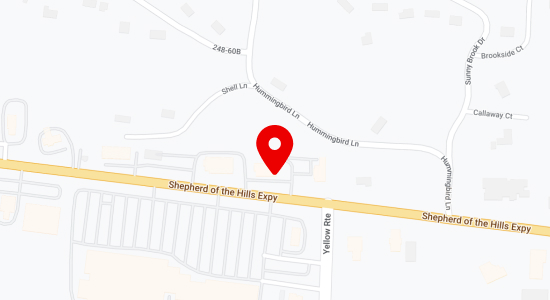
Please note that our law firm's address is for mail correspondence only. We do not accept in-office visits to this location. To schedule an appointment or consult with an attorney, please contact us via phone or email. Our contact information is readily available on our website. We look forward to hearing from you and strive to supply efficient and accessible legal services to our clients.
Branson, MO 65616