
Former Prosecutor
of 20 Years on
Your Side
of 20 Years on
Your Side







A juvenile disorderly conduct case can feel deceptively small at first. A parent may hear that a child was loud at school, got into an argument in public, refused to calm down, blocked an entrance, made threatening remarks, or became involved in a fight. The initial reaction is often that it was just teenage behavior, a misunderstanding, or a bad day. In Missouri, though, conduct that starts as a moment of anger, panic, immaturity, or peer-fueled decision-making can quickly become a juvenile court matter with real consequences.
The state offense is usually called peace disturbance under Section 574.010. Depending on the facts, a juvenile may also face related allegations tied to municipal ordinances, school discipline, threats, resisting, assaultive conduct, or property-related offenses. That is why it is important not to dismiss the accusation based on the label alone. The exact allegation, where it happened, what was said, who was involved, and whether the case is being handled in juvenile court or another court can all make a major difference.
Scrivner Law Firm represents families facing juvenile and criminal allegations in southwest Missouri. The firm is led by Dayrell Scrivner, a criminal defense attorney and former prosecutor with decades of legal experience. His background includes years as a prosecutor, service as Chief Assistant Prosecutor, and extensive experience with the local courts in Taney, Stone, and Christian Counties. In juvenile cases, that perspective matters. A family needs more than a basic overview of the law. They need an attorney who can evaluate how the case may be screened, how the facts may be framed by the juvenile office or prosecutor, and what steps can be taken early to protect a child’s future.
Missouri juvenile courts have jurisdiction over many cases involving minors alleged to have violated state law or municipal ordinances before reaching adulthood. Under Section 211.031, the juvenile court has authority in proceedings involving a child alleged to have violated a state law or municipal ordinance prior to age eighteen, subject to certain statutory exceptions. In practical terms, that means behavior described by a school, police officer, store employee, neighbor, or bystander as disorderly conduct may lead to a juvenile referral rather than being brushed aside as routine misbehavior.
That point matters because families often assume that a young person cannot face meaningful court consequences over a verbal confrontation, a hallway incident, a fight outside a game, or disruptive behavior in a parking lot or public place. In reality, once the matter is referred into the system, the case can take on a life of its own. Statements get taken. Witnesses give their versions. School resource officers may become involved. Social media posts may be reviewed. Video footage may be pulled. What felt like a messy but temporary incident can become a formal delinquency matter with deadlines, hearings, and restrictions placed on the child.
The juvenile court process may be framed as rehabilitative rather than punitive, but that should not lull families into thinking the matter is minor. Court supervision, detention, counseling requirements, curfews, community service, no-contact directives, and school consequences can all follow. A child’s sports participation, extracurricular activities, and reputation can also be affected in ways that reach far beyond the courthouse.
In Missouri, the statute most often associated with disorderly conduct allegations is Section 574.010, the peace disturbance statute. The law states that a person commits peace disturbance if he or she unreasonably and knowingly disturbs or alarms another person or persons by certain listed conduct. That conduct includes loud noise, face-to-face offensive language directed to a specific individual under circumstances likely to provoke an immediate violent response from a reasonable recipient, a threat to commit a felony, or physically fighting. The statute also covers unreasonably and purposefully causing inconvenience to another person by physically obstructing vehicle or pedestrian traffic or the free ingress or egress to or from a public or private place.
That language is important because not every argument, rude comment, or immature outburst qualifies. The state still has to prove the required conduct and mental state. In juvenile cases, those details matter even more because situations involving teenagers are often chaotic. A loud group may all get blamed for the actions of one child. A witness may exaggerate. A child may repeat something without intending a true threat. A school or officer may characterize words as fighting words when the actual circumstances were more complicated. A teen may be present during a confrontation without being the one who escalated it.
Section 574.010 classifies peace disturbance as a class B misdemeanor for a first conviction, with higher treatment for subsequent convictions. Although juvenile cases are handled differently from adult criminal prosecutions, the seriousness of the underlying allegation still shapes how the court and the state treat the case. If the facts suggest threats, violence, repeated incidents, or disruption in a sensitive setting such as a school, the pressure on the child and family can increase quickly.
Parents frequently come into these cases feeling defeated because a teacher, officer, or complaining witness has already told them what happened. But a juvenile disorderly conduct case is not decided by the first adult who writes a report. These matters often contain weaknesses that deserve careful attention.
One major issue is whether the conduct actually fits the statute. Missouri’s peace disturbance law is specific. It does not criminalize every rude interaction or every loud adolescent moment. For example, not all offensive speech qualifies. The statute focuses on face-to-face offensive language directed to a specific person under circumstances likely to produce an immediate violent response from a reasonable recipient. That is a narrower concept than simply being disrespectful or vulgar.
Another issue is context. Was the child reacting defensively after being confronted? Was the child being surrounded or baited by peers? Was the alleged victim equally involved? Did adults step in after only hearing the end of the exchange? Did the child make a serious threat, or was the statement exaggerated by witnesses after the fact? In group incidents, identity can also become an issue. Schools and officers sometimes treat a cluster of teenagers as interchangeable, even when individual behavior differed substantially.
Then there is the question of proof. Many juvenile cases begin with hurried statements, incomplete videos, and emotionally charged assumptions. A disciplined review of the evidence can reveal inconsistencies that were overlooked when the accusation was first made.
Once a juvenile is referred into the system, the family may face decisions almost immediately. In some cases the child is released to a parent after police contact. In others, the matter is sent to the juvenile office for review. A formal petition may follow, or the case may proceed in a more informal way before becoming formal later.
If detention is involved, Missouri law places limits on how long a juvenile may be held without further court action. Section 211.061 provides that a juvenile generally may not remain in detention for more than twenty-four hours unless the court orders a detention hearing. If the hearing is not held within three days, excluding weekends and legal holidays, the juvenile is to be released unless the court finds good cause to continue it. For families, that means the earliest stage of the case can move very fast. What is said and done during that period can affect the direction of the case from then on.
Parents should also know that juvenile proceedings have their own structure and terminology. The matter may involve allegations that the child is delinquent rather than the adult criminal language many people are familiar with. Even so, the consequences can be substantial. The child may face court-ordered conditions long before the family fully understands the long-term implications.
A juvenile accused of violating the law should not go through the process without legal guidance. Section 211.211 provides for the right to counsel in delinquency proceedings. That is not a technicality. In a juvenile disorderly conduct matter, a lawyer may be able to shape the case early by addressing statements, evidence preservation, school records, witness interviews, detention issues, and options for informal resolution or negotiated outcomes.
Without counsel, families sometimes make avoidable mistakes. A parent may pressure a child to “just explain what happened” without realizing the explanation locks the child into damaging facts. A family may assume that because the case is in juvenile court, admitting wrongdoing will lead to mercy. Sometimes it does not. In other situations, the family focuses only on getting the child home or back to school and does not fully consider how the court record, the factual basis, or the disposition could affect the future.
Early representation can also help distinguish between a true legal issue and a school discipline matter that has been pushed too far into the justice system.
A juvenile disorderly conduct case is not always just one allegation. The same event may also produce accusations of assault, property damage, trespass, resisting or interfering, harassment, or municipal ordinance violations. If a child allegedly made a threat, pushed someone, broke property, or refused instructions during police contact, the legal exposure can expand quickly.
That is one reason a parent should never rely on the casual shorthand used by school staff, police, or even other parents. Someone may say the child is “just charged with disorderly conduct” when the actual paperwork alleges more than that, or when the facts open the door to additional allegations later.
Because Dayrell Scrivner is a former prosecutor, his background is especially useful in identifying where a seemingly small juvenile case might be headed before the paperwork fully reflects it. That kind of foresight can matter when the goal is not only defending the present allegation but also preventing the situation from escalating.
One of the hardest parts of these cases is that families often have to deal with two different systems at once. The school may suspend the child, recommend alternative placement, restrict extracurricular participation, or impose conditions for returning to class. At the same time, the juvenile court may be considering separate action. Success in one arena does not automatically fix the other.
A child who has already been punished by the school is not necessarily finished with the matter. Likewise, a school’s view of the incident is not the same thing as proof in juvenile court. Families often need a coordinated approach that accounts for both. Statements made in school discipline meetings may later affect the court case. Social media apologies, written admissions, or rushed explanations offered to “clear things up” can create problems if they are not handled carefully.
Every case depends on its own facts, but certain defense themes appear often in juvenile disorderly conduct matters.
Sometimes the alleged behavior was immature, inappropriate, or school-rule violating, but still did not meet the legal elements of peace disturbance. That distinction matters. A child can get in trouble without being delinquent under the statute.
Teenagers do not always process stressful events like adults. Fear, confusion, embarrassment, and impulsivity can affect how an incident unfolds. In the right case, the mental-state requirement deserves close attention.
Many of these cases depend on conflicting human recollections. Witnesses may exaggerate, protect themselves, or fill in gaps with assumptions. Video, timing, and independent accounts can expose those problems.
A juvenile should not automatically bear the full weight of a confrontation when multiple people contributed to it. This is especially important in school and public-setting cases.
Even where the facts are not strongly disputed, the best outcome may involve advocating for a response centered on rehabilitation, maturity, and future protection rather than a damaging formal disposition.
Families dealing with juvenile allegations need a lawyer who can see the case from multiple angles at once. Scrivner Law Firm brings local experience, courtroom knowledge, and a grounded understanding of how these matters are handled in southwest Missouri. Dayrell Scrivner’s decades in the legal profession, including extensive prosecutorial experience, give him insight into how juvenile allegations are built and where they may be vulnerable. His work as a state-licensed specialist instructor for police academies and universities further reinforces that depth of knowledge.
Just as important, the firm’s juvenile practice recognizes what parents are actually facing. This is not only about a statute number. It is about a child’s future, the family’s stability, school consequences, and the stress of dealing with a legal system that most parents never expected to enter.
If your child has been accused of disorderly conduct, peace disturbance, threatening behavior, fighting, or disruptive conduct in Missouri, do not assume the case will fade away on its own. Juvenile allegations deserve immediate attention, especially when they involve school incidents, law enforcement reports, or claims that a child alarmed or disturbed others in a way that prosecutors may try to fit under Section 574.010.
Scrivner Law Firm represents juveniles and families in Taney, Stone, and Christian Counties. With attorney Dayrell Scrivner’s background as a former prosecutor and experienced defense lawyer, the firm is prepared to evaluate the facts, explain the process, and work toward an outcome that protects your child’s future as much as possible.
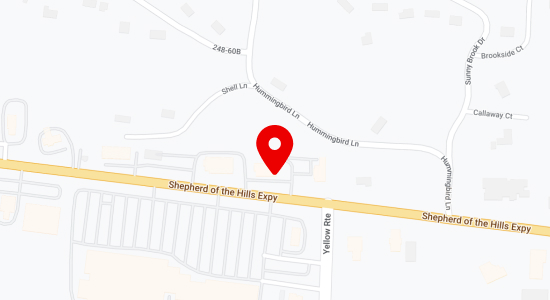
Please note that our law firm's address is for mail correspondence only. We do not accept in-office visits to this location. To schedule an appointment or consult with an attorney, please contact us via phone or email. Our contact information is readily available on our website. We look forward to hearing from you and strive to supply efficient and accessible legal services to our clients.
Branson, MO 65616