
Former Prosecutor
of 20 Years on
Your Side
of 20 Years on
Your Side









A social media post, direct message, email, gaming chat, or other online communication can become evidence in a federal criminal investigation once it is reported, preserved, or brought to the attention of law enforcement. Under 18 U.S.C. § 875, certain communications containing threats to kidnap or injure another person may result in federal charges when the interstate or foreign commerce requirement is satisfied.
The words alone, however, do not necessarily determine whether a federal crime occurred. Investigators and prosecutors may examine the full exchange, the circumstances in which the statement was made, the accused person’s mental state, and whether the communication qualifies as a legally punishable threat rather than protected speech. The allegations may also implicate different federal statutes when they involve extortion, stalking, explosives, federal officials, witnesses, or other specifically protected persons.
Scrivner Law Firm represents people facing criminal investigations and charges in Taney County and throughout Southwest Missouri, including matters involving federal offenses. Attorney Dayrell Scrivner brings decades of legal experience, including substantial experience as a prosecutor, to evaluating the government’s evidence, the meaning and context of the alleged communication, and the legal elements federal prosecutors must establish.
Federal jurisdiction often comes from the method used to transmit the communication. Section 875 applies to communications transmitted in interstate or foreign commerce. The internet is treated as an instrumentality closely tied to interstate commerce, which means online communications can bring conduct that appears local within the reach of federal law.
A message therefore does not have to involve two people who live in different states before federal authorities take interest. The transmission method, routing of electronic data, platform used, and particular statute charged can matter independently of where the sender and recipient were physically located.
In Taney County, federal criminal matters fall within the Southern Division of the United States District Court for the Western District of Missouri, which sits in Springfield. A federal investigation may involve agencies such as the FBI, Secret Service, ATF, or another agency depending on the alleged target and content of the communication.
The principal federal statute for many online-threat cases is 18 U.S.C. § 875(c). It prohibits transmitting in interstate or foreign commerce a communication containing a threat to kidnap a person or injure another person. A conviction carries a maximum term of five years in federal prison, along with a possible fine.
The statute can apply to communications made through modern electronic platforms even though its language is not limited to any particular technology. Federal prosecutions have involved tweets, social-media messages, emails, and other electronic communications.
The government must prove more than the existence of harsh language. The prosecution must establish the required interstate-commerce connection and show that the communication legally qualifies as a threat. Because speech is involved, the Constitution also limits how threat statutes may be applied.
The First Amendment does not protect “true threats” of violence in the same way it protects ordinary speech. At the same time, federal law cannot criminalize a statement merely because someone finds it offensive, alarming, insulting, or politically extreme.
The Supreme Court has required a subjective mental-state component in true-threat prosecutions. At minimum, the First Amendment requires proof that the defendant was reckless as to the threatening character of the communication, meaning the person consciously disregarded a substantial risk that the statement would be understood as threatening violence. In the context of § 875(c), the Supreme Court has also rejected a negligence-only approach that would allow conviction merely because a reasonable person should have recognized that the words could be viewed as threatening.
Whether particular words constitute a true threat is therefore highly contextual. Political hyperbole, jokes, lyrics, sarcasm, fantasy, venting, quotations, and conditional language are not automatically protected, but neither are they automatically criminal. Courts examine what the communication conveyed in its actual setting.
Online communications are especially vulnerable to being separated from the conversation that gave them meaning. A screenshot may show one message while omitting earlier exchanges. A repost can remove the identity of the original speaker. Slang may be interpreted differently by investigators than by the people who were actually participating in the conversation.
Federal courts may consider the language itself together with the broader circumstances. Relevant evidence can include prior communications between the parties, whether the statement was directed at a particular person, the reaction of the recipient, prior disputes, previous alleged threats, whether the statement was conditional, and whether surrounding facts made violence appear more or less likely.
The defense may also need to distinguish between an intent to communicate and an intent or awareness concerning the threatening nature of the message. A person does not necessarily escape liability by claiming there was no plan to carry out the threatened act, but the government also cannot replace the required mental state with hindsight about how others reacted.
The identity of the target and the purpose of the communication can significantly change the charging analysis.
Under 18 U.S.C. § 875(b), transmitting a threat to kidnap or injure another person with intent to extort money or another thing of value can carry up to twenty years in prison. Section 875(d) separately addresses certain extortionate threats involving property, reputation, or accusations of crime.
Threats aimed at federal officials can implicate 18 U.S.C. § 115 when the government alleges an intent to impede, intimidate, interfere with, or retaliate against a federal official, federal judge, or federal law-enforcement officer because of official duties. Threats against the President, Vice President, certain successors, former Presidents, major presidential or vice-presidential candidates, and other protected persons may fall under 18 U.S.C. §§ 871 or 879.
A communication concerning fire or explosives may be prosecuted under 18 U.S.C. § 844(e), which covers certain threats and knowingly false information transmitted through instruments of interstate or foreign commerce. The statute provides for imprisonment of up to ten years. A fabricated report designed to make others believe certain serious federal offenses have occurred or will occur may also raise issues under 18 U.S.C. § 1038, the federal false-information-and-hoaxes statute.
Repeated electronic conduct directed at another person may implicate the federal stalking statute, 18 U.S.C. § 2261A, when its specific jurisdictional, intent, conduct, and harm requirements are met. Depending on the circumstances, a violation can carry up to five years in the ordinary case, with higher penalties when specified injuries or other aggravating circumstances result.
Threats involving a witness, victim, or informant can create still another category of exposure. Sections 1512 and 1513 address witness tampering and retaliation and can carry substantially greater penalties when threats are used to affect testimony, prevent communication with federal law enforcement, or retaliate for cooperation.
An online-threat case may generate a larger evidentiary record than the message that triggered the investigation. Investigators may seek account records, subscriber information, IP logs, device data, location information, platform records, emails, text messages, search history, images, and communications with third parties.
Authentication can become important when the accused denies writing or sending the statement. Access to an account does not necessarily establish authorship by itself. Shared devices, compromised accounts, deleted material, automated posts, copied content, and multiple users may complicate attribution.
Completeness is equally important. The defense may need the full conversation rather than a selected screenshot. Metadata and platform records may help establish timing, edits, deletion, forwarding, or account access. Other communications may show whether the disputed words were part of an argument, joke, quotation, role-playing exchange, or ongoing pattern that changes their meaning.
Statements made after law enforcement arrives can also affect the case. Attempts to explain, minimize, delete, or reinterpret a message may be treated as evidence by investigators, while additional communications with the alleged target may create new problems. Early legal advice can help prevent an investigation from expanding unnecessarily.
There is no single defense that applies to every federal online-threat charge. The strategy depends on the statute, the wording of the alleged threat, how the government obtained the evidence, and what prosecutors must prove about the defendant’s mental state.
A defense may challenge whether the communication was a true threat when read in full context. It may dispute whether the accused knowingly sent the message, whether the account or device can reliably be attributed to that person, or whether the government can establish the mental state required by the charged statute and the First Amendment.
Other issues may involve the interstate-commerce element, the legality of searches and seizures, the scope of warrants, custodial interrogation, the admissibility of statements, or whether investigators exceeded lawful authority when obtaining digital evidence.
Where prosecutors allege stalking, extortion, witness intimidation, or a threat against a government official, the defense must address the additional elements unique to that statute rather than treating the case as a generic threatening-communications prosecution.
The maximum penalty listed in a statute is only one part of the federal sentencing picture. If a person is convicted, the court also considers the applicable federal sentencing framework, the offense conduct, criminal history, and other legally relevant factors. Multiple communications can sometimes support multiple counts, and additional offenses may be charged from the same investigation.
A federal felony conviction can also affect employment, professional licensing, firearm rights, immigration status for noncitizens, and future background checks. Conditions of pretrial release or supervised release may restrict contact, internet activity, travel, or possession of certain devices depending on the case and the orders entered by the court.
These consequences make it important to evaluate the case before assuming that a message was “just talk” or, in the opposite direction, that an accusation necessarily proves a criminal threat.
Federal threat investigations can develop before an arrest occurs. Agents may contact the accused for an interview, execute a search warrant, seize electronic devices, speak with family members or coworkers, or obtain records from technology companies. The investigation may already be well developed by the time the person learns that federal authorities are involved.
Scrivner Law Firm represents people facing federal criminal allegations in Taney County and surrounding areas. Attorney Dayrell Scrivner brings decades of legal experience to criminal defense, including nearly two decades spent as a prosecutor. His background also includes teaching criminal law and criminal procedure as a Missouri licensed specialist instructor.
That experience can be important in a case where the defense must evaluate not only what a person wrote or posted, but how prosecutors are likely to interpret context, intent, digital evidence, and the elements of the particular federal statute.
Federal online-threat cases often turn on details that are easy to lose when a message is viewed by itself. The wording of the communication, the conversation surrounding it, who had access to the account, how the message was transmitted, and what the sender allegedly understood can all affect whether federal prosecutors can establish the charged offense.
Scrivner Law Firm evaluates those issues from the defense perspective in cases arising in Taney County and Southwest Missouri. Attorney Dayrell Scrivner has spent decades working in the criminal justice system, including substantial experience as a prosecutor, giving him insight into how criminal allegations are investigated, developed, and presented by the government.
If federal agents have contacted you, your electronic devices have been seized, or you are facing a charge involving an alleged online threat, contact Scrivner Law Firm to discuss the circumstances of the communication and the legal issues surrounding the case. Submit the firm’s online contact form to request a consultation.
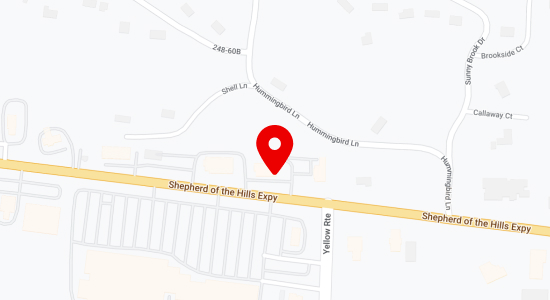
Please note that our law firm's address is for mail correspondence only. We do not accept in-office visits to this location. To schedule an appointment or consult with an attorney, please contact us via phone or email. Our contact information is readily available on our website. We look forward to hearing from you and strive to supply efficient and accessible legal services to our clients.
Branson, MO 65616