
Former Prosecutor
of 20 Years on
Your Side
of 20 Years on
Your Side









A federal cyberstalking case may be built from a digital record that looks very different when investigators assemble it than it did when the individual communications occurred. Emails, text messages, social-media posts, account activity, calls, location information, photographs, and communications involving third parties may be arranged chronologically to support an allegation that the accused engaged in an intentional and continuing pattern of conduct.
Federal prosecutors generally rely on 18 U.S.C. § 2261A when pursuing a cyberstalking charge. The statute can apply to certain conduct carried out through electronic communication services, interactive computer services, the mail, or other facilities of interstate or foreign commerce. Federal jurisdiction therefore does not necessarily depend on anyone physically traveling across state lines. The government must still establish the required course of conduct, intent, and resulting fear or substantial emotional distress specified by the statute.
Scrivner Law Firm represents people facing serious criminal allegations in Taney County and throughout Southwest Missouri. Attorney Dayrell Scrivner brings decades of legal experience, including two decades as a prosecutor, to examining whether the government can connect the accused to the communications, establish the required criminal intent, and prove that the alleged conduct satisfies each element of the federal offense.
Under 18 U.S.C. § 2261A(2), prosecutors generally must prove that the accused acted with intent to kill, injure, harass, intimidate, or place another person under surveillance with intent to kill, injure, harass, or intimidate. They must also establish the use of a qualifying interstate-commerce facility to engage in a “course of conduct.”
Federal law defines a course of conduct as a pattern composed of two or more acts that shows continuity of purpose. That definition can make chronology central to the case. Two communications may satisfy the numerical requirement, but the government still has to prove that the acts belong together in the legally relevant sense and were accompanied by the required intent.
This is one reason context matters. A series of messages sent during a continuing argument may be portrayed differently from messages separated by long periods, communications responding to messages from the other person, legitimate discussions about property or children, or online activity that was not directed at the alleged target. The defense can examine whether prosecutors are combining unrelated events to create the appearance of a unified campaign.
Section 2261A(2) contains alternative ways for the government to establish the required effect of the alleged course of conduct. One theory applies when the conduct places a person in reasonable fear of death or serious bodily injury to a statutorily protected person or animal. Another applies when the conduct causes, attempts to cause, or would reasonably be expected to cause substantial emotional distress to the targeted person or certain people connected to that person.
Because of that structure, a prosecution does not always require an explicit statement such as a direct threat to kill or injure someone. Prosecutors may instead rely on repeated messages, surveillance allegations, impersonation, unwanted publication of information, account activity, third-party contacts, or a combination of conduct to argue that the statutory emotional-distress provision was satisfied.
The absence of a direct threat can still be important. The precise words used, the history between the parties, whether statements were literal or rhetorical, who initiated or continued communications, and whether the accused knew how the communications would likely be understood may all affect the analysis. A federal indictment cannot substitute the label “harassment” for proof of the specific statutory requirements.
Cyberstalking cases often produce a large electronic record. Investigators may seek subscriber information, IP records, device data, cloud records, social-media account information, call logs, location evidence, photographs, browser history, and communications with friends, relatives, employers, or new partners. Search warrants may result in the seizure of phones, computers, storage devices, and account credentials.
The defense should not assume that a screenshot tells the whole story. Screenshots may omit earlier messages, timestamps, account identifiers, deleted content, or surrounding conversation. A username does not by itself establish who was operating an account at a particular moment. An IP address can identify a connection without conclusively identifying the person who typed a message. Shared devices, shared accounts, saved passwords, spoofed information, forwarded content, and account compromises can complicate attribution.
Metadata and provider records can strengthen the government’s case, but they can also expose gaps in it. The sequence of logins, device identifiers, account-recovery activity, location data, and message timestamps may support or contradict the prosecution’s theory about who acted, when the acts occurred, and whether they actually formed one course of conduct.
Federal prosecutors rarely have a document in which a defendant states the precise intent listed in § 2261A. Intent is commonly inferred from circumstances. The government may point to the number of contacts, the language used, attempts to reach the person through multiple accounts, continued contact after being told to stop, references to private information, physical proximity, or conduct involving friends and family.
The defense can test those inferences rather than accepting them as established facts. Communications may have been mutual. The accused may have believed contact remained welcome for a limited purpose. A social-media post may have been directed to a general audience rather than to one person. A location overlap may have an innocent explanation. A heated statement may be significant, but its meaning still depends on the words, audience, context, and surrounding conduct.
The difference between proving that a communication was unpleasant and proving that it was sent with the federal statute’s required intent can be decisive.
Cyberstalking prosecutions can intersect with the First Amendment when the alleged course of conduct consists partly or entirely of speech. Federal law can punish threats and other unprotected conduct, but it does not convert every insulting, disturbing, obsessive, or politically charged communication into a crime.
The United States Court of Appeals for the Eighth Circuit, whose decisions apply to federal cases arising in Missouri, has recognized constitutional limits on applying § 2261A to protected expression. In United States v. Sryniawski, the court rejected a cyberstalking conviction where the government’s theory rested on political speech directed at a candidate and did not establish a true threat or another sufficient basis for removing the speech from First Amendment protection.
That does not create immunity for communications merely because they contain opinions or political language. It does mean the defense may need to identify exactly which parts of the alleged course of conduct are speech, whether those communications fall within protected expression, and whether prosecutors are using a broad characterization such as “harassing” to reach conduct the Constitution protects.
Cyberstalking is sometimes charged with other federal offenses when the same investigation uncovers additional conduct. Under 18 U.S.C. § 875(c), transmitting an interstate communication containing a threat to kidnap or injure another person can be prosecuted separately. If an allegation includes threats made to obtain money or another thing of value, other provisions of § 875 may become relevant.
If investigators claim that the accused entered an email, social-media account, computer, or other protected system without authorization, the Computer Fraud and Abuse Act, 18 U.S.C. § 1030, may also be examined. Cases involving a protection order can raise separate federal issues under 18 U.S.C. § 2262 when the jurisdictional and substantive requirements of that statute are present. Allegations involving an intimate partner and interstate travel may also lead investigators to consider 18 U.S.C. § 2261.
Each additional count has its own elements. The defense should therefore resist treating a multi-count indictment as one undivided accusation. A communication that supports one theory may not establish another, and a weakness in attribution, intent, jurisdiction, or admissibility can affect different counts in different ways.
In an ordinary case under § 2261A, 18 U.S.C. § 2261(b) authorizes imprisonment of up to five years. The maximum increases when specified harm results or a dangerous weapon is used. Serious bodily injury or use of a dangerous weapon can raise the maximum to ten years. Permanent disfigurement or life-threatening bodily injury can raise it to twenty years, and a case in which death results can carry life imprisonment or any term of years.
The statute also provides a minimum term of imprisonment when stalking is committed in violation of certain civil or criminal injunctions, restraining orders, no-contact orders, or other qualifying orders. Separate provisions can increase the maximum punishment for stalking a victim under eighteen, subject to statutory limitations, or for certain repeat offenders with qualifying prior domestic-violence or stalking convictions.
A conviction under this federal chapter also carries mandatory restitution. Under 18 U.S.C. § 2264, restitution can include qualifying medical or psychological care, transportation, temporary housing, lost income, attorneys’ fees associated with obtaining a protection order, and other losses proximately caused by the offense.
Federal jurisdiction does not necessarily eliminate possible state exposure. Missouri has separate stalking offenses under RSMo §§ 565.225 and 565.227. Those provisions use their own elements and classifications and should not be treated as interchangeable with § 2261A.
An investigation may therefore require determining which sovereign is pursuing the case, whether state and federal agencies are sharing evidence, and whether the same communications are being evaluated under materially different legal standards. Statements made in response to a local investigation can also become relevant if the matter later receives federal attention.
For someone contacted by police, an FBI agent, another federal investigator, or a prosecutor about alleged online conduct, the safest legal strategy is not to assume that explaining the relationship or producing selected messages will end the matter. A defense attorney can first identify the scope of the investigation and evaluate what records already exist.
Cyberstalking allegations are often presented as a story: repeated contact, escalating language, surveillance, fear, and emotional harm. Defense analysis should move in the opposite direction by testing the story one component at a time.
That can include determining who controlled each account or device, reconstructing the full communication history, identifying contacts initiated by the other person, comparing screenshots with provider records, examining whether alleged surveillance was actually directed at the person, and separating protected speech from conduct that may lawfully be regulated. The defense can also evaluate search warrants, subpoenas, interviews, device searches, and statements for constitutional or evidentiary issues.
The objective is not simply to argue that the parties remember events differently. It is to determine whether the government can prove the required intent, a qualifying course of conduct, the interstate-commerce connection, attribution of the acts to the accused, and the fear or emotional-distress element beyond a reasonable doubt.
Scrivner Law Firm represents people facing criminal accusations in Taney County and surrounding Southwest Missouri communities. Attorney Dayrell Scrivner brings decades in the legal profession, including two decades as a prosecutor, to evaluating how criminal cases are assembled and where the government’s theory may be challenged. That background can be particularly relevant when an investigation depends on how prosecutors interpret a large body of communications rather than one isolated event.
Federal cyberstalking allegations may involve far more than the communications visible on a phone or social-media account. Provider records, login histories, device information, witness accounts, and the sequence of interactions between the parties may all influence how federal investigators interpret an alleged course of conduct. A careful defense review can determine whether those records actually support the government’s account of who communicated, what the communications meant, and whether the elements of 18 U.S.C. § 2261A can be established.
Attorney Dayrell Scrivner brings decades of legal experience, including two decades as a prosecutor, to the defense of people facing serious criminal accusations. In a federal cyberstalking matter, that experience can be applied to examining how investigators assembled the case, what conclusions prosecutors are drawing from the electronic evidence, and where the government’s theory may be vulnerable.
Scrivner Law Firm can evaluate the communications, digital records, alleged course of conduct, jurisdictional basis, and intent issues involved in a federal cyberstalking investigation or charge. Contact the firm through its online contact form to discuss the circumstances of the allegation and the defense considerations that may apply.
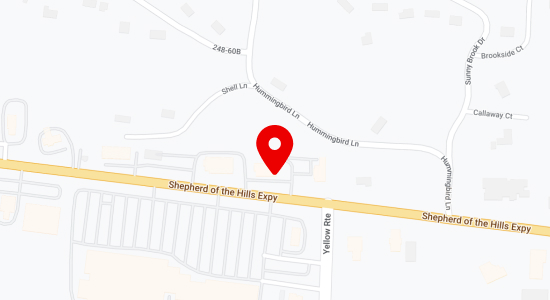
Please note that our law firm's address is for mail correspondence only. We do not accept in-office visits to this location. To schedule an appointment or consult with an attorney, please contact us via phone or email. Our contact information is readily available on our website. We look forward to hearing from you and strive to supply efficient and accessible legal services to our clients.
Branson, MO 65616