
Former Prosecutor
of 20 Years on
Your Side
of 20 Years on
Your Side









A screenshot can make an online exchange look simple. A criminal stalking case rarely is. One screen may be only part of a longer sequence involving texts, social-media accounts, location sharing, repeated calls, email, third-party contact, online posts, or alleged monitoring.
In Missouri, “cyberstalking” is commonly used to describe stalking carried out through electronic means, but the criminal statutes do not require prosecutors to file a charge bearing that exact title. Instead, prosecutors may rely on Missouri’s stalking laws when electronic communications or other digital acts are alleged to form a prohibited course of conduct. Depending on the facts, harassment, violation of an order of protection, or a federal stalking offense may also become part of the case.
Scrivner Law Firm handles criminal defense matters in Taney County and throughout Southwest Missouri. Led by attorney and former prosecutor Dayrell Scrivner, the firm evaluates cyberstalking allegations by looking beyond isolated messages to the broader digital record, including account access, authorship, the sequence and purpose of communications, prior interactions between the parties, and any court-imposed restrictions that may affect the charge.
Missouri’s stalking statutes focus on a “course of conduct,” making chronology especially important. RSMo 565.002 defines a course of conduct as a pattern of two or more acts that may include communication by any means, occurring over a period of time, however short, and showing a continuity of purpose. Constitutionally protected activity is excluded.
That definition can reach conduct through phones, computers, social media, messaging applications, email, or other digital systems. Prosecutors may combine separate communications into one alleged pattern even when they occurred on different platforms or at different times.
The defense is not limited to the prosecution’s chosen timeline. Messages may have different purposes, respond to the other person, concern shared property or children, or not have been sent by the accused at all. Deleted portions can also change how a message appears in isolation.
A careful review therefore looks beyond selected screenshots. Account records, complete message threads, call logs, device information, timestamps, platform data, witness statements, and the surrounding relationship may all matter when determining whether the State can establish a continuous course of conduct.
RSMo 565.227 addresses stalking in the second degree. Under the current statute, a person commits the offense if the person purposely, through a course of conduct, “disturbs” another person or follows another person with the intent to disturb that person.
The meaning of “disturbs” comes from RSMo 565.225. It refers to a course of conduct directed at a specific person that serves no legitimate purpose and would cause a reasonable person under the circumstances to be frightened, intimidated, or emotionally distressed.
Those elements create several disputed issues in an online case. The State must do more than show that communications were unwelcome. Prosecutors must connect the accused to a qualifying course of conduct and establish the required purpose. The reasonable-person component also means the inquiry is not based solely on how one individual later describes the messages.
Second-degree stalking is ordinarily a class A misdemeanor. It can become a class E felony when specified enhancement conditions apply, including certain prior stalking convictions or when a law-enforcement officer, or a qualifying relative of an officer, is intentionally targeted.
First-degree stalking under RSMo 565.225 uses the same basic concept of purposely disturbing or following another person through a course of conduct, but it requires an additional statutory circumstance.
One route to a first-degree charge is an alleged threat. The statute addresses a threat communicated with the intent to cause the target to reasonably fear for personal safety or the safety of a family or household member, as well as qualifying threats involving domestic animals or livestock. The threat must concern death, physical injury, or kidnapping as described by the statute.
Other circumstances can elevate the allegation without that kind of threat. They include an act that violates an order of protection after actual notice, an act that violates specified release or supervision conditions, certain age differences, specified prior offenses against the same alleged victim, and knowing efforts to access the address of a participant in Missouri’s address confidentiality program.
First-degree stalking is generally a class E felony. It can be classified as a class D felony when statutory enhancement provisions apply, including certain prior stalking convictions or specified targeting of law-enforcement officers or their qualifying relatives.
For a digital case, the distinction between first and second degree may therefore depend on one communication, one prior case, or one court-ordered restriction within a much larger sequence.
Cyberstalking accusations often depend heavily on electronic evidence, but electronic evidence still has to be attributed and placed in context.
A username does not automatically prove who was operating an account at the relevant time. Phones may be shared. Passwords may be known to more than one person. Accounts can be accessed from multiple devices. Messages can be forwarded, edited, deleted, cropped, or presented without the communications that came before them.
Investigators may seek platform records, subscriber information, device data, IP information, location records, cloud backups, or forensic images. They may also compare wording, account activity, photographs, or timing against other evidence to identify the alleged sender.
The defense can examine whether the evidence supports that attribution and how it was obtained. Search warrants, consent searches, device seizures, account-access requests, and statements during questioning may raise constitutional or evidentiary issues.
Preserving the full record can be particularly important. A selective set of messages may support one interpretation while a complete thread shows a continuing argument, mutual contact, a legitimate reason for communication, or statements inconsistent with the accusation.
A cyberstalking investigation does not necessarily remain limited to stalking.
RSMo 565.090 defines harassment in the first degree as, without good cause, engaging in an act with the purpose of causing emotional distress to another person when the act does in fact cause emotional distress. Harassment in the first degree is a class E felony. Because electronic communication can be the alleged act, prosecutors may examine the same digital evidence when deciding whether a harassment charge is supported.
Orders of protection create another area of potential exposure. Missouri law allows protective orders involving stalking, and RSMo 455.085 criminalizes specified violations of ex parte and full orders of protection when the respondent has notice. Prohibited communication can include digital communication, so sending a message that might otherwise seem minor can become significant if an order bars contact. A qualifying order violation is generally a class A misdemeanor and may become a felony after specified prior violations.
The existence and precise language of an order matter. The defense should determine what the order prohibited, whether the accused had legally sufficient notice, whether the communication was actually initiated by the accused, and whether the State can prove the charged violation beyond a reasonable doubt.
Some online stalking allegations can move beyond Missouri law.
Under 18 U.S.C. § 2261A, federal stalking can include using the mail, an interactive computer service, an electronic communication service or system of interstate commerce, or another facility of interstate or foreign commerce with the required intent to engage in a course of conduct that places a qualifying person in reasonable fear of death or serious bodily injury, or causes, attempts to cause, or would reasonably be expected to cause substantial emotional distress.
The federal statute requires more than the simple fact that the internet was used. Prosecutors must establish the statute’s intent, jurisdictional, course-of-conduct, and harm-or-distress elements. A federal investigation may involve subpoenas, search warrants, provider records, account data, and communications that cross state lines or use services operating through interstate systems.
For most federal stalking cases, the general statutory maximum is five years of imprisonment, but punishment can increase when the offense causes specified injuries, involves a dangerous weapon, or results in death. Additional rules apply when stalking violates certain restraining or no-contact orders, and qualifying cases involving victims under eighteen can carry an enhanced maximum.
Under RSMo 558.011, a class A misdemeanor can carry up to one year in jail, a class E felony up to four years of imprisonment, and a class D felony up to seven years. RSMo 558.002 permits fines of up to $2,000 for a class A misdemeanor and up to $10,000 for a class D or E felony.
The impact can extend beyond the sentence. A stalking allegation may coincide with an order-of-protection case, bond restrictions, limits on contact, or conditions affecting where the accused may go. Shared children, property, or employment connections can make compliance especially important.
A felony conviction can also create longer-term consequences associated with a criminal record. That makes it important to determine early whether the State has charged the correct degree of offense and whether the alleged facts actually satisfy every statutory element.
Cyberstalking cases are highly fact-dependent. The strongest defense issues are often found by testing the prosecution’s narrative against the underlying digital record.
Authorship may be disputed when accounts, devices, phone numbers, or passwords were shared or compromised. Intent may be disputed when the communication concerned a legitimate issue or when the accused did not act for the purpose required by the stalking statute. The defense may also examine whether the alleged acts truly form one course of conduct rather than disconnected incidents.
Context can be equally important. Mutual communication does not automatically defeat a stalking allegation, but it may affect how a message, alleged threat, or pattern should be understood. The timing of blocking and unblocking accounts, requests for contact, responses by both parties, and communications through third parties can all become relevant.
For a first-degree allegation, the defense must also examine the specific aggravating factor alleged by the State. If the prosecution relies on a threat, the content and context of that threat matter. If it relies on an order of protection or release condition, the exact restriction and proof of notice matter. If it relies on a prior offense, the record must support the enhancement.
Constitutional protections may also be relevant. Missouri’s statutory definition of a course of conduct expressly excludes constitutionally protected activity. A defense should distinguish criminally actionable conduct from speech or activity that the government may not punish merely because it is offensive, critical, or unwanted.
Scrivner Law Firm represents people facing criminal accusations in Taney County and surrounding areas of Southwest Missouri. Attorney Dayrell Scrivner brings decades of legal experience to criminal defense, including two decades spent as a prosecutor. His background includes handling criminal matters from the prosecution side and teaching criminal law, criminal procedure, and domestic violence as a Missouri state-licensed specialist instructor for universities and police academies.
That perspective can matter in a cyberstalking case, where the defense must evaluate both the communications and the way investigators and prosecutors assemble them into a theory of criminal conduct.
The defense may involve reconstructing the full digital timeline, identifying missing context, examining whether an account or device can reliably be attributed to the accused, reviewing warrants and investigative methods, and testing whether the facts satisfy the particular degree of stalking charged. When related allegations involve harassment, an order of protection, or possible federal jurisdiction, those issues should be evaluated as part of the same overall strategy.
A cyberstalking investigation can involve much more than the messages shown in a police report. Account ownership, deleted communications, device access, location information, prior contact between the parties, and the existence of any court-imposed restrictions may all affect how the allegations should be evaluated. Understanding that broader digital record can be critical before decisions are made about how to respond to the charge.
Scrivner Law Firm represents defendants facing stalking and other criminal allegations in Taney County and surrounding areas of Southwest Missouri. Attorney Dayrell Scrivner draws on experience as both a criminal defense lawyer and former prosecutor when examining how the State has assembled its evidence and whether that evidence satisfies the elements of the offense charged.
If electronic communications or online activity have resulted in a stalking investigation or criminal charge, Scrivner Law Firm can review the circumstances, identify issues that may affect the prosecution’s case, and explain the available defense strategy. Reach out to the firm through its online contact form to arrange a consultation.
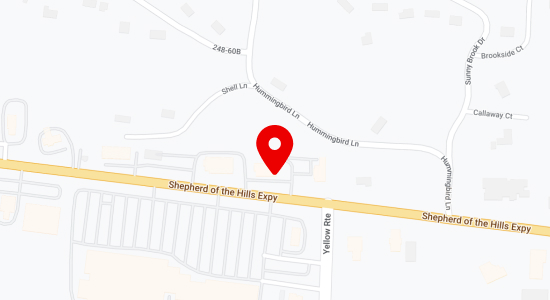
Please note that our law firm's address is for mail correspondence only. We do not accept in-office visits to this location. To schedule an appointment or consult with an attorney, please contact us via phone or email. Our contact information is readily available on our website. We look forward to hearing from you and strive to supply efficient and accessible legal services to our clients.
Branson, MO 65616