
Former Prosecutor
of 20 Years on
Your Side
of 20 Years on
Your Side









An accusation of cyberharassment can grow out of texts, social-media messages, emails, comments, direct messages, shared images, location information, or repeated attempts to contact another person online. What begins as an argument can become a criminal investigation once law enforcement is shown screenshots, account records, a pattern of communication, or allegations that the messages caused fear or emotional distress.
Missouri law requires particular care with the word “cyberharassment.” The state has enacted RSMo 565.400, a statute specifically titled “Cyberharassment,” but that provision has a delayed effective date and is not yet operative. Online conduct may nevertheless be prosecuted under existing harassment, stalking, order-of-protection, privacy, witness-tampering, or other criminal statutes depending on the communications involved and the circumstances surrounding them.
Scrivner Law Firm represents people facing criminal allegations in Taney County and throughout Southwest Missouri. Led by former prosecutor Dayrell Scrivner, whose legal career spans decades, the firm can examine whether digital communications have been attributed to the correct person, whether the evidence establishes the elements of an applicable offense, and whether the complete communication history presents a different picture from the allegations made to law enforcement.
Investigators, complaining witnesses, schools, employers, and social-media platforms may use terms such as cyberharassment, cyberbullying, online abuse, digital intimidation, or electronic stalking. Those descriptions can be useful in ordinary conversation, but criminal liability depends on statutory elements rather than the label attached to the behavior.
Online disputes can involve very different situations. One case may concern repeated messages after a relationship ends. Another may involve an anonymous account allegedly created to frighten someone. A third may involve threats, intimate images, public posts, or contact that allegedly violates an order of protection. Interpretation can also depend on what came before the messages, whether communication was mutual, whether the sender had a legitimate purpose, and whether the State can prove who used the account.
A defense should therefore begin by separating the accusation into individual acts and asking which statute, if any, each act is supposed to satisfy.
RSMo 565.400 creates a specific offense of cyberharassment. Under the enacted language, the offense involves purposely or knowingly engaging in a threatening, aggressive, or otherwise fear-inducing course of conduct through digital technology, internet or electronic service providers, or other electronic communications and devices. The statute also requires repeated contact with no legitimate purpose that causes reasonable fear, alarm, anxiety, undue stress, or terror to others.
When operative, a first offense is a class B misdemeanor, while a second or subsequent offense is a class A misdemeanor.
Because RSMo 565.400 is not yet in effect, it should not be treated as the current basis for a Missouri criminal charge. A present investigation described as “cyberharassment” must instead be evaluated under laws that are already operative. Missouri has also enacted RSMo 565.405, a separate cyberstalking provision with a delayed effective date.
Two existing Missouri harassment statutes can be relevant to electronic communications.
RSMo 565.090 defines harassment in the first degree. It applies when a person, without good cause, engages in an act with the purpose of causing emotional distress to another person and the act actually causes that person to suffer emotional distress. Harassment in the first degree is a class E felony.
RSMo 565.091 addresses harassment in the second degree. It applies when a person, without good cause, engages in an act with the purpose of causing emotional distress to another person. Unlike first-degree harassment, the statute does not require the State to prove that the intended emotional distress actually resulted. The offense is generally a class A misdemeanor, with enhanced treatment available for certain repeat offenders.
Electronic communication is not automatically harassment merely because it is rude, angry, insulting, embarrassing, or unwanted. The prosecution still has to establish the required purpose, the absence of good cause, and, for first-degree harassment, actual emotional distress. Context can be critical. A message sent to resolve a financial dispute, arrange parenting logistics, retrieve property, discuss work, or respond to an ongoing exchange may present a different legal question from communications sent for the purpose of causing distress.
A cyberharassment investigation may also be treated as stalking when the allegation involves a course of conduct rather than an isolated communication.
Under RSMo 565.227, stalking in the second degree occurs when a person purposely, through a course of conduct, disturbs or follows with the intent to disturb another person. “Disturbs” refers to a course of conduct directed at a specific person, serving no legitimate purpose, that would cause a reasonable person under the circumstances to be frightened, intimidated, or emotionally distressed. Stalking in the second degree is generally a class A misdemeanor, although specified aggravating circumstances can increase the classification.
RSMo 565.225, stalking in the first degree, adds circumstances that make the allegation more serious. Those can include a qualifying threat intended to cause reasonable fear for safety, conduct violating an order of protection or a condition of release, certain prior offenses involving the same alleged victim, or specified age-related circumstances. First-degree stalking is generally a class E felony.
For digital communications, the sequence matters. Prosecutors may try to combine direct messages, public posts, calls, new accounts, third-party communications, or other contacts into a single course of conduct. The defense may need to determine whether those acts can be attributed to the accused and whether they establish the statutory purpose and lack of legitimate reason required by the charged offense.
Cyberharassment cases are often built around screenshots, message threads, call logs, account names, photographs, videos, login records, or data obtained from an online service. Yet digital evidence still requires authentication, context, and interpretation.
A screenshot may omit earlier portions of a conversation. A username does not necessarily establish who controlled an account at the relevant time. A device may have been shared, and messages can be deleted, cropped, or presented out of sequence. Spoofed communications or compromised accounts can also create attribution issues.
Investigators may seek subscriber information, IP records, device data, cloud records, or search-warrant returns to connect communications to a user. The defense can examine whether those records actually establish authorship, whether the evidence was lawfully obtained, whether the collection is complete, and whether metadata supports or contradicts the accusation.
Preserving the accused person’s communications can matter because context may explain why a message was sent, show reciprocal contact, or raise authorship issues.
Criminal statutes involving speech require more than a conclusion that words were offensive. The First Amendment protects a broad range of expression, including speech that is unpopular, harsh, insulting, or upsetting. At the same time, constitutional protection does not extend to every threat, act of intimidation, or course of unlawful conduct.
That boundary makes context important. Prosecutors may rely on wording, frequency, prior disputes, blocking and re-contact, references to physical harm, knowledge of the recipient’s location, or attempts to involve friends, relatives, coworkers, or employers. The defense may point to ambiguity, sarcasm, political or social commentary, a legitimate reason for contact, lack of intent to distress or frighten, or a conversation that was mutual rather than one-sided.
The question is not whether a judge, prosecutor, or juror approves of the communication. The question is whether the State can prove the elements of the charged offense while respecting constitutional limits on criminal punishment based on speech.
Some online disputes raise issues beyond harassment or stalking.
RSMo 573.110 addresses the nonconsensual dissemination of private sexual images. Among other requirements, the statute concerns intentional dissemination with the intent to harass, threaten, or coerce an identifiable person when the image was obtained under circumstances in which a reasonable person would understand it was to remain private and the person depicted did not consent to dissemination.
RSMo 573.112 separately addresses threats to disseminate private sexual images when the threat is used to obtain or attempt to obtain something of value, or to coerce or attempt to coerce another person to act or refrain from acting.
RSMo 575.270 may become relevant if online messages are allegedly intended to dissuade a victim from reporting a crime, participating in a prosecution, or assisting law enforcement. A communication sent after an arrest or during a pending criminal matter can therefore create issues very different from an ordinary interpersonal dispute.
Online contact becomes particularly risky when an ex parte or full order of protection is already in place. RSMo 455.050 authorizes protective relief that can restrict specified conduct and contact, while RSMo 455.085 provides criminal penalties for violations involving, among other matters, communication initiated by a respondent when prohibited by the order.
Depending on the language of the order and the facts, messages through another account, communications through a third person, comments intended to reach the protected person, or other electronic activity may become part of an alleged violation.
The defense must examine the actual terms of the order, notice, identity of the sender, whether the accused initiated the communication, and whether the alleged conduct falls within what the order prohibits. The existence of a contentious relationship does not eliminate the State’s burden to prove a criminal violation.
A cyberharassment defense is often strongest when organized chronologically rather than around isolated screenshots selected by one side. That can require reconstructing the relationship between the parties, identifying when contact began and ended, determining which accounts were used, and comparing the allegation with the complete communication history.
Important issues can include whether the State can prove authorship, whether there was a legitimate purpose for contact, whether the accused acted with the required mental state, whether the complaining witness’s description matches the full message history, whether an alleged threat is being interpreted outside its context, and whether police obtained account or device evidence in compliance with constitutional and statutory requirements.
The classification of the charge also matters. A misdemeanor allegation may carry different exposure from a felony harassment or stalking charge, while prior findings of guilt, protection-order allegations, or other aggravating facts can change the stakes. Strategy should be based on the precise count filed, not on a general description of the case as online misconduct.
Scrivner Law Firm represents people facing criminal accusations in Taney County and other communities in Southwest Missouri. Attorney Dayrell Scrivner has spent decades in the legal profession, including two decades working as a prosecutor before moving into private practice.
That background is relevant in a case built from digital communications because the defense must anticipate how the State may organize a large volume of messages into a theory of intent, course of conduct, fear, or emotional distress. Scrivner also teaches criminal law and criminal procedure as a Missouri State Licensed Specialist Instructor for universities and police academies.
A cyberharassment allegation may look straightforward when presented as a collection of screenshots. Effective defense work requires a more exact examination of who sent the communications, what was said before and after them, which statute the prosecution is relying on, and whether the evidence proves each required element.
The meaning of an online exchange can change substantially when individual messages are removed from the conversation in which they occurred. A cyberharassment allegation may therefore require more than reviewing the screenshots selected for a police report. Account ownership, message history, the reason for the contact, the sequence of communications, and the particular Missouri statute being applied can all affect how the case should be evaluated.
Scrivner Law Firm examines those issues from the perspective of a criminal defense practice led by former prosecutor Dayrell Scrivner, whose legal career spans decades. When electronic communications have resulted in a harassment, stalking, threat, protection-order, or related criminal allegation, the firm can assess the digital evidence and the elements the State must establish. Contact Scrivner Law Firm through its online form to discuss the circumstances of the case and the legal issues that may require further examination.
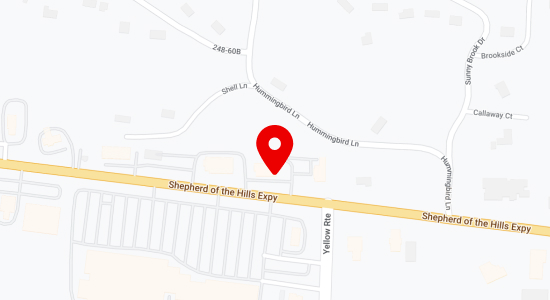
Please note that our law firm's address is for mail correspondence only. We do not accept in-office visits to this location. To schedule an appointment or consult with an attorney, please contact us via phone or email. Our contact information is readily available on our website. We look forward to hearing from you and strive to supply efficient and accessible legal services to our clients.
Branson, MO 65616