
Former Prosecutor
of 20 Years on
Your Side
of 20 Years on
Your Side









A password, login record, or IP address may show that a computer system was accessed, but it does not necessarily establish who was responsible or whether the access was criminal. Computer-tampering cases can involve shared credentials, workplace permissions, cloud accounts, remotely accessed devices, or authorization that changed over time. Those circumstances can make the difference between permitted activity, a private dispute, and conduct prosecutors believe violates Missouri law.
The State may focus on different aspects of the alleged activity depending on what occurred. Missouri law separately addresses interference with computer data, damage or alteration involving computer equipment and systems, and unauthorized access affecting computer users. Prosecutors may also examine whether information was copied or disclosed, whether services were interrupted, whether property was obtained, and whether the alleged conduct caused measurable damage.
Scrivner Law Firm represents people facing computer-related criminal allegations in Taney County and throughout Southwest Missouri. Attorney Dayrell Scrivner brings decades of legal experience, including two decades as a prosecutor, to evaluating how digital evidence was obtained, whether the accused had authorization to access the system or information involved, and whether the facts support the particular computer-tampering offense alleged.
The principal Missouri computer-tampering statutes are RSMo 569.095, 569.097, and 569.099. Although they overlap in some situations, each focuses on a different type of conduct.
RSMo 569.095 addresses knowingly acting without authorization, or without reasonable grounds to believe authorization exists, in relation to computer data and programs. The statute covers more than deleting files.
Prohibited conduct can include modifying or destroying data or programs; taking or disclosing data, programs, or supporting documentation; taking or disclosing passwords, identifying codes, personal identification numbers, or other confidential access information; accessing a computer or network and intentionally examining information about another person; and receiving, retaining, using, or disclosing data known or believed to have been obtained in violation of the statute.
A case therefore does not require sophisticated malware or technical intrusion. An accusation could arise from copying business files, entering another person’s account, disclosing credentials, examining private information, or using data the prosecution claims was unlawfully obtained.
Ordinarily, tampering with computer data is a Class A misdemeanor. It becomes a Class E felony when the offense is committed to devise or execute a scheme to defraud or to obtain property valued at $750 or more.
RSMo 569.097 focuses on the hardware and infrastructure used for computing. It prohibits knowingly and without authorization, or without reasonable grounds to believe authorization exists, modifying, destroying, damaging, or taking computer equipment, data-storage devices, a computer, a computer system, or a computer network.
This provision applies when the allegation concerns damage, alteration, removal, or interference with a device or system rather than only the information stored on it.
The starting classification is a Class A misdemeanor. The offense becomes a Class E felony when it is committed as part of a scheme to defraud or obtain property worth at least $750. It is also a Class E felony when damage to the equipment, computer, system, or network is $750 or more. When the alleged damage reaches $25,000 or more, the offense is a Class D felony.
The claimed amount of damage can therefore become a major point of dispute. Replacing an entire system is not necessarily the same as proving legally attributable damage in that amount. Repair invoices, restoration costs, upgrades, preexisting problems, and the method used to calculate losses may require scrutiny.
RSMo 569.099 addresses unauthorized access and interference with computer services. A person may be charged if the State alleges that the person knowingly, without authorization or reasonable grounds to believe authorization exists, accessed or caused access to a computer, computer system, or computer network.
The statute also covers denying computer-system services to an authorized user when the services are owned, operated, contracted for, or otherwise provided in conjunction with another.
This provision may be implicated by allegations involving unauthorized account access, interference with network availability, or conduct that prevents legitimate users from reaching computer services.
Tampering with computer users is generally a Class A misdemeanor. It becomes a Class E felony when committed for the purpose of carrying out a scheme to defraud or obtain property worth $750 or more.
Many computer-tampering cases are not disputes over whether a person physically touched a device or entered an account. The more difficult question is whether the access was actually unauthorized.
That issue can become complicated in workplaces, families, intimate relationships, partnerships, and small businesses where passwords or devices were previously shared. An employee may have had broad access while working for a company but later be accused of exceeding that authority. A former partner may have credentials that were voluntarily provided before a relationship ended. Multiple people may use the same computer, cloud storage, or subscription account.
The statutory language is important because the State must address not only authorization itself but also whether the accused had reasonable grounds to believe authorization existed. Evidence showing how credentials were provided, whether restrictions were communicated, what access had historically been allowed, and when any permission was revoked can be critical.
A workplace policy dispute or interpersonal disagreement does not automatically establish criminal intent. The statute charged and the facts surrounding permission must be examined closely.
Computer allegations often depend heavily on records that appear technical and objective. Those records still require interpretation.
Investigators may seek computers, phones, external drives, account records, cloud information, messages, browser histories, authentication logs, IP-address records, and financial information. Forensic examiners may recover deleted files, identify user activity, determine when data was transferred, or connect an account to a device.
But a digital record does not always identify the person who performed an action. An IP address may point to a connection rather than an individual. A shared device may have multiple users. Credentials may be saved automatically or known by several people. Remote-access tools, synchronized accounts, compromised passwords, and inaccurate timestamps can complicate attribution.
The defense can also examine how the evidence was obtained. Searches of phones, computers, cloud accounts, and other digital repositories may involve consent, search warrants, or other constitutional issues. The wording and scope of a warrant can matter when investigators seize large quantities of information unrelated to the suspected offense.
Preservation is equally important. Original devices, forensic images, metadata, audit logs, and account-provider records may help establish whether information was altered and whether the State’s timeline is reliable.
The same general allegation of unauthorized computer activity can carry substantially different exposure depending on how prosecutors characterize its purpose and financial impact.
Under Missouri sentencing law, a Class A misdemeanor can carry up to one year in jail. A Class E felony can carry up to four years of imprisonment, while a Class D felony can carry up to seven years. Missouri law also authorizes fines of up to $2,000 for a Class A misdemeanor and up to $10,000 for a Class C, D, or E felony. When money or property was gained through an offense, separate fine provisions may allow the court to base a fine on the amount of gain.
Those ranges make the valuation evidence especially important in felony computer-equipment cases. The prosecution may rely on claimed repair expenses, replacement hardware, recovery work, lost data, or other costs. A defense may question causation, necessity, reasonableness, and whether the claimed amount falls within what the charging statute actually measures.
In data and user-tampering cases, the felony enhancement instead focuses on whether the offense was committed to execute a scheme to defraud or obtain property valued at $750 or more. The State therefore may need to prove more than unauthorized access; the alleged purpose and value can affect the classification.
Missouri law also provides a civil remedy related to computer tampering. Under RSMo 537.525, an owner or lessee of a computer system, network, program, service, or data may bring a civil action against a person who violates the computer-tampering statutes.
Recoverable compensatory damages can include reasonable and necessary expenditures incurred to verify that a system, network, program, service, or data was not altered, damaged, or deleted by the access. The statute also allows a court to award reasonable attorney fees to a prevailing plaintiff.
That means statements made while trying to settle a workplace, business, or personal dispute can have consequences beyond the immediate criminal investigation. The possibility of parallel civil claims should be considered before providing explanations, returning devices, signing agreements, or communicating directly with the complaining party.
Some allegations can attract federal attention in addition to a Missouri prosecution. The federal Computer Fraud and Abuse Act, 18 U.S.C. § 1030, addresses several forms of unauthorized access to computers, obtaining information from protected computers, computer-related fraud, intentional or reckless damage, password trafficking, and computer-related extortion.
Federal jurisdiction can be broader than expected because a “protected computer” includes computers used in or affecting interstate or foreign commerce or communication. Online services, financial institutions, government systems, or interstate conduct may therefore raise federal questions.
A Missouri investigation does not automatically become a federal case. Still, federal agencies, interstate conduct, major losses, government systems, or multiple alleged victims can make federal exposure relevant.
A useful defense strategy should test the prosecution’s theory at several levels rather than assuming that a login or recovered file proves the charged offense.
The first issue is identity. The State must connect the accused person to the particular access, transfer, disclosure, alteration, or damage at issue. Shared devices, shared networks, common credentials, automated processes, and third-party access can create attribution problems.
The second issue is authorization. Records showing prior permission, job duties, account-sharing practices, access rights, or unclear revocation may affect whether the State can prove that the accused knowingly acted without authorization or lacked reasonable grounds to believe access was allowed.
The third issue is intent and purpose. A felony theory based on fraud or obtaining property requires careful examination of what the accused allegedly intended to accomplish. Downloading a file, viewing information, or entering an account does not by itself establish every element of a fraudulent scheme.
The fourth issue is loss or damage. In equipment cases, the defense may challenge whether the accused caused the claimed harm and whether the amount has been properly calculated. Technical experts, repair records, system logs, backups, and evidence of preexisting failures may be relevant.
Finally, the legality and reliability of the investigation should be reviewed. Search warrants, seizure procedures, forensic methods, chain of custody, interviews, and statements can all affect what evidence may be used and how persuasive that evidence actually is.
Attorney Dayrell Scrivner brings decades of legal experience, including two decades as a prosecutor, to the defense of people accused of Missouri crimes. In a case built from technical evidence, the defense must evaluate both what the records show and how prosecutors may use them to prove knowledge, authorization, intent, value, and identity.
Computer-tampering allegations often turn on details that are easy to overlook, including who controlled an account, how access credentials were obtained, whether permission had previously been given, and what a particular user actually did after gaining access. Those facts can affect whether the conduct fits the offense charged, whether a felony enhancement applies, and how digital records should be interpreted in the context of the case.
Attorney Dayrell Scrivner draws on experience in both prosecution and criminal defense when evaluating computer-related accusations under Missouri law. Scrivner Law Firm can review the alleged access or interference, the evidence linking it to the accused, and the statutory issues that may shape the defense. If you are facing an investigation or charge involving computer data, equipment, networks, or unauthorized access, contact the firm through its online form to arrange a consultation.
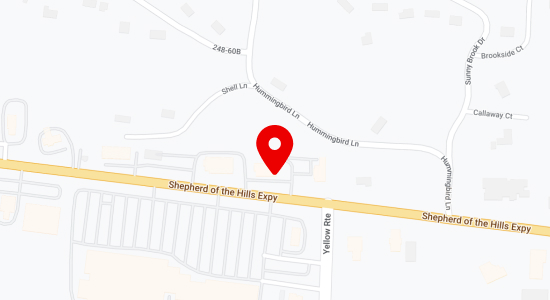
Please note that our law firm's address is for mail correspondence only. We do not accept in-office visits to this location. To schedule an appointment or consult with an attorney, please contact us via phone or email. Our contact information is readily available on our website. We look forward to hearing from you and strive to supply efficient and accessible legal services to our clients.
Branson, MO 65616