
Former Prosecutor
of 20 Years on
Your Side
of 20 Years on
Your Side









A damaged cemetery marker, spray-painted church wall, defaced public monument, or vandalized religious-school property may look at first like a conventional property-damage investigation. Missouri law, however, gives certain institutions and forms of property their own statutory treatment. When the location or object falls within RSMo § 574.085, prosecutors may pursue institutional vandalism rather than relying only on Missouri’s general property-damage laws.
The protected status of the property does not, by itself, establish a hate crime. Institutional vandalism requires proof of knowing vandalism, defacement, or damage to property identified by the statute; it does not require the State to prove hostility toward a religion, race, or other protected group. Bias becomes a separate legal question when prosecutors attempt to invoke Missouri’s hate-offense provisions, another qualifying state charge, or a federal statute addressing religious property or protected rights.
That separation between the physical offense and the alleged motive can shape the entire defense. Questions about ownership and use of the property, repair or replacement costs, identification of the person responsible, communications surrounding the incident, and the basis for any claimed discriminatory motive may point to different statutory issues. Criminal defense attorney and former prosecutor Dayrell Scrivner brings more than 30 years of legal experience to evaluating those issues for clients of Scrivner Law Firm in Taney County and surrounding Southwest Missouri communities.
RSMo § 574.085 identifies several categories of property that receive specific protection under the institutional-vandalism statute. The law applies to knowing vandalism, defacement, or other damage involving:
This list is broader than houses of worship. A case may concern landscaping outside a religious facility, property inside a church, a cemetery marker, a school bus, or a public monument. As a result, one early defense issue is whether the damaged item actually falls within the statutory category alleged by the prosecution.
Ownership, lease records, the ordinary use of the property, and its relationship to a qualifying institution can matter. If prosecutors rely on the protected status of the location or item, that status should be established with evidence rather than assumed from a name, appearance, or informal description.
Institutional vandalism is classified according to the amount of property damage. Under § 574.085, the offense is a class A misdemeanor when the damage remains below the statutory felony threshold. When the damage is at least $750, the offense becomes a class E felony. When the damage exceeds $5,000, it is a class D felony.
The statute also specifies how damage is measured. For purposes of institutional vandalism, the amount includes the cost of repair or, when replacement is necessary, the cost of replacement.
That rule makes valuation much more than an administrative detail. A dispute over whether an item could reasonably be repaired, whether replacement was actually necessary, what work was attributable to the alleged vandalism, or whether an estimate includes unrelated improvements can affect the level of the charge.
A prosecutor may rely on contractor estimates, invoices, photographs, replacement quotes, maintenance records, or testimony from the property owner. The defense may need to distinguish the cost of restoring actual damage from the cost of upgrading, renovating, or replacing property for reasons beyond the alleged conduct.
The title “institutional vandalism hate crime” can create the impression that every violation of § 574.085 is legally a hate crime. Missouri law is more specific.
RSMo § 557.035 is the state’s hate-offense enhancement statute. It allows certain listed underlying offenses to be charged at enhanced felony levels when the State alleges and proves that the offense was knowingly motivated because of the race, color, religion, national origin, sex, sexual orientation, or disability of the victim or victims.
Institutional vandalism under § 574.085 is not one of the offenses listed in § 557.035. That means the protected nature of the property, standing alone, does not transform an institutional-vandalism charge into a hate offense under that statute.
However, the same incident may support a different or additional charge if its facts satisfy another listed offense. For example, § 557.035 expressly includes first-degree property damage under subdivision (1) of RSMo § 569.100. That underlying offense involves knowingly damaging another person’s property to an extent exceeding $750. When the State believes a qualifying property-damage offense was knowingly motivated by a protected characteristic, it may attempt to proceed under the hate-offense statute.
The charging analysis therefore depends on the actual counts alleged, not merely the label used in a police report, news story, or complaint.
When the allegation concerns a church, synagogue, mosque, religious cemetery, or other religious real property, federal law may create another layer of exposure.
Under 18 U.S.C. § 247, sometimes referred to as the Church Arson Prevention Act, federal law prohibits intentionally defacing, damaging, or destroying religious real property because of the religious character of the property, or attempting to do so, when the offense is in or affects interstate or foreign commerce. The statute separately reaches intentional damage to religious real property because of the race, color, or ethnic characteristics of a person associated with that property.
Section 247 also covers intentional obstruction, by force or threat of force, of a person’s enjoyment of the free exercise of religious beliefs when the required federal jurisdictional connection exists.
The statute defines religious real property broadly enough to include fixtures or religious objects contained within a place of worship and real property owned or leased by a nonprofit religiously affiliated organization.
Federal penalties depend on the consequences and circumstances of the offense. Property damage exceeding the federal monetary threshold can increase the available punishment, while bodily injury, dangerous weapons, explosives, fire, kidnapping, aggravated sexual abuse, attempted killing, or death can produce substantially more serious penalties.
Federal jurisdiction should never be treated as automatic merely because a religious institution is involved. The particular subsection, alleged motive, type of property, effect on interstate or foreign commerce when required, and other statutory elements must be evaluated separately.
In an ordinary property-damage case, the central question may be whether the accused knowingly caused the damage. In a hate-offense or federal religious-property case, motive can become an additional contested fact.
Investigators may look beyond the physical scene. Depending on the allegation, they may examine words or symbols left on the property, statements allegedly made before or after the incident, social-media activity, direct messages, group chats, photographs, videos, search history, prior disputes, relationships among the people involved, or evidence that a particular institution was selected because of its religious or other protected character.
That evidence can be powerful, but context matters. A statement may be ambiguous, a social-media account may not belong to the accused, a message may be separated from its surrounding conversation, or offensive speech may be cited as evidence even though the prosecution still must prove the elements of the charged crime.
The defense analysis should distinguish evidence of identity, intent, motive, and actual conduct instead of allowing one inflammatory fact to substitute for all of them.
An institutional-vandalism investigation can expand because different statutes address different aspects of the same alleged conduct.
RSMo § 574.085 addresses damage to specifically protected institutions and property. RSMo § 569.100 may apply when prosecutors allege first-degree property damage. RSMo § 557.035 can enhance certain listed offenses when the required discriminatory motivation is pleaded and proved. RSMo § 537.523 also creates a separate civil cause of action for a person who suffers bodily injury, property damage, or loss resulting from institutional vandalism. A prevailing plaintiff may seek damages and, in appropriate cases, attorney fees and costs.
For religious property, 18 U.S.C. § 247 can create federal criminal exposure when its elements are present. If the incident involves fire, explosives, threats, bodily injury, or other conduct, additional state or federal statutes may also be considered.
This overlap makes it important to identify precisely what each charge requires. Evidence that supports one theory does not necessarily prove another.
Institutional-vandalism and hate-crime investigations can become emotionally charged very quickly. The physical condition of a religious site, cemetery, school property, or public monument may attract immediate attention, and investigators may begin forming a motive theory before all records have been collected.
A defense review should reconstruct the event from the evidence rather than from the characterization attached to it. Relevant questions can include who was present, who had access to the location, whether surveillance footage is complete, whether multiple people were involved, what property was actually damaged, when the damage occurred, how the accused was identified, and what forensic or digital evidence connects that person to the scene.
Where motive is alleged, the timing and context of communications can be equally important. Where valuation determines the offense level, repair methodology and replacement necessity deserve independent scrutiny. Where federal charges are possible, the defense should also examine whether the government can establish the required jurisdictional and motive elements.
Searches of phones, social-media accounts, vehicles, homes, or cloud accounts may raise separate Fourth Amendment issues. Statements made during questioning may also require review for voluntariness, Miranda compliance, and the circumstances under which they were obtained.
A case involving institutional vandalism may require the defense to anticipate how prosecutors will connect separate pieces of evidence into a single narrative: the damaged property, a disputed statement, a social-media post, an estimate of repair costs, location data, surveillance footage, or an alleged association with another person.
Dayrell Scrivner spent approximately two decades as a prosecutor before focusing his practice on criminal defense. He served as a Chief Assistant Prosecutor and has experience teaching criminal law and criminal procedure. That background provides a practical basis for examining how a charging theory may be built, where proof may be incomplete, and which facts could affect negotiations, motions, or trial strategy.
Scrivner Law Firm represents clients in Taney County, Stone County, Christian County, and surrounding Southwest Missouri communities. In a case carrying a hate-crime allegation or the possibility of federal involvement, the defense should be tailored to the actual statutes, evidence, and jurisdiction at issue rather than to the public label placed on the accusation.
The label placed on an institutional vandalism case does not determine what the prosecution can actually prove. The defense may need to examine whether the property falls within Missouri’s protected categories, how the claimed damage was calculated, what evidence connects the accused person to the incident, and whether allegations of discriminatory motive or federal jurisdiction are legally supported.
Criminal defense attorney and former prosecutor Dayrell Scrivner can evaluate those issues in the context of the specific charges and evidence. If an institutional vandalism investigation in Taney County or elsewhere in Southwest Missouri also involves allegations of bias, damage to religious property, or potential federal charges, contact Scrivner Law Firm through the online contact form to request a consultation.
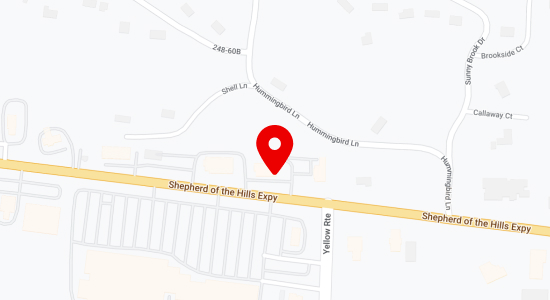
Please note that our law firm's address is for mail correspondence only. We do not accept in-office visits to this location. To schedule an appointment or consult with an attorney, please contact us via phone or email. Our contact information is readily available on our website. We look forward to hearing from you and strive to supply efficient and accessible legal services to our clients.
Branson, MO 65616