
Former Prosecutor
of 20 Years on
Your Side
of 20 Years on
Your Side









A confrontation, threat, property offense, or alleged act of violence does not become a federal hate crime simply because offensive language or prejudice is alleged. Federal prosecutors must identify a statute that reaches the conduct, establish the required federal jurisdiction, and prove the connection between the alleged act and a protected characteristic. Depending on the charge, the case may therefore turn on motive evidence, interstate-commerce requirements, the nature of the underlying conduct, or interference with a federally protected right.
Federal involvement therefore depends on more than the seriousness of the accusation. Prosecutors must be able to place the alleged conduct within a federal statute and, where required, establish the jurisdictional connection that gives federal authorities power to pursue the case. Those requirements can become separate points of dispute from the underlying allegation itself.
Scrivner Law Firm defends people facing serious criminal allegations in Taney County and throughout Southwest Missouri, including federal criminal matters. Attorney Dayrell Scrivner brings more than 30 years of legal experience, including approximately 20 years as a prosecutor and service as a Chief Assistant Prosecutor. His background in criminal law and criminal procedure can be particularly relevant when a federal case depends on separating the underlying conduct from the government’s theory about motive, jurisdiction, and intent.
There is no single federal statute that covers every accusation described as a “hate crime.” Federal law contains several provisions addressing bias-motivated violence and interference with protected rights, and each has different elements.
The principal modern federal hate crime statute is 18 U.S.C. § 249. Other cases may be prosecuted under 18 U.S.C. § 245 when force or threats interfere with federally protected activities, 42 U.S.C. § 3631 when the alleged conduct interferes with housing rights, or 18 U.S.C. § 247 when religious property or the free exercise of religion is involved. Prosecutors may also use 18 U.S.C. § 241 when two or more people allegedly conspire to interfere with rights secured by federal law.
That structure makes the exact charging theory critical. A physical confrontation may require proof of bodily injury and bias motivation under one statute, while a threat involving housing, employment, public accommodations, or religious practice may fall under another. The defense therefore begins with the statute invoked rather than the broad label attached to the allegation.
Section 249 criminalizes specified acts of violence committed because of certain actual or perceived characteristics. The statute does not require the victim to actually possess the characteristic attributed to that person. A case can therefore be based on what prosecutors say the accused believed or perceived.
Under 18 U.S.C. § 249(a)(1), the government may prosecute a person who willfully causes bodily injury, or who attempts to cause bodily injury through the use of fire, a firearm, a dangerous weapon, or an explosive or incendiary device, because of the actual or perceived race, color, religion, or national origin of any person.
Section 249(a)(2) addresses similar conduct based on actual or perceived religion, national origin, gender, sexual orientation, gender identity, or disability. This part of the statute also requires a federal jurisdictional connection. The government may attempt to establish that connection through interstate or foreign travel, the use of a channel, facility, or instrumentality of interstate commerce, a qualifying weapon that traveled in interstate commerce, interference with commercial or economic activity, or another effect on interstate or foreign commerce. Conduct occurring within the special maritime or territorial jurisdiction of the United States can also fall within the statute.
A basic violation of Section 249 can carry up to 10 years in federal prison. If death results, or the offense includes kidnapping, aggravated sexual abuse, an attempt to commit either, or an attempt to kill, the statute permits imprisonment for any term of years or for life. Section 249 also contains provisions addressing certain conspiracies to commit hate crime offenses when death, serious bodily injury, or other specified aggravating conduct is involved.
Federal hate crime prosecutions often turn on the phrase “because of.” The government must connect the alleged violence or interference to the protected characteristic covered by the statute. Evidence that a person used offensive language, held prejudiced views, belonged to a controversial organization, or made inflammatory statements may become relevant to motive, but those facts do not automatically establish every element of a federal offense.
Investigators may examine statements, messages, social-media posts, internet searches, photographs, symbols, prior interactions, location data, and evidence concerning how the victim was selected. Witnesses may be asked whether slurs or other statements were made during the encounter. If multiple people are suspected, prosecutors may use communications to argue that there was a shared purpose or plan.
Context matters. A statement can be quoted incompletely. A social-media post may be unrelated to the alleged offense. A confrontation may have begun for reasons unrelated to a protected characteristic. Witnesses may disagree about who initiated the encounter, what was said, or when particular words were used. The presence of biased or offensive expression does not eliminate the government’s burden to prove the charged conduct and the required causal connection.
Constitutionally protected beliefs or expression, standing alone, do not become a federal hate crime. The First Amendment can therefore matter when prosecutors rely heavily on speech, association, online activity, or expressive conduct as proof of motive. The defense must distinguish admissible motive evidence from conduct protected against criminal punishment.
A federal hate crime investigation may expand beyond Section 249 when the alleged conduct concerns a specific right, place, or activity.
Section 245 prohibits certain uses or threats of force intended to injure, intimidate, or interfere with a person because of race, color, religion, or national origin and because that person is participating in specified federally protected activities.
Those activities include areas such as public education, employment, jury service, interstate travel, and the use or enjoyment of certain public accommodations. The statute can also apply to force or threats directed at people assisting others in exercising protected rights.
The potential punishment increases when bodily injury, a dangerous weapon, explosives, fire, kidnapping, aggravated sexual abuse, attempted killing, or death is involved.
The criminal provision of the federal Fair Housing Act applies when force or the threat of force is allegedly used to willfully injure, intimidate, or interfere with a person in connection with housing rights because of race, color, religion, sex, disability, familial status, or national origin.
A case may involve the purchase, rental, financing, sale, or occupation of a dwelling, or efforts to intimidate someone from exercising or assisting another person in exercising protected housing rights. Penalties increase when bodily injury, dangerous weapons, fire, explosives, kidnapping, aggravated sexual abuse, attempted killing, or death is alleged.
Section 247 addresses intentional damage or destruction of religious real property because of its religious character, as well as certain intentional obstruction by force or threat of force of a person’s free exercise of religious beliefs. It also addresses damage to religious property because of the race, color, or ethnic characteristics of people associated with the property.
The statute can apply to churches, synagogues, mosques, religious cemeteries, and other qualifying religious real property. Depending on the allegation, the government may also have to establish the required interstate-commerce connection.
Section 241 is broader than a conventional hate crime statute. It makes it a federal crime for two or more people to conspire to injure, oppress, threaten, or intimidate a person in the exercise or enjoyment of a right secured by the Constitution or federal law.
When an alleged bias-motivated offense involves coordinated conduct, planning, or multiple participants, prosecutors may consider a conspiracy charge in addition to a substantive civil-rights offense. A conspiracy allegation can significantly expand the evidence at issue because the government may rely on communications, planning activity, and acts attributed to alleged co-conspirators.
The same incident can create both state and federal exposure. Missouri has its own hate-offense provision, RSMo § 557.035, which permits enhanced classifications for certain listed offenses when the state alleges and proves that the offense was knowingly motivated by race, color, religion, national origin, sex, sexual orientation, or disability.
Federal jurisdiction does not necessarily disappear because local or state authorities investigated first. Section 249 contains a certification requirement that addresses circumstances in which the federal government may prosecute, including situations involving lack of state jurisdiction, a state request for federal involvement, an inadequately vindicated federal interest, or a determination that federal prosecution is in the public interest and necessary to secure substantial justice.
As a result, the defense may need to evaluate parallel investigations, statements given to different agencies, warrants obtained by state or federal officers, and evidence shared among local police, the FBI, federal prosecutors, and other agencies.
The statute of conviction determines the maximum punishment, but federal sentencing also involves the United States Sentencing Guidelines and case-specific findings.
U.S.S.G. § 3A1.1(a) provides a three-level increase when the required finding is made that a victim or property was intentionally selected because of actual or perceived race, color, religion, national origin, ethnicity, gender, gender identity, disability, or sexual orientation. The application of that adjustment depends on the offense, the findings made, and the interaction with other guideline provisions.
Other sentencing issues may include bodily injury, weapon use, restraint, multiple victims, obstruction, acceptance of responsibility, criminal history, restitution, supervised release, and fines.
A federal hate crime defense should not begin and end with whether an incident occurred. The prosecution’s theory can be tested at several different points.
One issue may be identity: whether the accused was the person who committed the act, controlled the account, sent the message, or participated in the alleged plan. Another may be the underlying conduct: whether bodily injury occurred, whether an attempt satisfies the statute, whether force or a true threat was used, or whether the evidence supports self-defense or another lawful explanation.
Motive can require separate scrutiny. Prosecutors may be able to show that an accused person expressed hostility toward a group yet still have difficulty proving that the protected characteristic caused the charged act. Conversely, a dispute with an independent personal, financial, workplace, neighborhood, or relationship-based origin may be portrayed as bias-motivated because of language used during an emotionally charged encounter. The chronology of events can be central to separating the cause of a conflict from words spoken after it began.
Federal jurisdiction must also be proven where the charged statute requires it. The defense may examine the claimed interstate-commerce connection, the protected activity involved, the status of the property, or the specific federal right that prosecutors say was interfered with.
Digital evidence should be examined for attribution and completeness. Screenshots may omit surrounding messages. Account ownership does not always establish who authored a specific communication. Metadata, device records, login history, deleted content, and platform records may materially change how a conversation appears.
Finally, constitutional and procedural issues may affect what evidence reaches a jury. Search warrants, device seizures, custodial questioning, identification procedures, expert testimony, and the admissibility of prior statements or other-acts evidence can all require careful review.
A federal hate crime prosecution can depend on several separate questions: what conduct allegedly occurred, whether a protected characteristic actually motivated that conduct, and whether the government can establish the federal connection required by the statute being charged. Those issues can become even more important when investigators rely on statements, online communications, witness accounts, or evidence gathered by multiple law enforcement agencies.
Scrivner Law Firm can examine the government’s theory alongside the underlying evidence to determine which elements are genuinely supported and which may be open to challenge. Attorney Dayrell Scrivner draws on decades of criminal-law experience, including approximately two decades as a prosecutor, when evaluating serious federal allegations and the strategy used to pursue them.
If you are facing a federal hate crime investigation or charge in Taney County or elsewhere in Southwest Missouri, submit the firm’s online contact form to request a consultation and discuss the allegations, the statutes involved, and the defense issues that may affect your case.
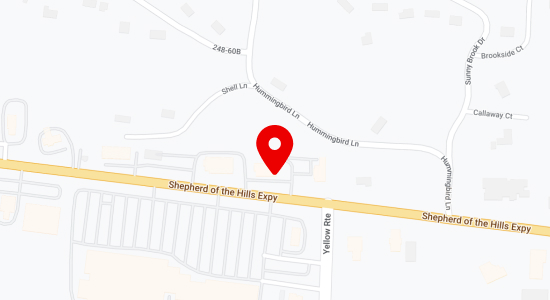
Please note that our law firm's address is for mail correspondence only. We do not accept in-office visits to this location. To schedule an appointment or consult with an attorney, please contact us via phone or email. Our contact information is readily available on our website. We look forward to hearing from you and strive to supply efficient and accessible legal services to our clients.
Branson, MO 65616