
Former Prosecutor
of 20 Years on
Your Side
of 20 Years on
Your Side









A trespass accusation does not become a Missouri hate offense simply because an argument involved offensive language or hostility toward another person. Prosecutors must first establish the qualifying trespass offense and then prove that the conduct was knowingly motivated because of a characteristic protected by Missouri law. That distinction can significantly change the seriousness of the case because first-degree trespass is ordinarily a misdemeanor, while Missouri’s hate-offense statute can elevate qualifying conduct to a felony.
The investigation may therefore focus on two different sets of facts at once. Property boundaries, posted notices, prior permission, surveillance footage, and witness accounts may be used to establish unlawful entry or remaining, while statements, electronic communications, prior disputes, and the selection of a particular property may be offered as evidence of motive. Proof of one does not automatically establish the other.
Scrivner Law Firm defends people facing serious criminal accusations in Taney County and surrounding Southwest Missouri communities. Criminal defense attorney Dayrell Scrivner brings more than 30 years of legal experience, including approximately 20 years as a prosecutor and service as a Chief Assistant Prosecutor, to evaluating whether the evidence supports both the underlying trespass allegation and the additional bias-based enhancement.
Missouri does not create a completely separate offense named “bias-motivated trespass.” Instead, the prosecution generally starts with the underlying trespass statute and then asks whether the alleged conduct falls within Missouri’s hate-offense enhancement law.
That creates two distinct questions.
First, can the State prove first-degree trespass under RSMo § 569.140? Second, can it prove the additional motivational allegation required by RSMo § 557.035?
Failure of either theory can substantially change the case. The hate-offense allegation cannot substitute for missing trespass elements, and proving an unlawful entry does not automatically prove the discriminatory motivation required by § 557.035.
The prosecution must still establish what property was entered, whether the accused had permission or privilege to be there, what notice was given, and whether the accused knowingly entered or remained unlawfully.
RSMo § 569.140 defines trespass in the first degree. A person commits the offense by knowingly entering unlawfully or knowingly remaining unlawfully in a building, inhabitable structure, or on real property.
For real property, Missouri adds an important limitation. First-degree trespass does not apply merely because someone crossed onto land owned by another. The real property generally must be fenced or otherwise enclosed in a way designed to exclude intruders, or notice against trespass must have been given either through actual communication or through posting reasonably likely to come to the attention of intruders.
This can make the physical setting central to the defense. Photographs of fences, gates, entrances, signs, parking areas, paths, doors, property boundaries, and access points may matter. So can evidence about whether a sign was visible, whether a gate was open, whether the person had previously been invited onto the property, or whether there was a misunderstanding about where a boundary began.
Missouri’s definition of “enter unlawfully or remain unlawfully,” found in RSMo § 569.010, focuses on whether the person was licensed or privileged to be on the premises. Property open to the public generally carries a license or privilege to enter, unless the person defies a lawful order not to enter or remain that is personally communicated by the owner or another authorized person. Areas of a building that are not open to the public are treated differently.
These rules can be especially important at businesses, religious facilities, schools, or other locations where some areas are open to visitors while others are restricted.
RSMo § 569.150 defines trespass in the second degree as unlawfully entering the real property of another. The statute describes it as an offense of absolute liability and classifies it as an infraction.
The difference is significant in a bias case. Missouri’s hate-offense statute specifically identifies § 569.140, the first-degree trespass statute. It does not list § 569.150.
As a result, a prosecutor seeking the felony treatment provided by § 557.035 for a bias-motivated trespass must establish the first-degree trespass predicate identified by the statute. The State cannot simply take any alleged second-degree trespass and automatically convert it into a hate-offense felony because offensive language or discriminatory hostility is alleged.
That makes classification an important defense issue. Whether the facts support first-degree trespass rather than second-degree trespass can affect the entire charging structure.
RSMo § 557.035 is Missouri’s hate-offense enhancement statute. It identifies specific underlying offenses that can receive increased classifications when the State believes the offense was knowingly motivated because of the race, color, religion, national origin, sex, sexual orientation, or disability of the victim or victims.
First-degree trespass under § 569.140 is one of the offenses expressly included.
Ordinarily, first-degree trespass is generally a Class B misdemeanor, subject to certain special circumstances. When the State charges the offense under § 557.035 and pleads and proves the required discriminatory motivation, the violation is a Class E felony.
A Class B misdemeanor can carry up to six months in jail and a fine of up to $1,000. A Class E felony can carry up to four years of imprisonment and a fine of up to $10,000. The statute requires the State to plead and prove the listed motivating factor, making motive a factual issue rather than a conclusion that automatically follows from the accusation.
Motive is rarely established by a single piece of evidence. In a bias-motivated trespass prosecution, investigators may try to build the motive theory from the surrounding context.
Potential evidence may include:
None of those categories automatically proves the statutory motive. A statement can be misquoted, taken out of sequence, attributed to the wrong person, or unrelated to the decision to enter the property. The defense may therefore need to examine authenticity, context, and whether the evidence actually connects the charged trespass to a protected characteristic of the victim or victims.
A case framed publicly as a hate offense may still turn on conventional trespass evidence.
Was the property actually posted? Who gave the order to leave? Did that person have authority? Was the order clearly communicated? Did the accused leave after receiving notice? Was the relevant area open to the public? Did an invitation, business relationship, family relationship, tenancy issue, employment arrangement, event ticket, or prior permission create a license or privilege to enter?
Video can also change the analysis. Surveillance footage, doorbell cameras, cell-phone recordings, security logs, access-control records, and photographs may show where the person went, how long the person remained, whether signs were visible, whether barriers existed, and what happened after any instruction to leave.
Preserving this material early can matter because video may be overwritten, signs can be moved, and property conditions can change.
Some incidents involve allegations beyond entry or remaining on property. If prosecutors claim that property was damaged, threats were made, a group acted together, or a protected institution was targeted, additional Missouri statutes may become relevant.
RSMo § 569.100 addresses first-degree property damage, including knowingly damaging another person’s property beyond the statutory value threshold. RSMo § 569.120 addresses second-degree property damage, including knowingly damaging property of another. Certain forms of property damage are also specifically included within Missouri’s hate-offense statute, meaning a bias allegation can affect those charges as well.
RSMo § 574.085 addresses institutional vandalism involving specified religious, burial, memorial, educational, community, and medical property. If an alleged trespass includes damage to a church, synagogue, cemetery, religious school, or other qualifying property, investigators may examine that statute in addition to trespass and general property-damage laws.
The exact combination of charges depends on the alleged conduct. A defense analysis should separate each offense and its elements rather than allowing multiple accusations to merge into one generalized narrative.
A meaningful review of a bias-motivated trespass allegation should test the prosecution’s theory from several directions.
The first question is authorization. If the accused had permission, privilege, public access, or a reasonable basis connected to lawful access, the State may have difficulty proving knowing unlawful entry or remaining.
The second is notice. On real property, fencing, enclosure, actual communication, and posting can determine whether first-degree trespass is established.
The third is identity. Security footage may be unclear, accounts may be shared, vehicles may have multiple occupants, and witnesses may make assumptions about who entered or who made a statement.
The fourth is motive. Even if an unlawful entry occurred, the prosecution must still prove the discriminatory motivation required by § 557.035 to obtain the felony hate-offense classification.
The fifth is evidentiary context. A statement that appears incriminating in isolation may have a different meaning when the full conversation, earlier messages, witness history, or surrounding events are reviewed.
Finally, the defense should examine whether investigators lawfully obtained digital evidence, whether statements were taken in compliance with constitutional protections, and whether the State can authenticate the electronic material it intends to use.
A felony prosecution can create consequences involving employment, professional licensing, housing, education, background checks, immigration status for noncitizens, and the right to possess firearms. The exact collateral consequences depend on the person’s circumstances and the final disposition of the case.
The “hate offense” characterization can also intensify practical stakes and public attention, making careful communication and disciplined handling of evidence especially important.
People under investigation should be cautious about posting explanations online, contacting an accuser directly, deleting messages, or attempting to “clear things up” with investigators without understanding how those actions may affect the case. Preserving evidence and obtaining legal advice before making additional statements can be important.
A trespass investigation can become significantly more serious when prosecutors claim that the alleged conduct was motivated by bias. Police may be reviewing surveillance footage, witness accounts, statements, electronic communications, property-access records, and other evidence while determining whether the facts support a misdemeanor trespass allegation or an enhanced felony charge. Early defense review can help identify what evidence actually supports the accusation and where the prosecution’s theory may be open to challenge.
Attorney Dayrell Scrivner brings experience as both a former prosecutor and criminal defense lawyer to serious Missouri criminal cases. If you are under investigation or have been charged with bias-motivated trespass in Taney County or elsewhere in Southwest Missouri, contact Scrivner Law Firm to discuss the allegations, the evidence being used against you, and the options available for your defense.
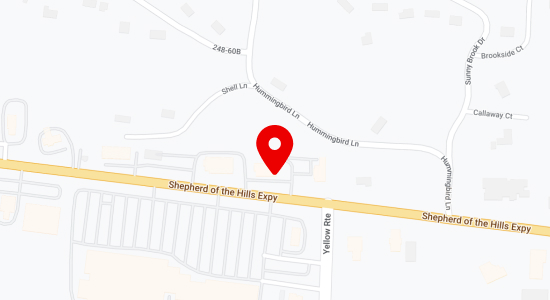
Please note that our law firm's address is for mail correspondence only. We do not accept in-office visits to this location. To schedule an appointment or consult with an attorney, please contact us via phone or email. Our contact information is readily available on our website. We look forward to hearing from you and strive to supply efficient and accessible legal services to our clients.
Branson, MO 65616