
Former Prosecutor
of 20 Years on
Your Side
of 20 Years on
Your Side







Open carry laws in Missouri give citizens considerable freedom to visibly carry firearms, but that freedom exists within a framework of legal limits and responsibilities. When someone is accused of violating an open carry rule, the consequences can include arrest, criminal charges, fines, or the loss of firearm privileges, even if the person believed they were acting lawfully. Many cases originate not from intentional misconduct but from confusion about local ordinances, unclear signage, or misinterpretations by witnesses or law enforcement. Because Missouri’s firearm regulations combine statewide rules with city and county authority, a simple oversight can escalate quickly.
At Scrivner Law Firm, attorney and former prosecutor Dayrell Scrivner brings more than three decades of criminal law experience to defending individuals charged with open carry violations. His background as both a prosecutor and instructor of police academy students provides a deep understanding of how these cases develop, how officers are trained to assess firearm visibility, and where legal defenses often arise.
Missouri generally allows most adults to openly carry a firearm without a permit, which can give the impression that there are few legal risks associated with visible gun possession. In reality, the right to open carry intersects with a variety of restrictions. State statutes prohibit possession in certain locations such as schools and government buildings. Local governments may impose additional requirements, including mandating that only those with concealed carry permits may openly carry inside city limits. Private businesses may bar weapons entirely, and property owners can object to the presence of firearms on their land.
Because this framework can be difficult to navigate, many open carry allegations begin as genuine misunderstandings. A defense lawyer must examine not only statewide statutes but also local rules, property-owner restrictions, and the context of the encounter to determine whether the accused actually violated the law.
Most open carry cases start with a moment of confusion or an unexpected interaction. A bystander may call police after seeing a firearm, unaware that the individual is lawfully carrying. Police may observe someone walking in a part of town where local ordinances restrict visible weapons. A business owner may ask someone to leave, and the encounter escalates when communication breaks down. Sometimes a person unwittingly enters a government building or designated event area where open carry is prohibited. These situations unfold quickly and often leave the accused shocked that they are facing criminal charges at all.
Misinterpretations can occur even when an individual had no intention of drawing attention to the firearm. An officer may believe the weapon was handled unsafely, that the firearm contributed to a disturbance, or that the accused posed a risk simply by being visibly armed during a tense moment. In many cases, witness perception becomes a crucial factor, making it important for the defense to reconstruct the full context.
City and county governments in Missouri have the authority to regulate open carry, which creates a patchwork of rules that vary widely across the state. Some municipalities allow open carry without restrictions, while others permit it only for individuals with concealed carry permits. Certain cities regulate firearm visibility in entertainment districts, commercial areas, or densely populated neighborhoods. Counties may impose temporary restrictions for public celebrations or events. Because these rules are not always clearly posted, someone might walk from a permissive area into a restricted zone without any warning.
This inconsistency generates many accidental violations. People who travel between neighboring towns for work, school, or errands often assume that firearm laws remain consistent. A defense attorney must determine the exact ordinance in place at the time of the incident, how it applies to the facts, and whether the municipality exceeded its authority when imposing the restriction.
While the law allows visible carry in many places, officers may still intervene if they believe the firearm was handled in a threatening or reckless manner. A holstered firearm typically raises no concern, but gestures such as adjusting the weapon, briefly removing it, or carrying it in hand can be misinterpreted. Any heated exchange or emotionally charged situation can heighten officers’ suspicion, even if the weapon was never intended to escalate the conflict. Some cases arise when people become nervous or startled by seeing a firearm and report the behavior as threatening.
Officers responding to a “man with a gun” call may be on alert when they arrive, and their perception of the accused’s tone, movements, and surroundings can strongly influence their decisions. A defense attorney must carefully examine the sequence of events, determine whether the accused acted responsibly, and demonstrate when witness fear does not equate to unlawful conduct.
Private businesses and property owners have the authority to restrict or prohibit firearms on their premises. When signs are posted in compliance with Missouri law, individuals carrying firearms must comply with those notices. However, many cases arise when signs are missing, improperly placed, unclear, or positioned only at certain entrances. Someone may inadvertently walk into a store through a doorway that lacks signage and then be accused of violating the no-firearms rule.
Disputes also emerge when an employee or manager requests that someone leave, but the conversation quickly becomes confusing or confrontational. Although most individuals intend to comply, the stress of the situation sometimes leads to misunderstandings. When charges such as trespass accompany an open carry accusation, examining the property layout, signage, and communication between the parties becomes essential.
Missouri law draws clear lines around school property, government buildings, and certain restricted spaces. Many people unintentionally violate these zones because the boundaries are not always obvious. Walking across a parking lot that happens to border a school, attending a public event held on school grounds, or passing through a government facility without noticing posted signs can all lead to legal trouble. Officers may detain someone simply to determine intent. These cases often turn on whether the accused knowingly entered a prohibited area, whether the area was properly marked, and whether the accused had any legitimate reason to be present.
Open carry cases often hinge on concrete evidence that clarifies what police or witnesses believed they saw. Surveillance footage, body camera recordings, 911 call audio, and photographs all help reconstruct the event. Witness statements can be helpful, especially when neutral third parties observed that the accused behaved calmly or responsibly. Maps and documentation of local ordinances may also demonstrate that the accused was legally entitled to carry the firearm.
Because many of these cases involve confusion, it is not unusual for witnesses to contradict one another. Someone may misidentify gestures, misunderstand a conversation, or assume a threat that was not present. A strong defense often involves showing how these inconsistencies undermine the government’s theory.
Defending an open carry charge requires examining the legal landscape, the behavior of the accused, and the credibility of the witnesses. Some defenses focus on proving that the accused fully complied with Missouri statutes and that local ordinances did not apply. Others demonstrate that signage was inadequate or missing, meaning the accused had no fair notice of restrictions. Cases involving alleged threatening behavior often rely on showing that the accused acted calmly and that witnesses misinterpreted ordinary movements.
To strengthen these arguments, attorneys often emphasize two central strategies:
Each case is unique, and a tailored approach ensures that the full context is presented rather than the narrow version reflected in a police report.
An open carry encounter may escalate into additional accusations when officers believe other laws were violated. Trespass may be charged if the person did not immediately leave restricted property. Disorderly conduct may be added if the officer believes the public felt disturbed. Unlawful use of a weapon charges may appear when police interpret gestures as threatening. These additional offenses increase potential penalties and complicate the defense, making early legal intervention particularly important.
Although many open carry violations begin as municipal or misdemeanor matters, penalties can still be significant. A conviction may lead to fines, probation, temporary firearm restrictions, and in certain cases, jail time. If the accused is considered a prohibited person or if the alleged violation occurs in a school zone, the offense may escalate to a felony. Beyond criminal penalties, a conviction may affect employment, professional licensing, and future firearm purchases.
To help clients understand the scope of potential consequences, attorney Dayrell Scrivner evaluates all charges and possible collateral effects, ensuring the client knows exactly what is at stake.
Some of the most common risks associated with open carry charges include:
Understanding these consequences helps clients make informed decisions about plea negotiations, trial strategy, and long term planning.
Attorney Dayrell Scrivner’s decades of experience in Missouri criminal law make him uniquely suited for open carry defense. His background as a prosecutor provides insight into how the State evaluates these cases, and his role as a Missouri licensed specialist instructor gives him firsthand knowledge of how law enforcement officers are trained to interpret firearm-related encounters. This dual perspective allows him to identify weaknesses in the State’s theory, challenge assumptions made by officers, and present a more accurate picture of the accused’s conduct.
Scrivner Law Firm represents clients across Taney County, Stone County, Christian County, and surrounding areas. The firm prioritizes clear communication, strategic case planning, and careful analysis of the facts. Clients receive personalized defense that takes into account both the legal issues and the practical realities of firearm ownership in Missouri.
Being accused of an open carry violation can feel overwhelming, especially when the accusation stems from a misunderstanding or misinterpretation. With experienced legal representation, many of these charges can be reduced or dismissed entirely. Early intervention is critical because it allows the defense to secure evidence, correct misstatements, and ensure that the accused’s rights are fully protected.
If you are facing open carry-related charges anywhere in southern Missouri, Scrivner Law Firm can help you understand the allegations, evaluate your defense options, and protect your future. You can contact the firm to request a confidential consultation with attorney Dayrell Scrivner and begin building a strong defense grounded in Missouri law and constitutional protections.
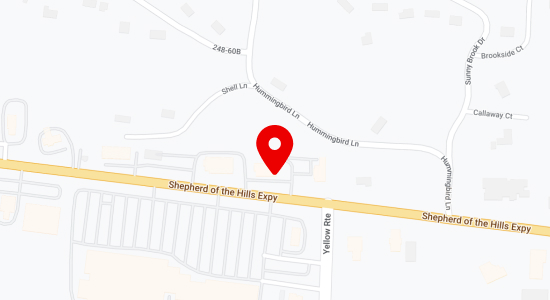
Please note that our law firm's address is for mail correspondence only. We do not accept in-office visits to this location. To schedule an appointment or consult with an attorney, please contact us via phone or email. Our contact information is readily available on our website. We look forward to hearing from you and strive to supply efficient and accessible legal services to our clients.
Branson, MO 65616