
Former Prosecutor
of 20 Years on
Your Side
of 20 Years on
Your Side









An armed criminal action charge can substantially increase the stakes of a Missouri felony case because it is not simply another way of describing the underlying offense. Under RSMo 571.015, prosecutors may file armed criminal action when they allege that a felony was committed by, with, or through the use, assistance, or aid of a dangerous instrument or deadly weapon. A conviction carries its own prison sentence, and that sentence must run consecutively to the punishment imposed for the underlying felony.
That structure makes armed criminal action different from many other enhancement provisions. A person accused of assault, robbery, domestic assault, homicide, or another felony may face not only the penalties attached to that offense but also a separate unclassified felony carrying additional mandatory imprisonment.
Scrivner Law Firm represents people facing serious criminal charges in Taney County and throughout Southwest Missouri. Attorney Dayrell Scrivner brings extensive experience on both sides of the criminal justice system, including prior service as Chief Assistant Prosecutor. He draws on that prosecutorial background to examine how felony and weapons allegations were developed, test whether the evidence supports each charge, and identify weaknesses in the prosecution’s theory.
The most important feature of RSMo 571.015 is the requirement that punishment for armed criminal action be added to the sentence for the felony allegedly committed with the weapon or instrument.
For a first armed criminal action conviction, the statute classifies the offense as an unclassified felony and generally provides for a term of imprisonment of at least three years and no more than fifteen years. If the person was unlawfully possessing a firearm, the statute raises the minimum term to at least five years.
The sentence is not served at the same time as the punishment for the predicate felony. RSMo 571.015 requires the armed criminal action sentence to be consecutive. This means that even when the underlying offense already carries a lengthy prison term, the ACA sentence can extend the total period of incarceration.
The statute also restricts early release and sentencing alternatives. For a first conviction, a person is not eligible for parole, probation, conditional release, or a suspended imposition or execution of sentence for three calendar years.
Repeat ACA convictions carry still greater consequences. A second offense is punishable by five to thirty years, with a minimum of fifteen years if the person was unlawfully possessing a firearm. A third or subsequent offense carries at least ten years, or at least fifteen years when unlawful firearm possession is involved. The statutory periods during which parole, probation, conditional release, and suspended sentences are unavailable also increase for repeat offenses.
Armed criminal action depends on another felony. The State must identify a felony that the accused allegedly committed through the use, assistance, or aid of a dangerous instrument or deadly weapon.
That relationship is critical. If the prosecution cannot prove the underlying felony beyond a reasonable doubt, an ACA charge tied to that felony cannot stand on its own. The defense therefore has to examine two connected questions: whether the State can prove the predicate felony and whether it can establish the required connection between that felony and the alleged weapon or instrument.
Common predicate offenses may include first-degree assault under RSMo 565.050, first-degree domestic assault under RSMo 565.072, second-degree murder under RSMo 565.021, first-degree robbery under RSMo 570.023, and other felonies allegedly carried out with a firearm, knife, blunt object, vehicle, or other dangerous instrument.
The precise charging theory matters. It is not enough that a weapon happened to be present somewhere near the scene. The prosecution must prove the elements of armed criminal action as charged, including the accused’s knowing use, assistance, or aid of the dangerous instrument or deadly weapon in committing the felony.
Missouri’s definitions in RSMo 556.061 give “deadly weapon” a specific legal meaning. The term includes a firearm whether it is loaded or unloaded. It also includes certain other weapons capable of discharging a shot that can cause death or serious physical injury, as well as specifically listed weapons such as a switchblade knife, dagger, billy club, blackjack, and metal knuckles.
A “dangerous instrument” is broader and depends on how an object is used under the circumstances. RSMo 556.061 describes it as an instrument, article, or substance that, in the manner in which it is used, is readily capable of causing death or serious physical injury.
That distinction means an object does not necessarily have to be designed as a weapon to support an ACA allegation. In an appropriate case, an everyday object or even a vehicle may be alleged to be a dangerous instrument if prosecutors claim it was deliberately used in a manner capable of causing serious injury or death.
Because the classification may depend on the circumstances, the defense can examine exactly how the object was used, whether it was capable of producing the alleged harm, and whether the evidence actually shows that the defendant knowingly used it to commit the felony.
RSMo 571.015 imposes increased minimum penalties when armed criminal action involves a firearm that was unlawfully possessed. If the State establishes unlawful firearm possession, the minimum term of imprisonment for the ACA offense increases.
RSMo 571.070 is therefore an important related statute in firearm cases. It prohibits certain people from knowingly possessing a firearm, including people with qualifying felony convictions and certain other prohibited statuses. Under the current statute, unlawful possession is generally a class C felony, but it can become a class B felony when the person has a dangerous-felony conviction or a prior unlawful-possession conviction.
A case involving both unlawful possession and armed criminal action requires careful attention to the defendant’s criminal history, the legal status of the prior conviction, possession evidence, and whether the State can prove the firearm belonged to or was knowingly possessed by the accused.
Constructive-possession allegations can be especially important when a firearm is recovered from a vehicle, residence, hotel room, shared space, or property occupied by several people. Proximity alone does not automatically answer who possessed the firearm or who knew it was there.
An ACA defense should not assume that the State’s description of the weapon is accurate simply because it appears in a probable cause statement or police report.
Important evidence may include body-camera footage, surveillance recordings, photographs, firearm examination reports, DNA testing, fingerprints, gunshot-residue evidence, shell casings, projectile evidence, 911 recordings, witness statements, and electronic communications. Each can affect whether the State can connect a particular weapon to a particular person and to the alleged felony.
Witness accounts may also change over time. One witness may say a gun was displayed, another may say it remained concealed, and another may never have seen a weapon at all. Video may contradict the sequence described in an initial statement. Physical evidence may show that an object was located somewhere different from where officers claimed it was used.
Where the case involves several people, the defense may also need to separate individual conduct. The fact that one participant possessed or used a weapon does not automatically establish every allegation made against every person at the scene.
Some armed criminal action cases arise from shootings, stabbings, or confrontations in which the accused claims to have acted in self-defense or defense of another person.
RSMo 563.031 governs the use of force in defense of persons. Missouri law permits physical force in specified circumstances when a person reasonably believes it is necessary to defend against another person’s use or imminent use of unlawful force. Deadly force is subject to additional statutory requirements.
A valid justification issue can be central because the ACA count is tied to the underlying felony. If the conduct was legally justified and the State cannot prove the predicate felony, the related armed criminal action charge may also fail.
These cases are highly fact dependent. The defense may examine who initiated the confrontation, prior threats, the relative positions of the people involved, access to exits, injuries, weapon locations, the timing of 911 calls, statements made immediately after the incident, and video or digital evidence showing what occurred before force was used.
Weapon cases frequently involve constitutional issues. Police may recover a firearm after a traffic stop, vehicle search, entry into a home, execution of a search warrant, consent search, or arrest.
The defense can examine whether officers had lawful grounds for the initial stop or detention, whether a warrant was supported by probable cause, whether a search exceeded its permitted scope, and whether purported consent was actually voluntary. If evidence was obtained in violation of constitutional protections, a motion to suppress may affect both the weapon allegation and the felony count connected to it.
Statements require similar attention. Officers may question a suspect about who owned a firearm, why it was present, whether it was displayed, or what happened during an altercation. The circumstances surrounding Miranda warnings, custodial interrogation, recording practices, and the accuracy of police summaries can become important when the State relies on an alleged admission to establish knowing use or possession.
Armed criminal action cases should be evaluated count by count rather than treated as one generalized allegation involving a weapon.
The defense may challenge whether a felony occurred at all, whether the accused was the person who committed it, whether the alleged object qualifies as a dangerous instrument or deadly weapon, whether the defendant knowingly used the object in committing the felony, or whether lawful self-defense explains the conduct.
There may also be evidentiary weaknesses that do not appear in the charging document. A weapon may never have been recovered. Laboratory testing may not connect it to the accused. Witness descriptions may be inconsistent. Surveillance footage may leave gaps. The prosecution may rely heavily on an informant, accomplice, or alleged victim whose account can be tested against prior statements and objective evidence.
Attorney Dayrell Scrivner has worked within Missouri’s criminal justice system for decades and spent approximately 20 years prosecuting criminal cases before focusing his practice on defense. That background gives him familiarity with how prosecutors assess serious felony files, how charging decisions develop, and which evidentiary issues can become important as a case moves toward hearings, negotiations, or trial.
Scrivner Law Firm represents clients in Taney County, including Branson, Forsyth, Hollister, Merriam Woods, and Rockaway Beach, as well as clients in Stone County, Christian County, and surrounding Southwest Missouri communities.
An armed criminal action charge can significantly increase the stakes of a Missouri felony case because it is prosecuted as a separate offense tied to the alleged use of a dangerous or deadly instrument during the commission of another felony. That can create additional sentencing exposure beyond the underlying charge itself. The defense may depend on details such as whether the accused actually possessed or used the weapon, whether the alleged instrument legally qualifies under the statute, whether witness accounts are consistent, how physical or digital evidence supports the State’s version of events, and whether prosecutors can prove the underlying felony beyond a reasonable doubt. Problems with identification, conflicting testimony, self-defense issues, unlawful searches, or weaknesses in the State’s evidence may also affect how the case should be approached.
Attorney Dayrell Scrivner brings experience from both prosecution and criminal defense to cases involving armed criminal action and other serious felony allegations in Taney County and Southwest Missouri. That background can be especially important in a case where prosecutors may pursue multiple charges arising from the same incident and use the weapons allegation to increase pressure on the accused. If you are under investigation or have been charged under RSMo 571.015, contact Scrivner Law Firm to discuss what the State must prove, the penalties you may be facing, and the factual or legal issues that could shape your defense. Call the firm or submit the online contact form to schedule a consultation.
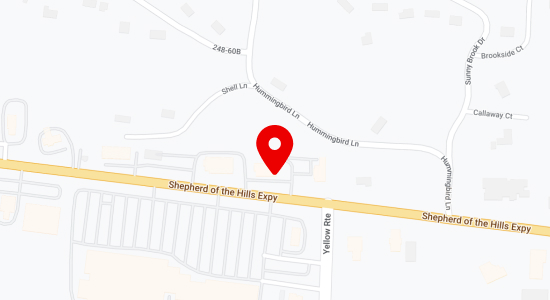
Please note that our law firm's address is for mail correspondence only. We do not accept in-office visits to this location. To schedule an appointment or consult with an attorney, please contact us via phone or email. Our contact information is readily available on our website. We look forward to hearing from you and strive to supply efficient and accessible legal services to our clients.
Branson, MO 65616